Cambodia’s broad money nears $62 billion in May, NBC reports
Cambodia’s broad money nears $62 billion in May, NBC reports
The figures show the majority of funds remain within the formal banking system rather than being held as physical cash, highlighting the continued development of the Kingdom’s financial infrastructure.

The broad money supply reached 247.7 trillion riels ($61.9 billion) in May 2026, remaining at a historically high level despite a slight monthly decline as deposits and currency holdings eased, according to the latest Depository Corporations Survey (DCS) released by the National Bank of Cambodia (NBC).
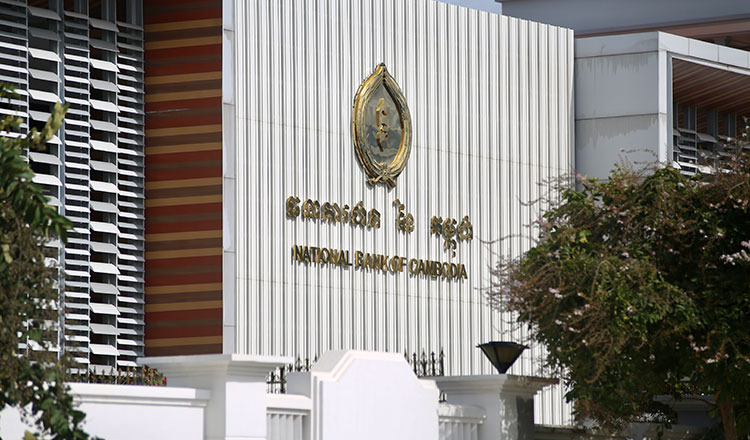
The survey, published on NBC’s official website on June 30, consolidated the balance sheets of the central bank and other depository corporations, providing a comprehensive overview of the Kingdom’s monetary conditions, banking liquidity and financial activity.
According to DCS, the broad money liabilities (M2) stood at 247,668.9 billion riels ($61.9 billion) in May. The indicator included currency held by the public, transferable deposits and other deposits maintained within the banking system, making it one of the key measures of liquidity and financial conditions in the economy.
A rising M2 can indicate more money available for spending, investment and credit activity in the country, while changes in M2 can help central banks assess inflation risks, economic activity and monetary stability.
Although Cambodia’s M2 remained at a historically high level, the figure in May represented a 1.2 percent decline from 250,753 billion riels ($62.7 billion) in April, reflecting a moderate decrease in deposits and currency holdings.
The monthly decline does not necessarily indicate weaker economic fundamentals, as fluctuations in money supply are often influenced by seasonal cash demand, government transactions and normal banking activities.
The survey showed that other deposits continued to represent the largest component of Cambodia’s money supply, reaching 188,310.7 billion riels ($47.1 billion), accounting for about 76 percent of total M2.
These deposits, including savings and fixed-term accounts, remained the backbone of the country’s financial system, reflecting continued public confidence in banks and other financial institutions.
Meanwhile, transferable deposits, which included current accounts and funds readily available for payments, stood at 40,611.3 billion riels ($10.2 billion), representing around 16 percent of broad money.
Currency outside depository corporations, referring to cash held by households and businesses, totalled 18,746.9 billion riels ($4.7 billion), accounting for approximately 7.6 percent of M2.
The decline in physical cash holdings compared with the previous month suggested that a greater share of economic transactions continued moving through formal financial channels and digital payment platforms.
Beyond the composition of domestic liquidity, the survey highlighted the continued importance of foreign currencies in Cambodia’s monetary system. Of the total money supply, 206,166.9 billion riels ($51.5 billion), or more than 83 percent, was denominated in foreign currencies, primarily the US dollar.
Dollarisation remained a defining feature of the Kingdom’s economy. The widespread use of the US dollar has supported international trade, investment and financial transactions over the years. However, it also reduces the effectiveness of conventional monetary policy tools available to the central bank.
To gradually strengthen the role of the riel, NBC has continued promoting wider use of the national currency through initiatives such as the Bakong digital payment system, KHQR interoperability and cross-border payment connectivity with regional partners.
These efforts aimed to increase financial inclusion, improve payment efficiency and encourage greater use of the riel in domestic transactions while maintaining financial stability.
Alongside strong liquidity conditions, the survey showed continued activity in Cambodia’s financial sector through domestic claims and credit expansion. Domestic claims reached 223,068.8 billion riels ($55.8 billion), indicating continued financing support from financial institutions to the domestic economy.
The banking sector has remained a key source of financing for businesses and households, supporting important economic sectors including manufacturing, agriculture, construction, tourism and trade.
Access to credit continues to play an important role in supporting investment, business operations and economic activity by enabling businesses to expand production, improve competitiveness, create employment opportunities and finance growth.
The report also recorded additional balance sheet components, including deposits excluded from broad money, which totalled 479.9 billion riels ($120 million), while securities other than shares excluded from broad money amounted to 72.4 billion riels ($18 million).
The banking sector reported loans of 7,779.3 billion riels ($1.9 billion), while shares and other equity stood at 96,939.3 billion riels ($24.2 billion), reflecting the size and complexity of financial institutions’ balance sheets.
Overall, the latest Depository Corporations Survey indicated that Cambodia’s financial system remained stable, supported by strong liquidity, continued confidence in banking institutions and growing adoption of digital financial services.
The figures showed that the majority of funds remained within the formal banking system rather than being held as physical cash, highlighting the continued development of Cambodia’s financial infrastructure.
As the Royal Government works towards its goal of becoming an upper-middle-income country, the banking sector is expected to play an increasingly important role in mobilising savings, supporting productive investment and promoting sustainable economic growth.
Backed by prudent monetary management and ongoing financial sector reforms, the NBC is expected to continue balancing liquidity conditions, financial stability and economic development while encouraging the gradual expansion of riel-based financial transactions across the economy.
- 08:24 08/07/2026