Export rises nearly 20% to reach $23.38 billion
Export rises nearly 20% to reach $23.38 billion
Despite external risks, Cambodia’s early 2026 trade performance suggests the country’s economy remains resilient and increasingly diversified.
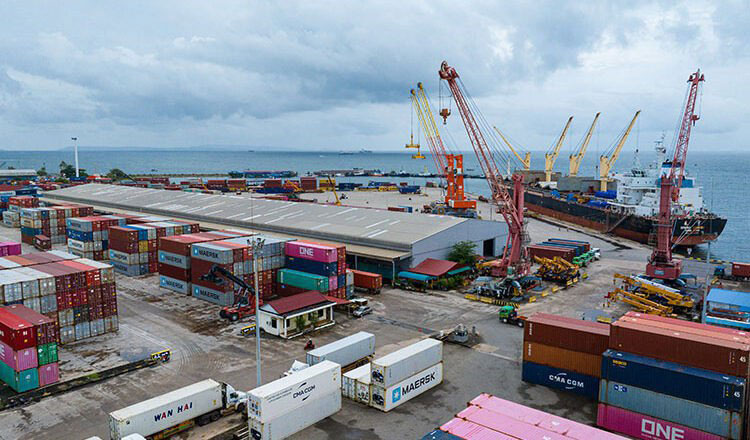
Cambodia’s international trade reached $23.38 billion in the first four months of 2026, an increase of 19.9 percent from $19.5 billion recorded during the same period last year, a report from the General Department of Customs and Excise showed yesterday.
The surge in trade demonstrated the remarkable resilience of the economy in the earlier period of 2026, overcoming global inflationary pressures, supply chain disruptions, and border tension with Thailand.
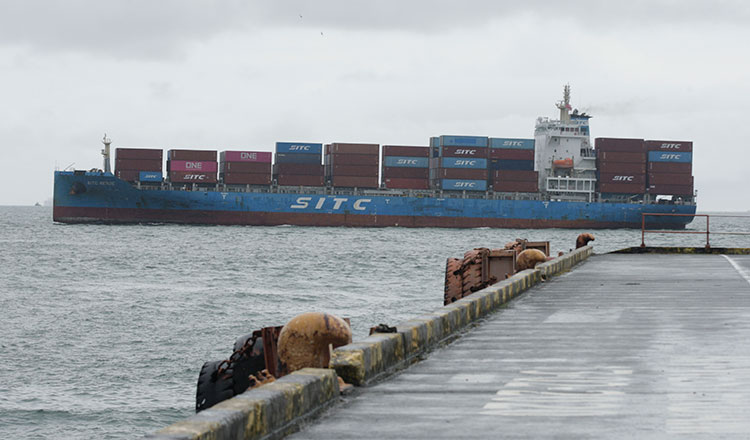
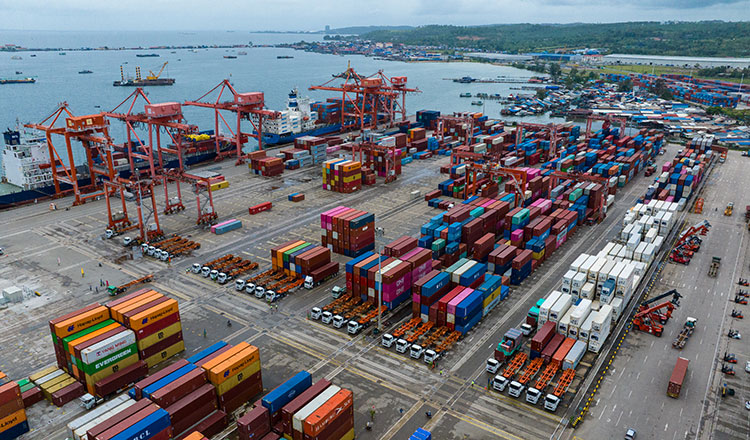
Exports accounted for a significant portion of the increase. Cambodia exported goods worth $11.12 billion during the four-month period, up 21.7 percent year-on-year. Imports also rose steadily, climbing 18.3 percent to $12.26 billion as domestic manufacturing activity and consumer demand continued to recover.
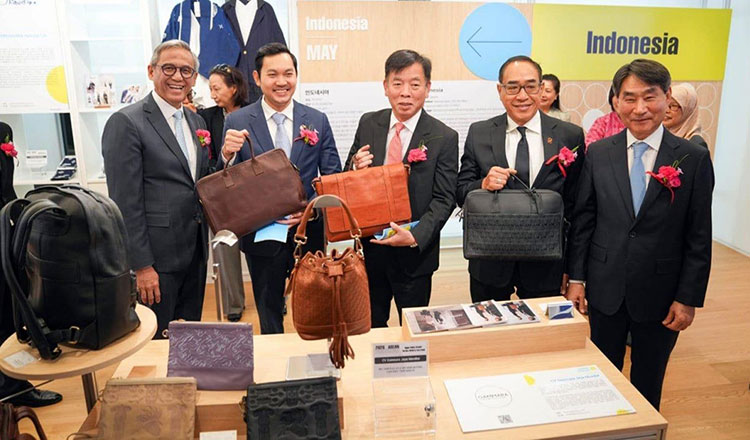
Government officials said the increase demonstrates the growing competitiveness of Cambodian-made products in major international markets. Trade with several key partners—including Vietnam, Japan, Canada, Spain, Indonesia and the United Kingdom—recorded strong growth during the reporting period.
Penn Sovicheat, Secretary of State and spokesman for the Ministry of Commerce, said Cambodia’s trade performance has been supported by free trade agreements, regional trade arrangements and preferential market access schemes that have allowed exporters to diversify destinations and reduce dependence on individual markets.
“Despite facing the continuing turbulence in the global economy, Cambodia’s exports have shown a remarkable growth since the beginning of this year. it shows the potential of Made-in-Cambodia products, which stand firmly in major markets in the US, RCEP countries, ASEAN bloc and the EU,” Sovicheat told Khmer Times.
Cambodia’s export sector has traditionally been dominated by garments, footwear and travel goods, which together account for a major share of foreign exchange earnings and employment.
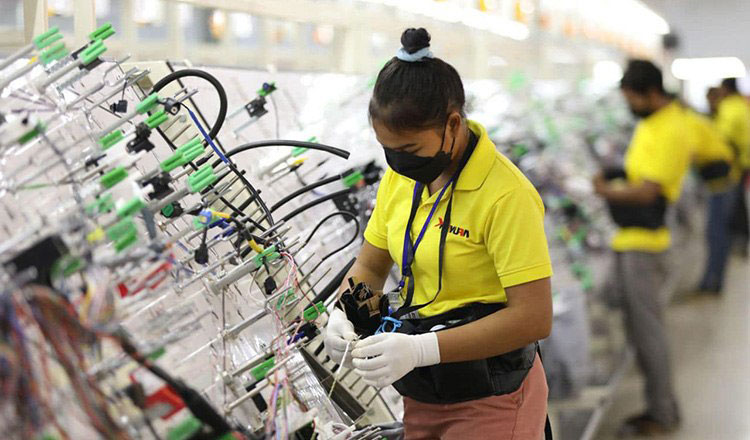
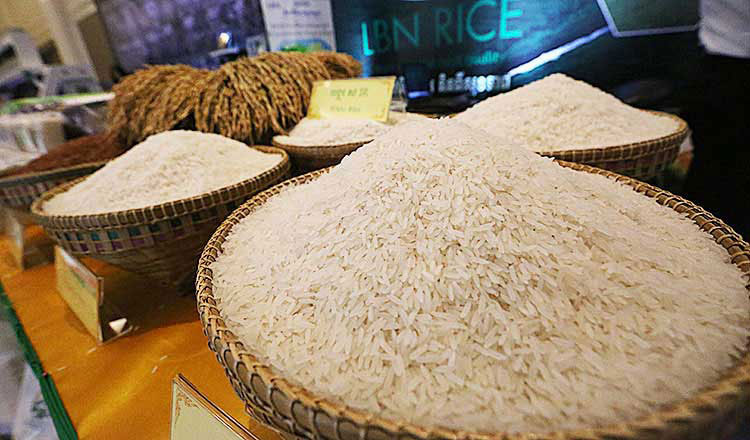
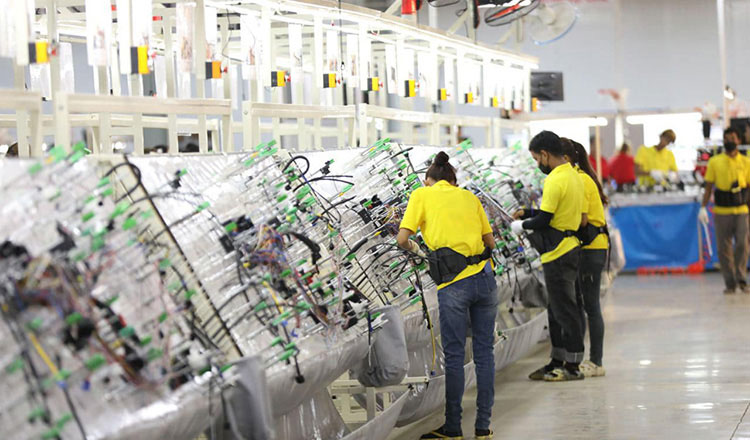
However, recent years have seen gradual diversification into higher-value sectors including electronic components, bicycles, tyres and processed agricultural products.
The country’s import profile also reflects its industrial structure. Cambodia imports large volumes of raw materials used in garment and manufacturing production, along with petroleum products, vehicles, machinery and electronics needed to support economic activity and infrastructure development.
Business leaders have welcomed the latest trade data as a sign of investor confidence in the Cambodian economy. Lim Heng, Vice-President of the Cambodia Chamber of Commerce, said growing demand for Cambodian garments, agricultural goods and electronic components indicates that the country remains an attractive destination for foreign direct investment.
He added that the implementation of the RCEP and Cambodia’s bilateral free trade agreements has played an important role in cushioning the economy against external shocks and global unpredictability.
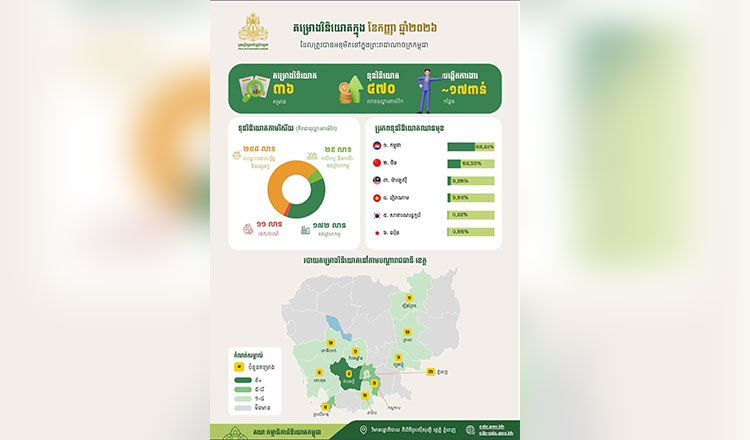
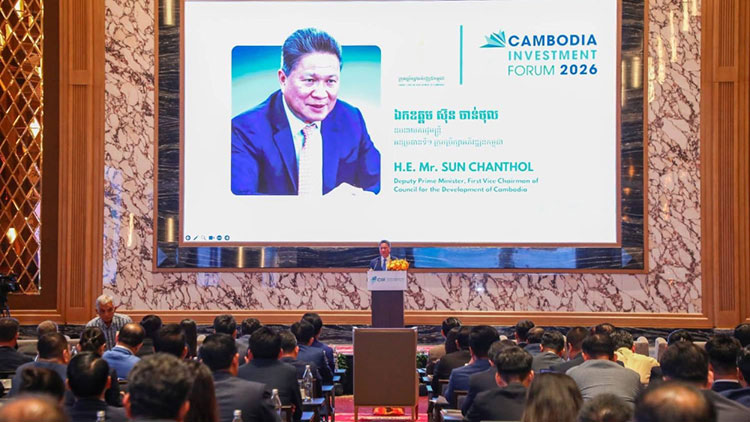
Investment inflows have also remained strong. According to the Council for the Development of Cambodia, the country approved 184 fixed-asset investment projects worth more than $2.6 billion during the January-April period. Many of the projects were concentrated in garment and non-garment manufacturing, infrastructure, agriculture, agro-industry and tourism.
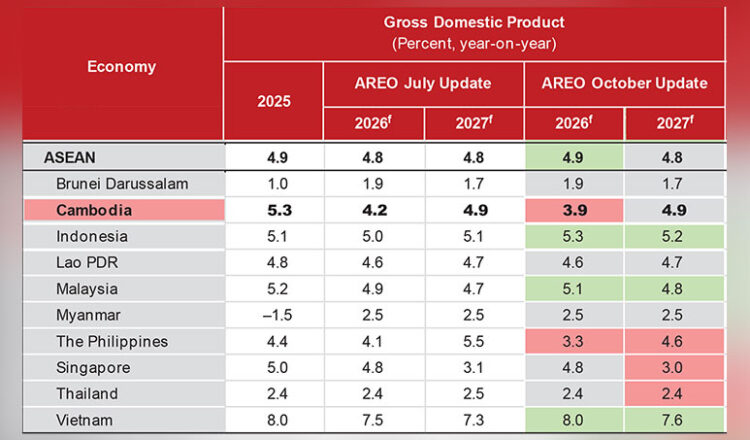
Economists say the combination of rising exports and sustained investment could help Cambodia maintain solid economic growth through the remainder of 2026. However, challenges remain.
Global oil prices continue to fluctuate, while concerns over instability in the Strait of Hormuz and broader geopolitical tensions could increase shipping and logistics costs for exporters.
Officials have stressed the importance of improving trade efficiency and accelerating digital transformation in customs and trade procedures to reduce costs and strengthen competitiveness. The government is also seeking to expand access to new overseas markets while maintaining existing trade partnerships.
Despite external risks, Cambodia’s early 2026 trade performance suggests the country’s economy remains resilient and increasingly diversified, positioning the Kingdom to better withstand volatility in the global economic environment.
- 08:14 12/05/2026