Tensions apart, Cambodia’s trade with Thailand reaches $696M
Tensions apart, Cambodia’s trade with Thailand reaches $696M
According to data, Thailand benefits more from the bilateral trade, as it maintains a substantial trade surplus by exporting significantly more goods to Cambodia than it imports, while the Kingdom continues to face a trade deficit.
Despite land border restrictions, bilateral trade between Cambodia and Thailand reached $696.2 million in the first quarter of 2026, reflecting a 39.4 percent decline from the same period last year. Thailand maintained a significant trade surplus, exporting goods worth over $500 million to Cambodia.
According to the latest trade data from the General Department of Customs and Excise (GDCE), Cambodia imported goods worth $514.9 million from Thailand, representing a 42.4 percent decrease compared to $893.3 million recorded in the first quarter of 2025.
Meanwhile, Cambodia exported goods valued at around $181.3 million, down 29 percent from $255 million in the same period last year, bringing total bilateral trade to $696.2 million, with Thailand maintaining a significant trade surplus.
The Q1 data indicated that Thailand benefits more from the bilateral trade relationship, as it maintains a substantial trade surplus by exporting significantly more goods to Cambodia than it imports, while Cambodia continues to face a trade deficit.
Despite Cambodia’s boycott of Thai-made products, the figures indicated only a moderate decline in overall trade flows, suggesting continued economic relations between the two neighbouring countries.
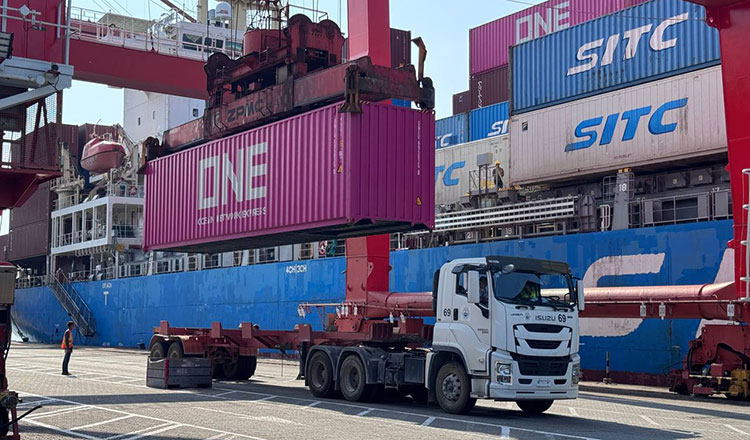
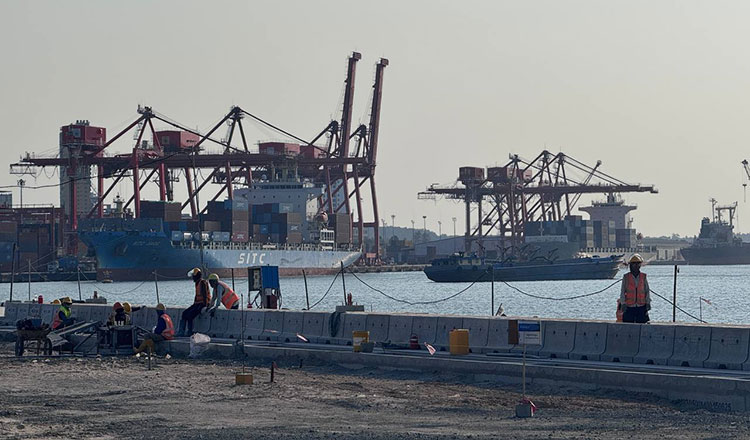
Due to land border closures, trade between Cambodia and Thailand has increasingly shifted to water and air routes, with the majority of goods now transported using ships and boats.
Since the border conflict erupted, the Royal Government was expected to boost trade with Vietnam to compensate for the decline in trade with Thailand. However, GDCE reported that bilateral trade between Cambodia and Vietnam has dropped from $2.34 billion to $2.26 billion, a decline of 3.2 percent in the first three months this year.
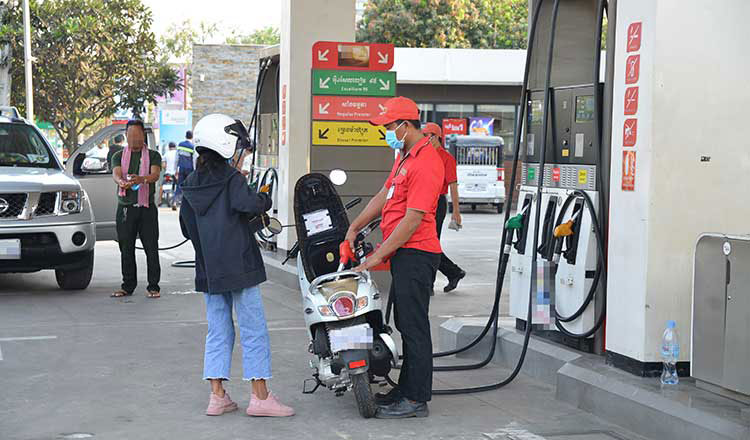
After ending energy imports from Thailand, Cambodia has increased the purchases of oil and fuel from alternative sources, with imports from Singapore rising sharply by 191.8 percent and from Malaysia 49.6 percent.
Speaking to Khmer Times, Chea Chandara, President of the Logistics Supply Chain and Brokers Business Association in Cambodia (LOSCBA), explained that Thailand, a major manufacturing and logistics hub in Southeast Asia, is well integrated into the regional production networks of countries with strong economies and manufacturing bases there.
“Cambodia and Thailand are linked through cross-border value chains where intermediate goods and industrial components are produced in Thailand before being exported for further processing or final assembly in Cambodia,” Chandara said.
According to him, Cambodia’s boycott of Thai-made products is primarily concentrated in downstream consumer goods such as processed foods, cosmetics, and personal accessories, which are directly linked to retail markets.
However, intermediate industrial inputs and semi-processed components continue to flow through established supply chains, sustaining bilateral trade despite shifting consumption patterns and partial demand substitution within domestic markets.
- 07:53 21/04/2026