IMF maintains Cambodia’s growth at 4% in 2026 amid global shocks
IMF maintains Cambodia’s growth at 4% in 2026 amid global shocks
While the four percent GDP growth partially reflects a resilient and stable economy, it also signals the need to continue to promote crucial growth drivers to cope with rising global energy prices, says an economist.
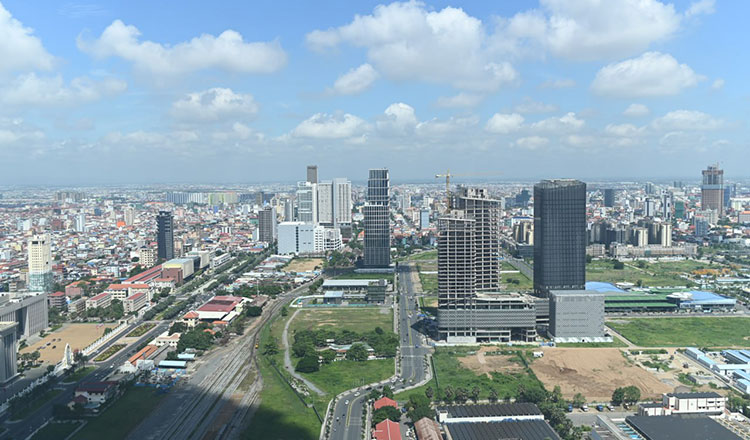
The International Monetary Fund (IMF) has maintained its projection of Cambodia’s economic growth at four percent this year, underscoring the Kingdom’s resilience despite mounting global shocks, including rising energy prices, trade tensions and geopolitical uncertainties.
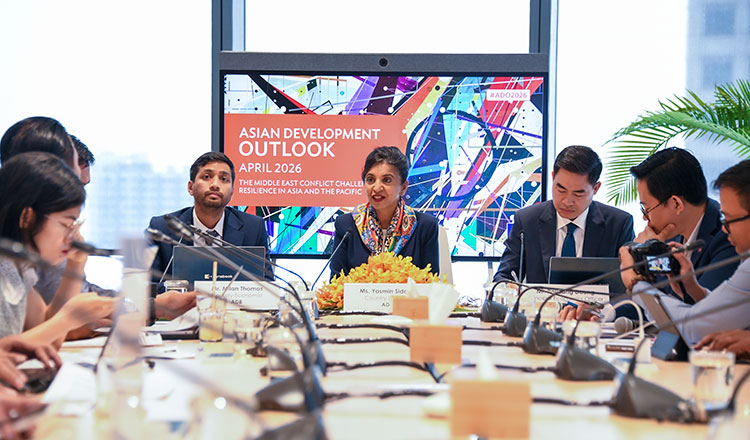
The projection was reported in the “Regional Economic Outlook: Asia and Pacific” launched by Krishna Srinivasan, IMF Director of the Asia and Pacific Department, attended by Thomas Helbling, IMF Deputy Director of the Asia and Pacific Department, during the 2026 Spring Meeting in Washington, DC on April 16.
During the press conference, the IMF regional director said Asia entered 2026 on a solid footing, with growth remaining resilient despite the region bearing the brunt of US tariffs and heightened uncertainty.
However, Srinivasan warned that the region’s high fossil fuel intensity and reliance on conflict-affected areas for key commodities would expose it to new energy shocks. “The shock is raising inflation, weakening external balances, tightening financial conditions, and narrowing policy space,” he noted.
The IMF regional director emphasised that Southeast Asia is highly exposed to energy shocks for three main reasons.
First, the region is energy-intensive, with oil and gas consumption averaging about four percent of GDP—nearly double Europe’s level—with countries such as Malaysia and Thailand exceeding 10 percent.
Second, limited domestic production means this high energy demand translates into strong import dependence. Net oil and gas imports account for around 2.5 percent of GDP across the region, rising to about eight percent in economies such as Singapore and Thailand.
Third, the region is also vulnerable to non-energy imports. Disruptions to fertilisers and petrochemical supplies, including helium and sulphur, could trigger broader supply chain pressures if the conflict persists.
According to the “Regional Economic Outlook: Asia and Pacific” report, the IMF forecasts economic growth for the Emerging Markets and Developing Economies (EMDEs) at 4.9 percent in 2026 and 4.8 percent in 2027.
Within the EMDEs, Cambodia’s economy is projected to grow at four percent in 2026, unchanged from the IMF’s October 2025 forecast, despite ongoing challenges such as border conflict, tariff uncertainty and conflicts in the Middle East.
Meanwhile, the Kingdom’s economic growth is expected to rebound to 4.7 percent in 2027, up from the earlier projection of 4.5 percent, reflecting a gradual recovery in external demand and domestic activity.
When asked about the IMF’s latest forecast, economist Duch Darin told Khmer Times that four percent GDP growth for Cambodia in 2026 partially reflects a resilient and stable economy, “but also signals the need to continue to promote crucial growth drivers to cope with rising global energy prices.”
"I believe that to sustain inclusive economic growth amid global economic uncertainty, Cambodia should continue to strengthen productivity by upskilling the labour force, along with adopting modern digital solutions in manufacturing and services. In addition, Cambodia should continue to diversify its export markets,” he added.
Among neighbouring countries, the IMF forecasted Vietnam’s economic growth at 7.1 percent this year, Lao PDR at four percent and Thailand at 1.5 percent.
Meanwhile, IMF also foresees public debt of Cambodia reaching approximately 66 percent of its GDP.
In Thailand’s case, the IMF regional director suggested that the Thai Government places greater emphasis on using fiscal resources more efficiently. “Thailand’s debt is on the higher side, but it’s not among the weakest in terms of the levels of debt, but this also puts the onus on making sure that you use your fiscal resources wisely,” Srinivasan said.
According to the IMF, the war in the Middle East has triggered a new energy disruption that is now testing Asia’s economic resilience. Higher oil and gas costs are pushing up inflation, widening external imbalances and limiting governments’ policy space—particularly in economies that rely heavily on imported fuel.
While Asia is still expected to lead global growth, risks have increased if the situation persists or intensifies. The IMF stressed the need for targeted policy responses, including protecting vulnerable groups, allowing costs to adjust, anchoring inflation expectations and accelerating reforms to strengthen resilience, from stronger social safety nets to more reliable and sustainable energy systems.
- 07:58 20/04/2026