Cambodia draws on RCEP, ASEAN dynamics to bolster trade
Cambodia draws on RCEP, ASEAN dynamics to bolster trade
Cambodia’s 18 percent growth in trade in the first quarter of 2026 points to the fact that the Kingdom is becoming deeply integrated into the Asia-Pacific economic architecture, specially with the Regional Comprehensive Economic Partnership (RCEP) and ASEAN. According to a recent report by the Ministry of Commerce, the RCEP remained Cambodia’s largest market, accounting for 64 percent of its total trade volume of $17.58 billion in the first quarter of the year. Similarly, trade volume with ASEAN reached $4.86 billion in the first quarter of 2026, a 10.5 percent year-on-year increase. In the face of global uncertainties and ongoing supply chain disruptions, RCEP offers Cambodia a stable market. But beyond trade volumes, these blocs are reshaping Cambodia’s investment landscape too. Lower tariffs and predictable trade rules have made the country more attractive to foreign investors. Manufacturers are increasingly viewing Cambodia as part of a China+1 strategy, relocating or expanding production to take advantage of lower labour costs. So what are the key takeaways? As one expert tells Khmer Times, once Cambodia graduates from the Least Developed Country status, it will lose trade preferences from Western markets, and RCEP shall then become a safety net for a smooth transition to a high-income country. Cambodia can tap into this huge market to perpetuate its economic growth
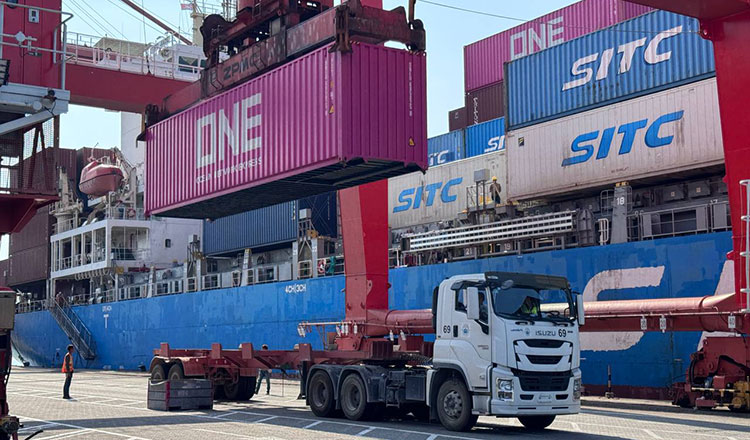
Cambodia’s trade landscape is being reshaped by deeper regional integration, with the Regional Comprehensive Economic Partnership (RCEP) and ASEAN cooperation emerging as twin engines driving export growth, investment inflows, and supply chain connectivity in the face of growing geopolitical challenges and a worsening Middle East conflict.
Since the RCEP agreement came into force in 2022, Cambodia has seen a marked expansion in trade with member countries. Official data show that trade between Cambodia and RCEP partners reached $11.26 billion in the first quarter of 2026, a year-on-year increase of 18.5 percent.
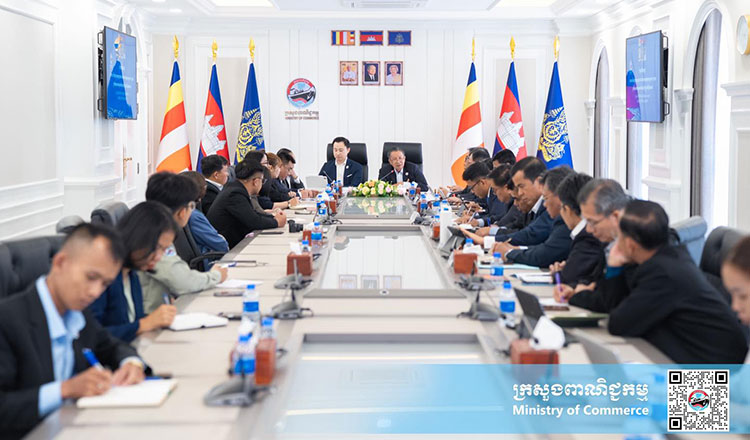
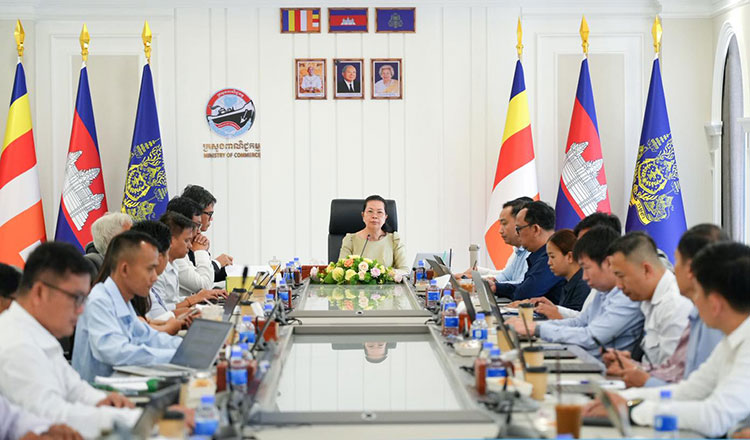
According to an official report compiled by the Ministry of Commerce recently, the Kingdom’s exports to fellow RCEP member countries were valued at $2.82 billion during the January-March period, up 4.2 percent, while its imports reached $8.44 billion, up 24.2 percent.
The report showed that the RCEP remained Cambodia’s largest market, accounting for 64 percent of the Kingdom’s total trade volume of $17.58 billion in the first quarter of the year.
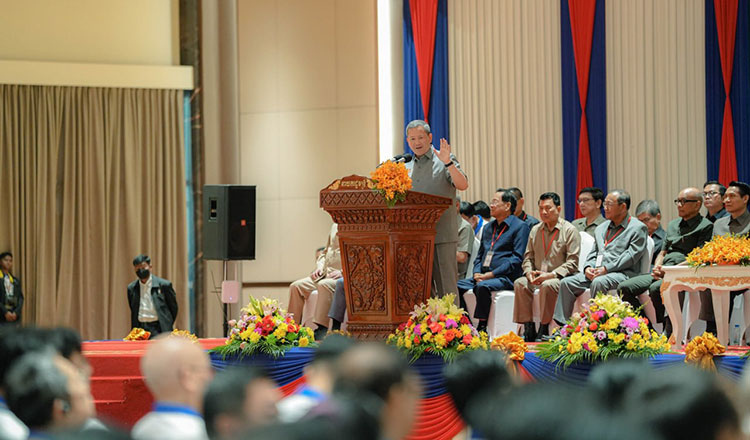
Cambodia’s top five trading partners under the RCEP, according to the report, are China, Vietnam, Singapore, Japan, and Thailand. Penn Sovicheat, Secretary of State and Spokesman of the Ministry of Commerce, said that RCEP, the world’s largest free trade pact, has played a crucial role in boosting Cambodia’s trade growth.
“RCEP is a key driver of our long-term export growth and a magnet for attracting more foreign direct investment to Cambodia,” he said, according to Chinese media Xinhua last week.
Looking further back, in 2025, Cambodia’s trade with RCEP was estimated to be about $40.2 billion, a year-on-year increase of more than 16 percent, underscoring the pact’s growing importance to the Kingdom’s economy.
RCEP in 2025 accounted for roughly 61 percent of Cambodia’s total trade, making it the country’s largest trading bloc. This reflects Cambodia’s increasing reliance on regional markets, particularly major partners such as China, Vietnam, Malaysia, Japan and Singapore.
At the heart of RCEP’s impact is its sweeping reduction of tariffs and simplification of trade rules. The agreement, which includes all 10 ASEAN member states plus five key Asia-Pacific partners (China, Japan, South Korea, Australia and New Zealand), has created a unified framework that lowers trade barriers and improves market access.
Government officials say the agreement is not only boosting exports but also strengthening Cambodia’s role in regional supply chains. Preferential tariffs and harmonised rules of origin allow Cambodian producers to source materials across member countries and export finished goods more competitively.
Another report recently showed that Cambodia’s trade volume with its fellow ASEAN Member States reached $4.86 billion in the first quarter of 2026, a 10.5 percent year-on-year increase.
The Kingdom exported products worth $1.6 billion to other ASEAN countries in the January-March period, down seven percent year on year.
Meanwhile, total imports amounted to $3.26 billion, up 22 percent, according to the Ministry of Commerce report. Cambodia’s trade with ASEAN accounted for 27.6 percent of the Kingdom’s total trade in the first quarter.
According to Thong Mengdavid, Deputy Director at China-ASEAN Studies Centre at CamTech University, the Cambodian government always considers RCEP as a geoeconomic lifeline that allows the country to navigate global uncertainty by embedding its economy within a rapidly growing and increasingly self-reinforcing regional trade ecosystem.
“During a period marked by uncertainty, especially trade tensions involving major economies, RCEP acts as a ‘shock absorber,’ allowing Cambodia to diversify away from overdependence on single markets like the United States,” Mengdavid told Khmer Times.
“Over 18 percent growth in trade in the first quarter of this year highlights that Cambodia is becoming more deeply integrated into the Asia-Pacific economic architecture, rather than relying predominantly on traditional Western markets,” he said.
According to Mengdavid, the shift is driven by tariff reductions, streamlined rules of origin, enhanced supply chain integration, and increased investment flows, all of which facilitate greater access for Cambodian exports to RCEP member markets.
“Amid global uncertainties, regional conflicts, geopolitical competition, and ongoing supply chain disruptions, RCEP offers Cambodia a more stable regional market and stronger collective bargaining capacity. This, in turn, encourages Cambodia to advance policy coordination and better align with broader regional economic integration frameworks,” he added.
While RCEP provides the broader framework, ASEAN remains the backbone of Cambodia’s trade integration. The regional bloc initiated the RCEP negotiations and continues to serve as a platform for intra-regional trade, infrastructure cooperation, and economic coordination.
Trade within ASEAN accounts for a significant share of Cambodia’s exports, particularly in agriculture and intermediate goods. Neighbouring countries such as Vietnam and Laos play a critical role in cross-border trade and logistics, helping Cambodian businesses access regional markets more efficiently.
ASEAN initiatives—ranging from the ASEAN Free Trade Area (AFTA) to connectivity projects—have reduced trade costs and improved transport links over the years. This has enabled Cambodia to integrate more deeply into regional production networks, particularly in textiles and electronics.
Investment and supply chains
Beyond trade volumes, RCEP and ASEAN are reshaping Cambodia’s investment landscape too. Lower tariffs and predictable trade rules have made the country more attractive to foreign investors seeking to diversify supply chains within Asia.
Manufacturers are increasingly viewing Cambodia as part of a “China+1” strategy, relocating or expanding production to take advantage of lower labour costs and preferential access to regional markets.
This trend is particularly evident in export-oriented industries such as garments, footwear, and electronics assembly. Cambodia’s integration into regional value chains allows firms to import raw materials from neighbouring countries and export finished products within the RCEP bloc with fewer barriers.
According to Vichet Lor, Vice President of the Cambodia-Chinese Commerce Association (CCCA), ever since the regional economic pact came into force on January 1, 2022, Cambodia’s international trade with RCEP countries has grown significantly year on year, even during challenging times and global uncertainties.
“As Cambodia prepares to graduate from the Least Developed Country status, which will ultimately lead to loss of trade preferences from Western markets, it is standing at a critical crossroad as RCEP becomes a pivotal component of a safety net for the country’s smooth and successful transition to a high-income country,” he told Khmer Times.
“On top of that, RCEP membership has enabled Cambodia to become an investment magnet to attract significantly more FDI and create more employment opportunities as the country seeks to diversify its export market beyond Europe and the United States.
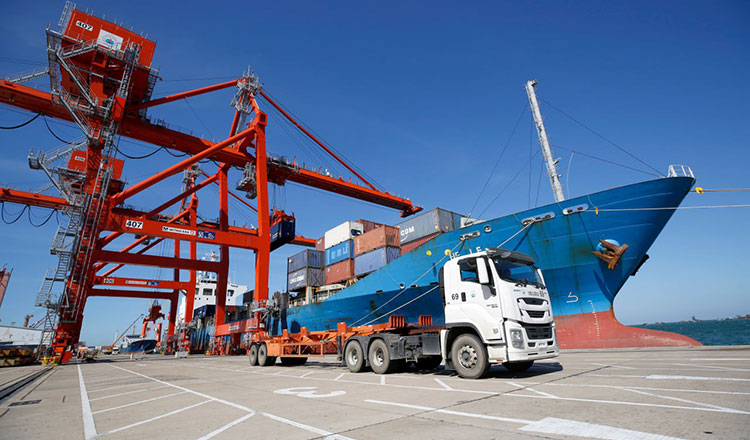
“RCEP being the largest regional trade pact in the world, representing roughly one third of global GDP and one third of global population, Cambodia can significantly tap into this huge market to perpetuate its economic growth and further optimise its trade policy to maximise its potential. Cambodia’s key infrastructure development projects like the Techo International Airport and Funan Techo Canal, plus the ongoing development of the deep-sea port in Sihanoukville, work hand in hand and in synchrony with regional value chain integration as the country shifted from a raw material exporter to a higher value-added goods exporter.”
According to Vichet, this shift will not be possible without tapping into the enormous market potentials of RCEP and ASEAN and maximising the ‘China Plus One’ strategy to allow Cambodia to eventually become a regional logistics and export hub.
Meanwhile, regional trade agreements have also provided Cambodia with a buffer against external shocks. While traditional markets such as the United States remain important, accounting for a large share of garment exports, shifting geopolitical dynamics and tariff uncertainties have highlighted the need for diversification.
RCEP and ASEAN offer alternative markets and supply routes, reducing Cambodia’s dependence on any single trading partner. The agreements also promote resilience by strengthening regional cooperation in areas such as energy, logistics, and digital trade.
Despite the gains, challenges persist. Cambodia continues to run a trade deficit with several RCEP countries, importing significantly more than it exports. In 2025, imports from the bloc exceeded $30 billion, reflecting the country’s reliance on foreign raw materials and machinery.
Moreover, increased competition within the free trade area means Cambodian firms must improve productivity and move up the value chain to remain competitive.
Analysts say Cambodia is well-positioned to benefit further from regional integration if it continues to upgrade infrastructure, diversify exports, and attract higher-value investment.
With ASEAN providing the institutional backbone and RCEP opening wider markets, Cambodia’s trade trajectory is increasingly tied to the dynamics of Asia-Pacific integration.
As regional supply chains deepen and trade barriers fall, the Kingdom’s role as an emerging manufacturing and export hub is expected to expand—cementing RCEP and ASEAN as central pillars of its economic future.
However, according to analysts, Cambodia continues to face competition from more industrialised ASEAN economies, as well as limitations in infrastructure and workforce skills. Non-tariff barriers within the region also persist, sometimes constraining the full benefits of integration.
Still, trade data show that Cambodia’s exports and imports within ASEAN and RCEP have grown steadily over the past several years, reflecting the tangible benefits of regional cooperation.
Policymakers argue that deeper integration—through improved connectivity, digital trade initiatives, and regulatory harmonisation—will be essential to sustaining this momentum.
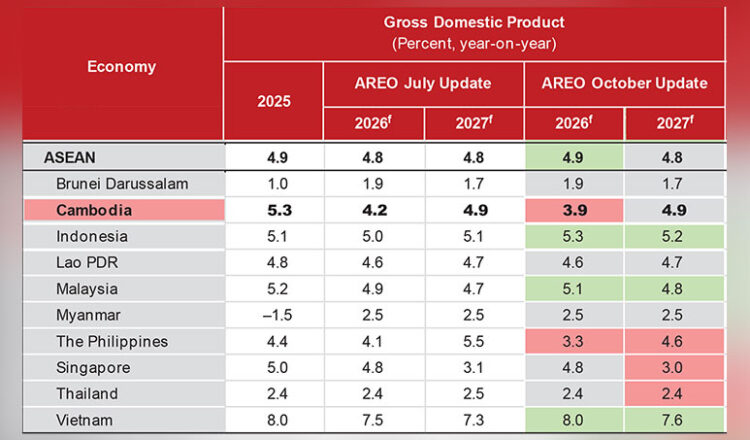
According to analysis by the International Monetary Fund, much of the increase in intra-ASEAN trade can be explained by the region’s strong economic growth rates, which are projected to continue boosting trade faster than the global average.
Trade openness and policy frameworks are other decisive factors. The establishment of the ASEAN Free Trade Area (AFTA) marked a turning point by reducing tariffs and encouraging cross-border exchange. Within RCEP, however, there are also concerns about a slowdown in China.
According to Vichet, growth is driven by private consumption but faces challenges from China’s economic deceleration and high trade barriers. “The growth of private consumption in the East Asia and the Pacific region offers enormous growth opportunities for Cambodia to tap into and position itself as a manufacturing and export hub given Cambodia favourable investment law and corporate tax incentives,” he said.
In his view, China’s economic deceleration has provided Cambodia with added opportunities to attract increased investment from Chinese investors moving capital out of the country, which has been evident in the rise of Chinese-owned factories operating across various Special Economic Zones in Cambodia.
“With India reconsidering joining RCEP amidst the US imposing heavy tariffs on its exports to the United States and Hong Kong officially submitting its request for membership to RCEP, the eventual membership of India and Hong Kong will be a game changer for Cambodia,” he opined.
According to Vichet, Cambodia will inherently become the strategic gateway via India to the Global South and via Hong Kong to the Greater Bay Area. “The future looks bright with infinite and boundless opportunities for Cambodia as this new landscape unfolds in the foreseeable future,” he said.
Meanwhile, Cambodia’s international trade reached $16.93 billion in the first three months of 2026, representing a 17.2 percent increase year-on-year, according to data released by the General Department of Customs and Excise (GDCE) recently. The broad-based expansion highlights the country’s steady recovery and growth following recent global disruptions, including supply chain bottlenecks and inflationary pressures.
Vietnam remained Cambodia’s third-largest trading partner after China and the US and its largest ASEAN partner, with bilateral trade totalling $2.27 billion in the first quarter of 2026. Singapore, Malaysia, Indonesia and Thailand are the other leading trade partners of the country in the ASEAN region. While trade with Singapore jumped nearly 192 percent, trade with Malaysia increased by nearly 50 percent, recently-published official trade data revealed.
- 14:17 27/04/2026