Cambodia’s GFT exports rise over 6% in first two months
Cambodia’s GFT exports rise over 6% in first two months
The garment, footwear and travel goods sector remains a central pillar of the country’s export performance and industrial employment. With demand for apparel and travel goods continuing to recover globally, the sector is expected to remain a key driver of Cambodia’s economic growth in 2026.
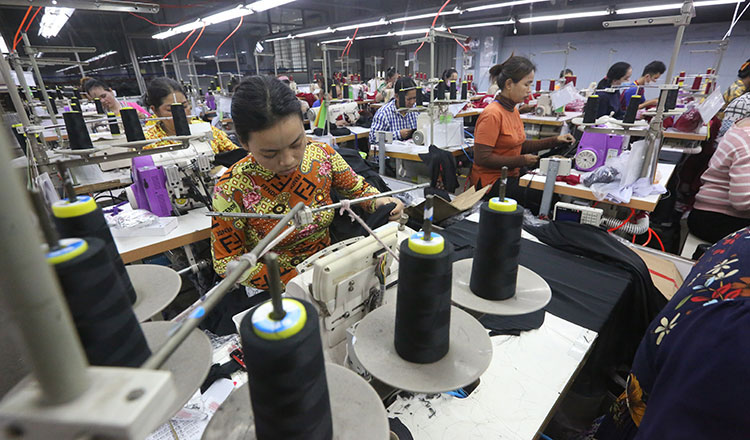
Despite mounting geopolitical challenges, Cambodia’s garment, footwear and travel goods (GFT) exports continued their strong growth trajectory in early 2026, rising by 6.19 percent year-on-year in the first two months of the year, according to the latest trade statistics from the General Department of Customs and Excise (GDCE).
The report shows that exports in this category reached approximately $2.59 billion in January to February 2026, compared with $2.44 billion during the same period in 2025. The GFT exports also constitute nearly 50 percent of the country’s total exports coming to $5.22 billion in the first two months of the year.
The data highlight the continued dominance of the garment industry in Cambodia’s export structure. Knitted apparel alone accounted for $1.1 billion in shipments during the first two months of the year, representing the largest share of the country’s manufacturing exports. Non-knitted apparel followed with $715 million, while leather travel goods and footwear exports reached $358 million and $344 million, respectively. Exports of other made-up textile articles totalled about $76 million, showing one of the fastest growth rates among the group.
Overall, the GFT sector remains the backbone of Cambodia’s export economy. Industry reports indicate that garments, footwear and travel goods together account for around half of the country’s total export value and employ more than 900,000 workers, most of them women.
The steady rise in exports reflects sustained global demand for apparel and travel goods, particularly in major markets such as the United States, the European Union, Canada and Japan.
Cambodia has also benefitted from ongoing investment in its manufacturing sector and the relocation of some production from other Asian economies seeking lower production costs.
Recent annual figures underline the sector’s importance. Cambodia exported more than $15 billion worth of GFT products in 2025, marking strong growth compared with previous years.
Garments accounted for the largest portion of that total, while footwear and travel goods have also expanded steadily as manufacturers diversified their product lines.
Industry leaders attribute the sector’s resilience to Cambodia’s competitive labour costs, improving infrastructure and trade agreements that provide preferential access to major markets. The country hosts more than 1,800 garment factories, many of which are operated by foreign investors from Mainland China, Taiwan and South Korea.
According to a report by the Ministry of Labour and Vocational Training in February, Cambodia added 310 new garment factories last year, bringing the total to 1,876 factories, up 19 percent from 1,566 factories by the end of 2024.
Despite the positive export figures, the industry faces several challenges. Rising global protectionism, potential tariff changes in key markets and competition from other manufacturing hubs such as Vietnam and Bangladesh could affect future growth. Analysts also note the need for Cambodia to move up the value chain by expanding textile production, improving supply chains and increasing automation.
Nevertheless, the latest trade statistics suggest that Cambodia’s GFT sector remains a central pillar of the country’s export performance and industrial employment. With demand for apparel and travel goods continuing to recover globally, the sector is expected to remain a key driver of Cambodia’s economic growth in 2026.
- 08:51 12/03/2026