Big capital alliances race to build crypto asset exchanges
Big capital alliances race to build crypto asset exchanges
The turning point came after the Government issued Resolution No. 05/2025/NQ-CP in September 2025, laying the groundwork for a five-year pilot of the crypto asset market.

To qualify for pilot licensing, enterprises must meet a minimum charter capital of VNĐ10 trillion. — Photo baochinhphu.vn |
Việt Nam's first digital asset market is witnessing an unprecedented influx of large-scale financial alliances, as leading corporations and financial ecosystems position themselves for a foothold in what is shaping up to be a tightly regulated but highly competitive arena.
The turning point came after the Government issued Resolution No. 05/2025/NQ-CP in September last year, laying the groundwork for a five-year pilot of the crypto asset market.
Since then, the sector has rapidly evolved from a fragmented landscape into a structured race dominated by major players with substantial financial and technological capacity.
A defining feature of this new phase is the stringent entry requirement. To qualify for pilot licensing, enterprises must meet a minimum charter capital of VNĐ10 trillion (US$380 million), effectively creating a high barrier that only a handful of players can overcome.
This condition has sharply narrowed the field, with only a limited number of companies capable of meeting the threshold.
Among the most notable entrants is Vimexchange, established with charter capital of VNĐ10 trillion. Its shareholder structure reflects a powerful consortium, including VIMEDIMEX Medi-Pharma JSC as the dominant investor alongside securities and gold trading firms.
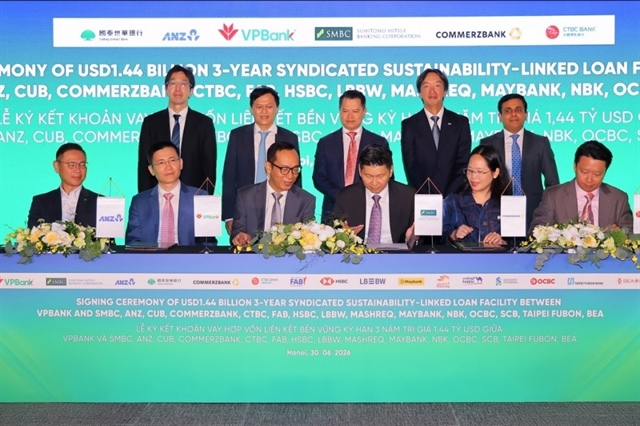
Similarly, Vietnam Prosperity Crypto Assets Exchange JSC (CAEX), part of the VPBank ecosystem, has drawn attention after rapidly scaling its charter capital from just VNĐ25 billion to VNĐ10 trillion by late February, meeting the regulatory threshold for participation in the pilot programme. The company's shareholder base includes VPBank Securities as well as other private investors.
These developments highlight how financial institutions, particularly banks and securities firms, are leveraging their ecosystems to enter the digital asset space.
Their involvement signals a shift toward institutionalisation, with a focus on compliance, liquidity, connectivity and risk management infrastructure.
Beyond the banking sector, large private conglomerates have also begun to join the race.
In mid-March, Sun Group established a digital asset company with charter capital of VNĐ1 trillion, holding a controlling stake while partnering with PetroVietnam Securities. Although not yet at the required capital threshold, the move underscores growing interest from diversified business groups seeking early positioning in the market.
At the same time, smaller entities and fintech-orientated firms are also emerging, though with significantly lower initial capital. DNEX, for instance, was launched with just VNĐ2 billion, backed by a group of financial technology and asset management companies.
These players may face challenges in scaling up to meet regulatory requirements, but their presence reflects the broader ecosystem forming around digital assets.
With regulatory requirements becoming clearer, capital flows into digital assets are being gradually redirected back into a domestic regulatory framework. 2026 is expected to be a hinge year, when the first digital-asset exchanges officially enter pilot operation, generating fresh impetus for Việt Nam's broader economy.
Most recently, the Minister of Finance issued Circular No. 15/2026/TT-BTC, which provides accounting principles for organisations participating in the country's digital-asset market during the pilot phase under the scope of Government Resolution No. 05/2025/NQ-CP dated September 9, 2025, on piloting the digital-asset market in Việt Nam.
The Circular states that digital-asset service providers, digital-asset issuers and domestic investors must fully comply with the Law on Accounting, Vietnamese accounting standards, the enterprise accounting regime, and relevant legal provisions governing the digital-asset market.
These entities must account under the enterprise accounting regime promulgated with Circular No. 99/2025/TT-BTC dated October 27, 2025, and follow the additional requirements set out in this Circular for bookkeeping, preparing and presenting financial statements.
If a digital asset issuer or a domestic investor is a business or organisation that applies a separate accounting regime, it shall continue to use that regime while simultaneously applying the provisions of this Circular for accounting, bookkeeping and financial statement preparation and presentation.
- 09:33 19/03/2026