

Cambodia’s gross lending reaches $66.5B by August
Cambodia’s gross lending reaches $66.5B by August
The high volume of gross lending underscores the sector’s vital economic role, while its stagnant growth points to ongoing challenges in the property market and muted borrower demand.
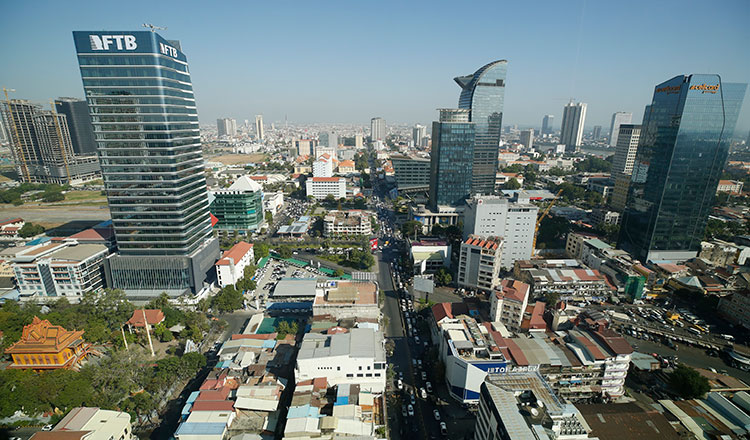
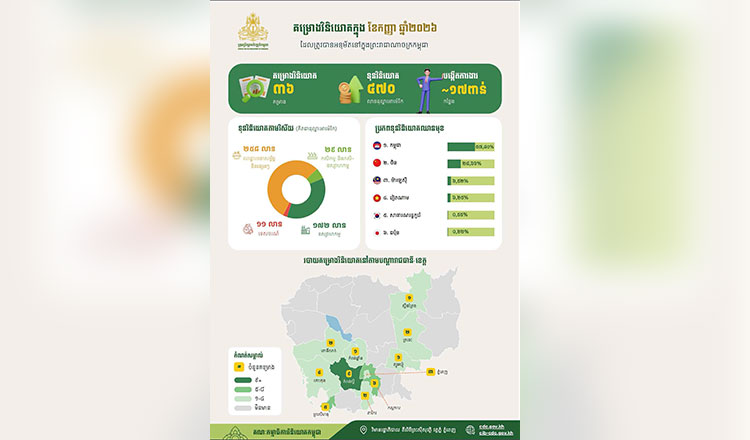
The National Bank of Cambodia (NBC) reported that gross lending reached 266.05 trillion riels (approximately $66.5 billion) as of August 2026, with real estate remaining the largest recipient of credit, accounting for 20.7% of total lending despite virtually flat year-on-year growth.
The figures, released by the NBC on October 14, covered lending by depository-taking institutions (DTIs) and non-depository-taking institutions (NDTIs), reflecting the scale of credit extended across Cambodia’s financial system.
DTIs, which include commercial banks and microfinance deposit-taking institutions, accounted for 254.02 trillion riels ($63.5 billion) in gross loans, up 4.9% from 242.12 trillion riels a year earlier. Lending also increased 1.4% from 250.57 trillion riels at the end of December 2025.
NDTIs, comprising specialised banks, microfinance institutions and financial leasing companies, recorded 12.03 trillion riels ($3 billion) in gross loans during the same period. Combined, the two groups held approximately 266.05 trillion riels in outstanding gross loans.
Real estate remained the largest recipient of DTI lending, with outstanding credit reaching 52.52 trillion riels ($13.1 billion). However, lending to the sector was virtually unchanged from August 2025, contrasting with stronger growth in several other economic activities.
The significant amount of gross lending to real estate reflected the sector’s importance to the country’s economy, while its stagnant growth highlighted continued challenges facing the property market and borrower demand.
Speaking to Khmer Times, an independent real estate consultant Mean Sovannarith said many Cambodians borrowed money to expand their businesses or invest in property, including land and houses, making responsible lending increasingly important amid economic challenges.
He underlined that the real estate sector had faced multiple challenges during the first half of this year, particularly in residential housing projects, putting pressure on developers and property buyers.
Sovannarith noted that the International Monetary Fund had forecast continued weakness in Cambodia’s real estate sector, with sluggish growth and subdued buyer demand. He urged relevant ministries and financial institutions, particularly the NBC and microfinance institutions, to take measures to address the challenges.
“Financial institutions should conduct proper assessments before approving loans, whether borrowers intend to expand their businesses or purchase property,” he said.
He also expressed concern over difficulties in Cambodia’s financial sector, calling on lenders to ensure loans were extended to borrowers who could use the funds productively and meet their repayment obligations.
He urged the government to consider relief measures and allow borrowers and relevant stakeholders sufficient time to restructure loans where necessary.
“Restoring foreign investor confidence in Cambodia’s real estate sector was also important, as investment could support business activity and employment, helping workers maintain their incomes and repay their debts, he said.
He added that the departure of Chinese investors and concerns surrounding online scams had increased pressure on the property market and contributed to job losses, further complicating the financial situation for businesses and households.
Sovannarith urged the central bank to consider flexible solutions, including extending preferential loan-restructuring measures where appropriate, to help borrowers manage repayments according to their financial capacity.
- 08:00 21/10/2026