Cambodia streamlines rules to boost foreign investment
Cambodia streamlines rules to boost foreign investment
While long-term growth hinges on innovation and productivity, well-crafted laws serve a dual purpose: safeguarding citizens and stimulating investment, business growth, and market competition.
Cambodia is upgrading its legal and regulatory standards to attract more investors. According to senior government officials, implementing stronger regulatory impact assessments will reduce unnecessary business costs, improve regulatory certainty, and foster a more attractive climate for investment.
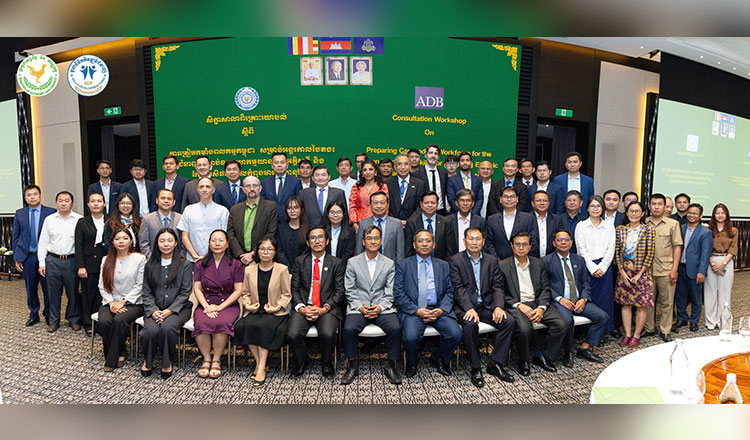
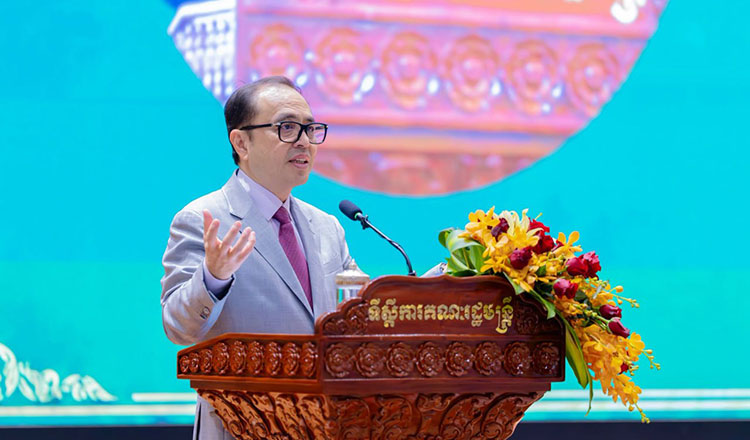
Permanent Deputy Prime Minister and Minister in Charge of the Office of the Council of Ministers (OCM) Vongsey Vissoth made the remarks on Tuesday while presiding over a workshop on Regulatory Impact Assessment (RIA) and Good Regulatory Practice (GRP), jointly organised by the Economic, Social and Cultural Council of the Office of the Council of Ministers and the British Embassy in Phnom Penh.
An official statement from the OCM noted that the workshop drew approximately 500 institutional representatives and ministry officials.
Abigail Fryer, the British Embassy’s Deputy Head of Mission, also attended the event.
Highlighting that Cambodia’s long-term growth hinges on productivity, innovation, and institutional quality as the country pursues deeper economic integration and development, Vissoth stressed that legal reform is an essential part of both economic and institutional reform, noting that well-designed regulations can protect citizens and the public interest while supporting investment, entrepreneurship and competition.
Conversely, he noted that flawed regulations discourage investment by causing unnecessary burdens, overlapping duties, regulatory uncertainty, and low compliance rates.
“Our goal is not to create as many laws as possible, nor is it to create no laws at all. What matters most is to develop good laws that serve clear and appropriate purposes and ensure they are properly and strictly implemented,” Vissoth said.
He said RIA is not new to Cambodia but is now being revitalised as part of a longer-term effort to build a stronger regulatory system. This includes institutionalising RIA, strengthening capacity and developing the necessary legal, policy and procedural frameworks.
RIA is an important tool for developing better policies and regulations based on in-depth and scientific analysis. Vissoth said impact assessments should be conducted before or alongside the drafting of legislation rather than only when a draft is nearing completion.
He explained that while RIA is one component of the regulatory system, GRP covers the entire regulatory cycle, from identifying problems and analysing policy options to consultation, impact assessment, drafting, implementation, monitoring, evaluation and review.
The success of RIA will depend on the commitment and capacity of ministries and institutions responsible for implementing it, Vissoth said. The Office of the Council of Ministers will therefore provide training to ministries and institutions so they can eventually carry out RIA independently and sustainably.
He also called for greater domestic funding to support legislative functions, legal reform and RIA, saying Cambodia should not rely solely on development partners to finance these reforms.
The push for better regulation comes as Cambodia seeks to strengthen its institutional framework and improve the business environment, with regulatory efficiency increasingly seen as an important factor in attracting investment and improving the competitiveness of the economy.
He reaffirmed that GRP has also been incorporated and considered as part of the strategic framework of the Royal Government’s 20-year Legal Reform Programme, which rests on two major pillars.
He said that the first is building an integrated legal system that ensures consistency, effectiveness, coherence, legal supremacy and legal certainty, while being based on international best practices and adapted to Cambodia’s context. The second pillar is building a culture of the rule of law.
Through this important workshop, the Permanent Deputy Prime Minister also expressed his expectation that the discussions would provide important inputs for the development of the above-mentioned policy.
“The policy will serve as a strong roadmap to promote Cambodia’s economic growth, improve the business environment and people’s livelihoods, while these efforts will open a new chapter for Cambodia toward resilient and sustainable long-term development.”
On her part, Fryer expressed support for the Cambodian Government’s efforts to improve the quality, transparency and effectiveness of its policies and regulations, saying good regulation is essential to building a strong and competitive economy, with RIA playing a central role in ensuring that policies and regulations are well-designed and effective.
“Good regulatory practice is extremely important for Cambodia because it affects every part of the country’s economy and society,” she added.
- 08:07 27/08/2026