AMRO warns over Cambodia’s 83.4% dollarised broad money
AMRO warns over Cambodia’s 83.4% dollarised broad money
Sustaining structural de-dollarisation efforts remains imperative for the National Bank of Cambodia to safeguard the financial sector against dollar-liquidity vulnerabilities.
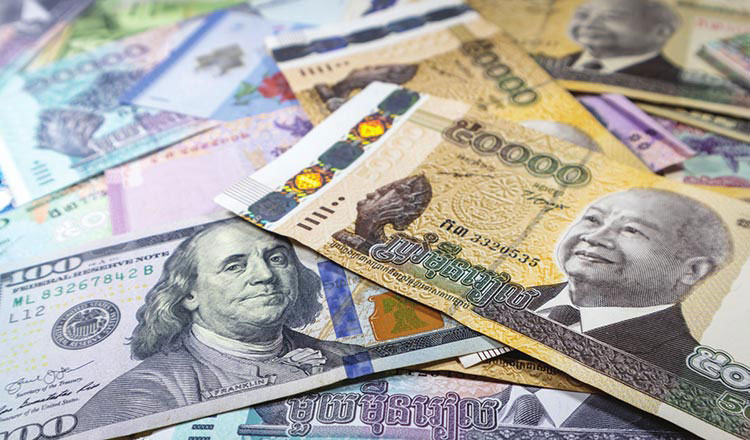
The ASEAN+3 Macroeconomic Research Office (AMRO) Tuesday warned that Cambodia’s high reliance on the US dollar, which accounted for 83.4 percent of broad money, could pose challenges for banks in mobilising dollar liquidity during market stress.
In an analysis published on September 1, AMRO examined US dollar liquidity conditions in Cambodia’s banking system, highlighting the importance of where banks hold their US dollar liquidity and how readily it can be accessed when needed.
According to AMRO, US dollars accounted for 83.4 percent of broad money at the end of 2025, underscoring the need for banks to maintain sufficient liquidity to meet substantial demand for the currency.
However, the National Bank of Cambodia’s ability to supply US dollars as a lender of last resort is more constrained than that of central banks issuing the currency predominantly used in their economies.
Banks can draw on three main sources of US dollar liquidity: US dollar assets held at the NBC, foreign assets held overseas, and other sources, including liquid assets held at other banks and short-term loans due for repayment.
Because public data on banks’ US dollar assets held overseas and at other banks are limited, AMRO used banks’ US dollar liquidity held at the NBC as a proxy for onshore liquidity conditions.
The analysis found that, relative to deposits, the measure has declined gradually since 2021, indicating that liquidity held at the NBC has fallen relative to banks’ deposit base.
The current high level of non-performing loans (NPLs) adds to the challenge. While they are not directly linked to US dollar liquidity risk, NPLs reduce interest and principal repayments, weakening banks’ cash inflows. Depositor herding could also amplify liquidity pressures at stressed banks through indirect channels.
Meanwhile, domestic banks have increased their overseas investments. Between 2024 and 2025, banks’ net foreign assets increased by $10.5 billion, three times the increase in foreign exchange reserves over the same period.
AMRO said banks increased their overseas asset holdings while repaying foreign liabilities, effectively deploying more US dollar liquidity offshore. While this can provide higher returns and greater diversification, it can also reduce the amount of US dollar liquidity available onshore.
However, AMRO noted that overseas assets could provide an additional liquidity buffer if they are sufficiently liquid and can be redirected readily to the domestic market when needed.
To strengthen US dollar liquidity resilience, AMRO underlined that policymakers should continue to monitor liquidity conditions closely and proactively address potential pressures.
It also recommended further development of the country’s interbank market, including interbank lending and foreign exchange swaps, to allow banks to borrow and lend US dollars more effectively.
Expanding domestic US dollar-denominated assets, such as government bonds, would give banks more options for investing their dollar liquidity at home.
Over the longer term, AMRO noted that the National Bank of Cambodia’s ongoing de-dollarisation efforts remain an important structural measure to reduce the financial system’s reliance on US dollar liquidity and associated vulnerabilities.
- 08:03 04/09/2026