Cambodia’s mid-year industrial output hits record $9.8B
Cambodia’s mid-year industrial output hits record $9.8B
The industrial surge shows the government’s success in growing the economy beyond traditional sectors. Global markets took in roughly 74 percent of this output, proving the sector’s vital role in Cambodia’s economic expansion.
Cambodia’s industrial sector recorded strong growth in the first six months of 2026, with total production exceeding $9.8 billion, according to a report released yesterday by the Ministry of Industry, Science, Technology and Innovation (MISTI).
About 74 percent of the output was exported to international markets, underscoring the sector’s growing contribution to Cambodia’s trade and economic development.
“In the first six months of 2026, the value of industrial production exceeded $9.8 billion, of which export products were worth approximately $7.3 billion,” the report stated.
The figures reflect a continued expansion of manufacturing activity and broader economic dynamism across the Kingdom.
As of June, Cambodia had 3,357 registered and operational factories, providing more than 1.35 million jobs. Women accounted for over 70 percent of the workforce.
Total investment in heavy industry reached approximately $28 billion, representing an increase of more than 29 percent compared with the same period last year, the report added.
Cambodia Chamber of Commerce (CCC) Vice-President Lim Heng said the figures reflected strong global demand for Cambodian products and the expansion of the country’s domestic industrial ecosystem, supported by a growing network of active factories.
Speaking to Khmer Times, Heng said, “Promoting the development of industry and trade in Cambodia, particularly in key sectors such as machinery, clothing and textiles, plastics, rubber, packaging and printing, plays an important role in production activities and national economic development.”
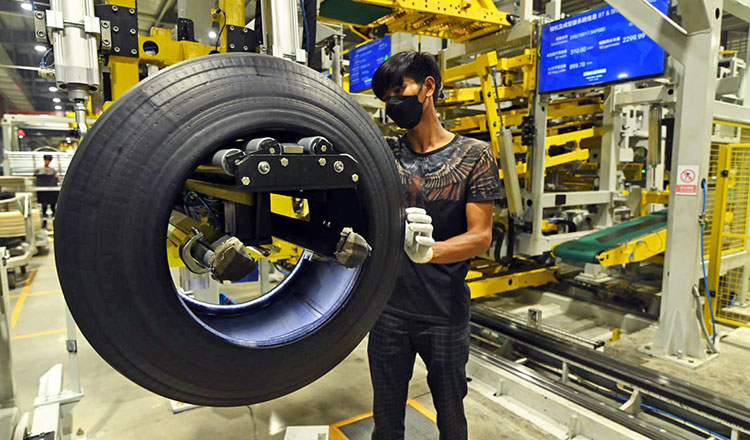
While textiles, footwear and travel goods remain major contributors to Cambodia’s industrial and export sectors, growth is increasingly being driven by higher-value industries, including automotive assembly, electronics, solar equipment and auto-parts manufacturing.
Heng said Cambodia’s bilateral trade agreements, preferential market-access programmes and ongoing infrastructure development had helped maintain the Kingdom’s attractiveness compared with regional competitors.
MISTI said the expansion reflected the government’s efforts to diversify the industrial base beyond traditional sectors. Investment is growing in automotive and auto-parts manufacturing, food processing, electronics, chemicals, furniture and other industries.
Industry, Science, Technology and Innovation Minister Hem Vanndy recently said Cambodia’s next phase of industrialisation would require the modernisation of machinery and equipment, stronger financial support and the development of a skilled workforce.
“Cambodia is diversifying beyond its traditional industrial base by expanding its capacity in automotive and auto parts, food processing, electronics, chemicals, furniture and other manufacturing industries,” he said at a forum last week.
The government has also reaffirmed its commitment to strengthening the industrial ecosystem by improving technical standards, enhancing risk-management systems and promoting cleaner energy practices. The measures are aimed at protecting workers while maintaining Cambodia’s competitiveness in global markets.
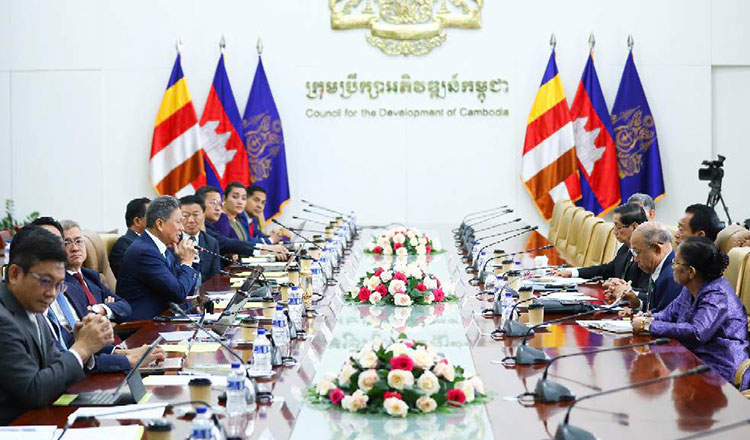
The Council for the Development of Cambodia (CDC) is streamlining administrative procedures and removing unnecessary bureaucracy to attract both domestic and foreign investment.
The reforms include digital workflows through the CDC Investment Project Management (CDCIPM) system, integrated online payment services and decentralised approval procedures at the sub-national level.
Between January and July 2026, the CDC licensed 309 investment projects with fixed-asset investments totalling approximately $5.22 billion.
The CDC has continued to promote investment in manufacturing and supply-chain activities, including automotive assembly and automotive wiring production, as part of efforts to deepen Cambodia’s industrial base and attract more value-added investment.
The Ministry of Labour and Vocational Training (MLVT) has identified manufacturing as a sector with continued employment opportunities, particularly for workers with technical and specialised skills.
According to the MLVT’s first-semester 2026 Occupational Outlook, manufacturing employment is concentrated in garment, footwear and travel goods, food and beverage production, wood and paper products and other manufacturing activities, while demand is also emerging in electronics, electrical products, rubber and plastics, and automotive and parts manufacturing.
The ministry has stressed the importance of technical and vocational education and training (TVET) to help workers meet the changing requirements of industrial employers.
The MLVT’s outlook also points to strong demand for machine operators, industrial and production engineers and other specialised technical occupations, highlighting the need to align workforce skills with Cambodia’s industrial diversification.
Heng said local small and medium-sized enterprises were gradually integrating into multinational supply chains, a trend that was boosting local value addition across key industries.
Heng said the CCC was encouraging private companies and local enterprises to register for official membership. CCC membership provides businesses with targeted support services, operational benefits and direct access to broader business networks and official trade activities.
- 08:03 25/08/2026