Global community backs ambitions for diary produce
Global community backs ambitions for diary produce
The dairy industry has evolved rapidly over recent decades, driven by rising incomes, growing health awareness and increasing demand for high-quality nutritional products.
As the country pursues ambitious development goals for the sector through 2030, international partners see expanding opportunities to cooperate with Việt Nam in areas ranging from food safety and sustainable farming to technology, processing and innovation.
Việt Nam News reporter Ly Ly Cao talked to diplomats from Sweden, the Netherlands and New Zealand about their perspectives on Việt Nam's dairy market, highlighting how partnerships built on technology transfer, sustainability and knowledge exchange can support the industry's next stage of development.
How do international partners view the development of Việt Nam's dairy industry?
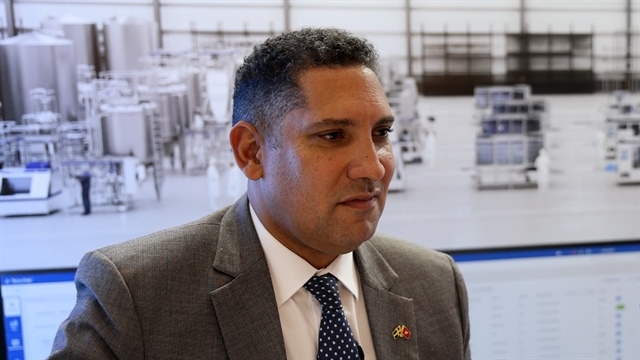
Johan Ndisi, Ambassador of Sweden to Việt Nam. — VNS Photo |
Johan Ndisi, Ambassador of Sweden to Việt Nam. — VNS Photo
Johan Ndisi, Ambassador of Sweden to Việt Nam: Việt Nam's dairy industry has made remarkable progress, not only in terms of production capacity but also in improving nutrition and the well-being of Vietnamese families.
Vietnamese consumers are placing greater emphasis on food safety and product quality, priorities that closely align with Sweden's long-standing approach to food production.
Sweden has developed its food industry around strict regulatory standards, ensuring consumers receive products that are safe, nutritious and of consistently high quality.
Rick Slettenhaar, deputy ambassador of the Netherlands to Việt Nam: Việt Nam's dairy market continues to offer significant opportunities as consumer demand grows alongside rising incomes, urbanisation and increasing awareness of nutrition.
While the Netherlands is recognised globally as a leading dairy producer, its success has been built not only on production but also on cooperation among farming communities, innovation and an integrated value chain.
Today, the Netherlands has developed a complete dairy ecosystem encompassing dairy farming, genetics, animal nutrition, farm management, milk processing, food safety, logistics and research.
Innovation is increasingly focused on reducing greenhouse gas emissions, improving resource efficiency, enhancing animal welfare and building resilience to climate change.
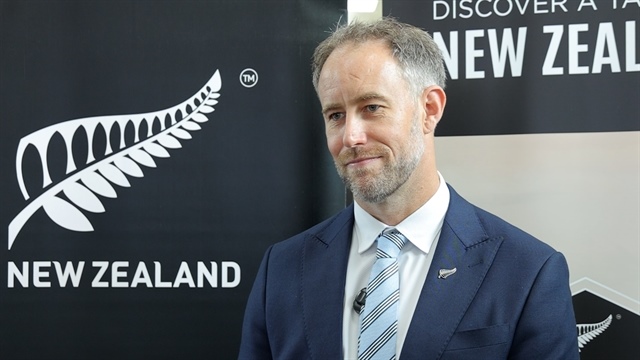
Johan Ndisi, Ambassador of Sweden to Việt Nam. — VNS Photo |
Scott James, consul general of New Zealand in HCM City: Việt Nam's expanding middle class and growing focus on health and nutrition continue to drive demand for dairy products, creating opportunities for collaboration with trusted international partners.
New Zealand's dairy industry is deeply integrated into its economy and international trade.
During the year ended December 2025, New Zealand exported approximately US$24.7 billion worth of dairy products, making dairy the country's largest merchandise export sector.
Its producers supply the equivalent of around two and a half servings of milk daily for approximately 90 million people worldwide each year, with most production destined for export markets.
That global experience has enabled New Zealand to establish internationally recognised systems for food safety, traceability and reliable long-term supply.
What cooperation opportunities does your country see in Việt Nam's dairy market?
Johan Ndisi: Cooperation between Sweden and Việt Nam extends well beyond commercial trade.
Academic partnerships between the Swedish University of Agricultural Sciences and Vietnamese agricultural institutions date back to the 1970s, creating a foundation for knowledge exchange that continues today.
Swedish companies have also established a long-term presence in Việt Nam. Among them, Tetra Pak has operated in the country for more than three decades, supplying integrated processing and packaging solutions while promoting food safety and sustainable production.
The company manufactures packaging materials in Việt Nam that are supplied across Southeast Asia, making the country an important production base within the regional supply chain.
Swedish companies place sustainability at the centre of their operations, applying advanced technologies to reduce waste, improve resource efficiency and strengthen consumer confidence through safe food production.
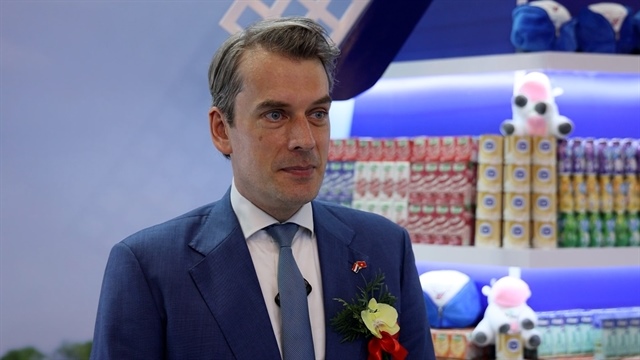
Johan Ndisi, Ambassador of Sweden to Việt Nam. — VNS Photo |
Rick Slettenhaar: Long-standing Dutch investment demonstrates the depth of bilateral cooperation.
FrieslandCampina, one of the world's largest dairy cooperatives owned by thousands of member farmers, has maintained a significant presence in Việt Nam for many years.
Their success shows that cooperation between farmers, innovation and long-term investment can create value for both producers and consumers.
Broader cooperation is also supported by bilateral agreements on sustainable agriculture, food security, One Health and food systems.
These frameworks create favourable conditions for deeper collaboration across dairy farming, feed efficiency, sustainable production, food processing, food safety and workforce development.
Scott James: New Zealand's 'Made with Care' platform reflects the country's approach to dairy production, combining environmental stewardship, responsible farming and continuous innovation.
The framework emphasises robust food safety systems, full traceability, environmental performance, animal welfare and product innovation tailored to changing consumer lifestyles.
As Việt Nam's dairy industry continues to modernise, I believe both countries can expand cooperation through trade, technology transfer, technical expertise and knowledge sharing.
In many cases, New Zealand dairy complements Việt Nam's own industry, supplying high-quality inputs that support local processing, innovation and growth rather than competing with it.
Stable and predictable food regulations are equally important for encouraging long-term investment while helping companies manage risks and improve production efficiency.
With the two countries upgrading ties to a Comprehensive Strategic Partnership following the 50th anniversary of diplomatic relations, growing numbers of New Zealand companies are seeking opportunities in Việt Nam by bringing technology, innovation and expertise to help develop healthier, greener and more sustainable dairy products for Vietnamese consumers.
- 08:00 09/07/2026