PM urges new growth model with agro-processing
PM urges new growth model with agro-processing
Developing processing industries locally would help retain more economic value, diversify exports, and strengthen industrial capacity, Mr Hun Manet says.
Prime Minister Hun Manet has urged ministries and state institutions to develop a new economic growth model centred on agro-processing industries, aiming to reduce Cambodia’s dependence on imports while strengthening domestic production and exports.
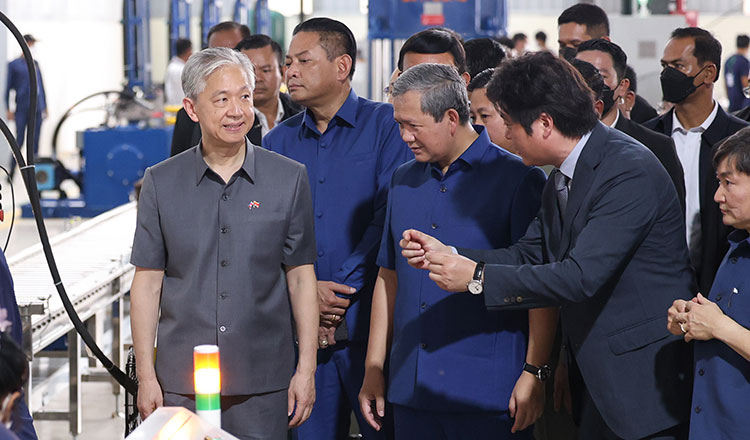
Speaking at the inauguration ceremony of a new rubber processing factory operated by KIMS Rubber (Cambodia) Co., Ltd. in Tbong Khmum province yesterday, the Prime Minister stressed that Cambodia must shift from exporting raw agricultural materials to producing higher value-added finished goods for both domestic and international markets.
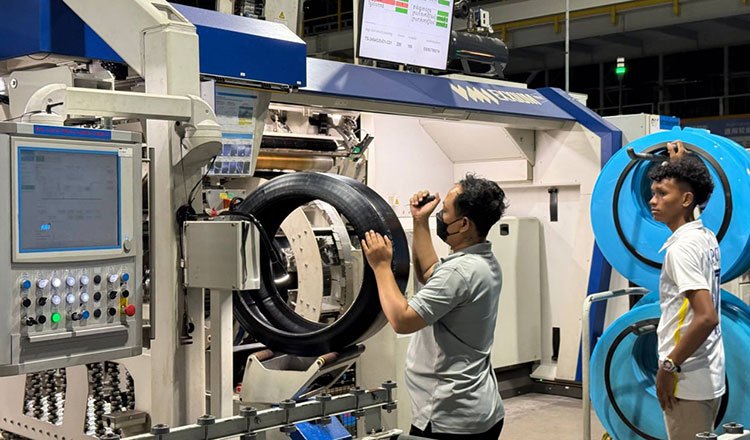
The $30 million factory, a subsidiary project of China-based Mainland Group, is located in Choam Mlou village, Roka Por Pram commune, Tbong Khmum district. Built on nearly 15 hectares of land, the plant has an annual processing capacity of around 100,000 tonnes of rubber.
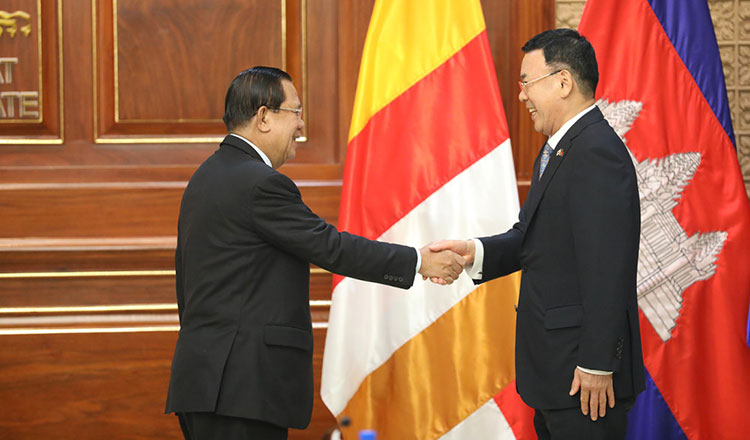
Along with Mr Hun Manet, the new rubber processing factory was jointly inaugurated by Chinese Ambassador to Cambodia Wang Wenbin.
Mr Hun Manet said the development aligns with the government’s ‘Pentagon Strategy – Phase 1,’ which identifies the private sector as a key driver of Cambodia’s socio-economic growth. Under the strategy, agro-industrial development has been prioritised to improve competitiveness, create jobs, and raise incomes for Cambodian farmers.
“The Cambodian Government is promoting the implementation of policies and action plans in the agricultural sector in general, and the agro-industrial sector in particular, to promote the processing of agricultural products,” the Prime Minister said.
He noted that Cambodia has long relied heavily on the export of raw agricultural commodities, leaving the country vulnerable to fluctuating global prices and limiting the value captured within the domestic economy. Developing processing industries locally, he said, would help retain more economic value, diversify exports, and strengthen industrial capacity.
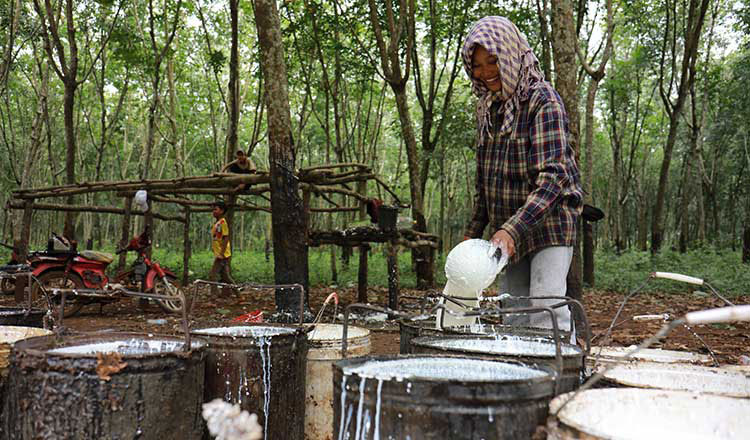
Cambodia remains one of the major rubber-producing countries in Southeast Asia, with rubber plantations covering more than 400,000 hectares nationwide, according to the Ministry of Agriculture, Forestry and Fisheries. The country exports large volumes of raw latex and rubber products mainly to China, Vietnam, Malaysia and the European market.
However, industry experts have repeatedly pointed out that Cambodia’s agro-processing sector remains underdeveloped, forcing the country to import many finished consumer and industrial goods despite its strong agricultural base.
Mr Hun Manet said the government has been working to improve Cambodia’s investment climate through reforms designed to ease business operations and attract greater private investment into manufacturing and agro-processing.
He highlighted the National Agricultural Development Policy 2022-2030 as a major roadmap for transforming the sector. The policy focuses on four strategic pillars, including modernisation and commercialisation of agricultural value chains, encouraging public and private investment, promoting sustainable and climate-resilient growth, and advancing institutional reforms.
The Prime Minister also called for closer coordination among ministries to strengthen supply chains and support industrial development. The Ministry of Agriculture, Forestry and Fisheries, the Ministry of Industry, Science, Technology and Innovation, and the Ministry of Commerce were tasked with enhancing backward linkages to ensure stronger integration between farmers, suppliers and processors.
The main goal is to drive agro-industry, which is to create an on-site, high-value-added industry to ensure that finished products are supplied to the domestic market and exported directly abroad,” he said.
Business leaders welcomed the government’s push for industrial upgrading, saying the strategy could help Cambodia become more competitive regionally while reducing its import dependency.
Cambodia Chamber of Commerce Vice-President Lim Heng described the Prime Minister’s directive as a timely move for Cambodia’s economic transition.
“The private sector stands ready to back the initiative, which will be critical to turning the government’s vision into a reality by promoting agro-industries and reducing dependency on imports,” Lim Heng told Khmer Times.
The inauguration of the rubber processing facility also reflected growing investor confidence in Cambodia’s political stability and economic prospects, Mr Hun Manet said, adding that peace and macroeconomic stability remain key foundations for attracting both domestic and foreign investment.
- 08:15 28/05/2026