Ministry of Finance tightens fiscal discipline amid global pressures
Ministry of Finance tightens fiscal discipline amid global pressures
Facing mounting inflation, trade and investment pressures, the Ministry of Finance is stepping up institutional reforms, tightening fiscal discipline and accelerating policy action to safeguard growth momentum and macroeconomic stability.
At a review conference on May 11, the Ministry of Finance (MoF) focused on removing impediments and unlocking resources across the economy, as Vietnam faces ambitious growth targets for 2026.
At the conference, chaired by Minister of Finance Ngo Van Tuan, leaders of the MoF and affiliated agencies reviewed recent achievements and assessed the outlook for the forthcoming months.
Discussions centred on analysing key risks – from inflationary pressure and slow public investment disbursement to institutional bottlenecks – while proposing measures to address them.
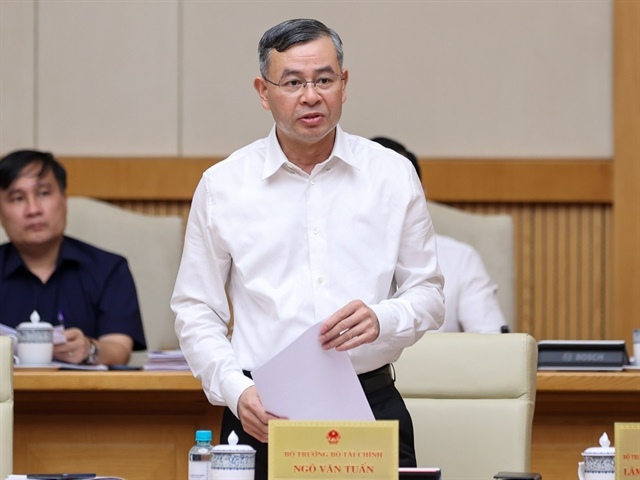
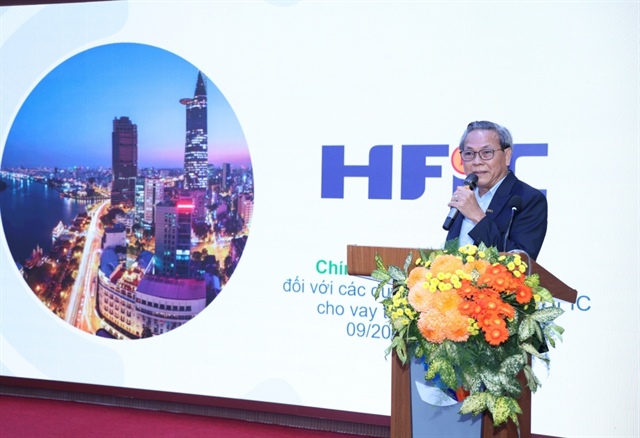
Minister of Finance Ngo Van Tuan |
One of the most pressing macroeconomic concerns in the period ahead, participants noted, is growing pressure on inflation and exchange rates, coupled with a widening trade deficit.
Addressing the issue, Deputy Minister of Finance Tran Quoc Phuong said a major driver of the trade deficit was the sharp rise in prices of imported raw materials and fuel, particularly petroleum products.
“This increase is partly driven by the impact of US tax policies, which have prompted businesses to stockpile raw materials ahead of the implementation of new tariff rates,” Deputy Minister Phuong said.
He also proposed holding monthly socioeconomic analysis meetings ahead of government sessions to produce more ‘sharp and focused’ reports to support policymaking and advisory work.
Regarding state budget revenues, Mai Xuan Thanh, director general of the Tax Department, said revenue collection in the first four months of the year rose 16.7 per cent. However, excluding deferred revenues from the previous year, the actual increase was ‘not significant compared to the double-digit growth target’.
“In response, the tax sector has developed specialised action plans for individual industries and sectors, directing local tax authorities to implement targeted measures aimed at improving operational efficiency,” he said.
On budget revenues and market oversight, Nguyen Van Tho, director general of the Department of Vietnam Customs, said the customs sector had fulfilled 38.6 per cent of its annual revenue target. To facilitate business activities, the sector is preparing to introduce a centralised customs clearance model aimed at reducing administrative procedures and expanding decentralisation.
“However, the sector is facing tremendous pressure in combating smuggling, particularly intellectual property violations. Since the beginning of the year, our sector has increased inspection frequency, uncovering 30 cases in the first four months alone,” Tho said.
Boosting public investment remains a key task in supporting economic growth. Alongside recent progress, Deputy Minister of Finance Nguyen Duc Tam pointed to a major obstacle – soaring prices of raw materials and fuel.
Some projects, he noted, were signed under fixed-price contracts without adjustment mechanisms, meaning contractors would incur losses if they proceeded, resulting in difficulties in selecting bidders.
“The Ministry of Construction should soon submit a resolution to the government providing nationwide guidance to resolve this issue,” Deputy Minister Tam said.
Concluding the conference, Minister Tuan issued specific directives regarding the implementation of the finance sector’s tasks in the upcoming period.
Noting that institutional development remains the top priority, Minister Tuan called for the rapid completion of the MoF’s work-progress monitoring software system, including a continuous warning mechanism for overdue tasks to assign direct accountability to individuals and agencies.
“Regarding macroeconomic targets, especially the completion of double-digit growth scenarios, thorough assessments are required along with clear assignment of responsibilities to each corporation, ministry, sector and locality, accompanied by strict monitoring and evaluation mechanisms. In the face of integration pressures and trade-related risks, the entire sector must prepare response scenarios to minimise adverse impacts on growth,” the minister said.
On fiscal management, Minister Tuan instructed tax and customs authorities to review policies to ensure the principles of collecting revenues accurately, sufficiently and on time, while also making procedures, "easy to understand, easy to implement and easy to inspect."
Emerging revenue sources such as e-commerce and asset-related income require management approaches that safeguard budget balances while providing stronger support for domestic enterprises, he stressed.
Minister Tuan also said that individuals and agencies responsible for project appraisal must be held fully accountable for the practicality and socioeconomic effectiveness of public investment disbursement.
On the development of financial markets, he called for, "the establishment of transparent and publicly accountable mechanisms to protect investors, while firmly preventing any form of stock market manipulation."
“Similarly, for the insurance market it is important to further enhance transparency in compensation and fee collection mechanisms so that the sector can serve as a capital mobilisation channel and a pillar of social security,” he said.
The minister also suggested considering assigning tax authorities to collect social insurance contributions on behalf of the social insurance system to improve efficiency and ensure the safety of the fund.
- 12:07 12/05/2026