WB warns Cambodia, others in EAP of slowing growth
WB warns Cambodia, others in EAP of slowing growth
The East Asia and Pacific countries should reinforce macroeconomic policy and structural reform to meet the rising headwinds, says Mattoo.
The World Bank (WB) yesterday warned countries in the East Asia and Pacific (EAP) region, including Cambodia, of slowing growth this year as rising global uncertainty is amplifying the impact of energy shocks, trade restrictions and policy risks.
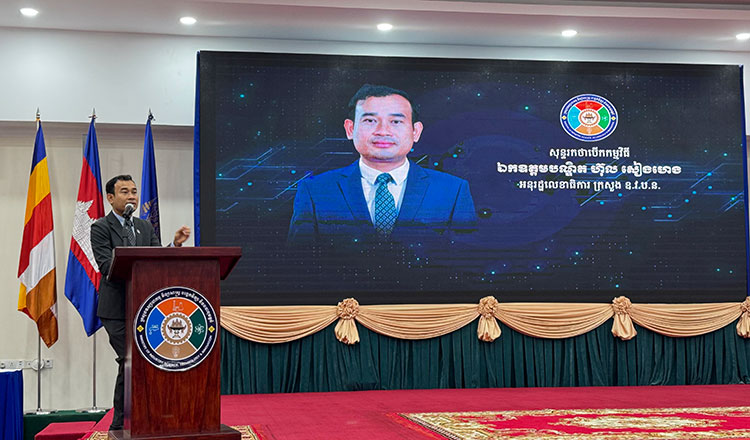
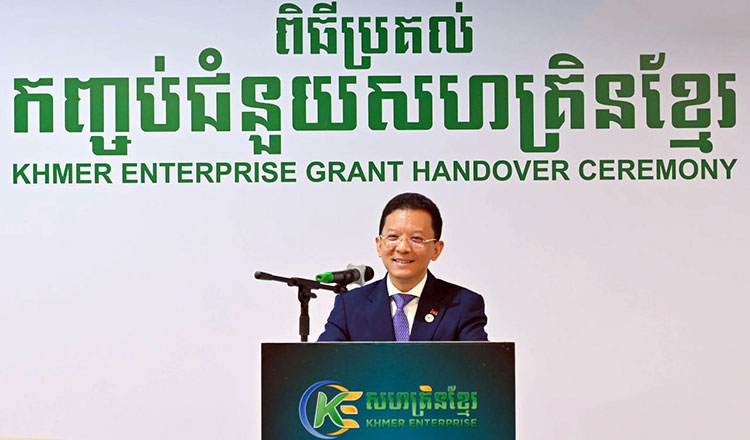
Aaditya Mattoo, WB Director of the Development Research Group, during a virtual press conference themed ‘World Bank East Asia and Pacific Economic Update Briefing’, urged these countries to reinforce macroeconomic policy and structural reform to meet the rising headwinds.
The press conference was moderated by Ngan Hong Nguyen, WB Senior External Affairs Officer for East Asia and Pacific.
The WB Director said overall growth in the EAP region is forecast to slow this year before recovering in 2027. “Most countries in the region are going to see slower growth in 2026 compared to 2025,” Mattoo said, noting that the near-term outlook reflects multiple global headwinds affecting trade-dependent economies.
However, he added that prospects are expected to improve next year, with many economies projected to rebound as the factors weighing on growth gradually ease. The anticipated recovery is based on expectations that current challenges will diminish in importance, even if they do not disappear entirely.
The WB Director identified three major external factors influencing growth in the region: ongoing conflict in the Middle East, the persistence of trade restrictions, and a climate of policy uncertainty. He emphasised that these negative developments disproportionately affect the EAP region, given its strong dependence on trade and energy imports.
At the same time, Mattoo highlighted a positive global trend: the rapid expansion of artificial intelligence (AI). While AI presents significant opportunities to boost productivity and exports, he cautioned that the region currently appears more exposed to negative shocks and may not yet be fully equipped to capture the benefits of emerging digital technologies.
Despite these challenges, he stressed that the region can forge its own path through sound macroeconomic management, including policies that support firms and households, alongside deeper structural reforms that strengthen economic resilience.
The WB Director highlighted that Cambodia, Thailand and Lao PDR are among countries facing relatively high exposure to global shocks, particularly due to reliance on imported energy. He noted that oil price shocks tend to affect poorer households the most, as they spend a larger proportion of their income on fuel and transportation.
The overall impact on each country depends on its level of exposure to oil imports, its vulnerability stemming from inflation pressures or current account deficits, and the degree of policy space available through monetary and fiscal tools to respond to external shocks.
According to his presentation, Cambodia’s net oil and gas imports accounted for six percent of GDP in 2024, while its external financing needs represented 15 percent in 2025. Meanwhile, the Royal Government’s debt stood at 27 percent of GDP in 2025, indicating a moderate level of policy space available to absorb future shocks.
Mattoo stressed that lessons from previous crises, including COVID-19, suggest targeted support measures are more effective than broad-based assistance. “From past crises like COVID-19, it tells us that rather than providing broad-based support, it makes more sense to provide targeted support to the poor and the vulnerable middle class, including small and medium firms,” he said.
He added that energy shocks are occurring alongside trade policy challenges and a climate of continued uncertainty, as countries still face relatively high tariffs compared to 2025.
“The combination of these shocks means a negative impact on real income in countries that depend on exports. We estimate that growth could be as much as a percentage point lower due to changes in trade conditions,” Mattoo said.
He noted that even with the positive development of a ceasefire in the Middle East, uncertainty continues to weigh heavily on the global outlook, particularly regarding future trade policy directions.
“That uncertainty has increased significantly, including uncertainty related to trade policy, and may impose a greater development cost than the specific policy measures themselves,” the WB Director said.
Nevertheless, Mattoo highlighted potential opportunities arising from the global AI boom, which has contributed to stronger export performance across the EAP region, noting that some of the region’s most dynamic exports are increasingly linked to AI-related technologies and digital services.
He said that investment flows into the region have also increased, particularly in AI-related infrastructure such as data centres, positioning the EAP region to benefit from global digital transformation. According to Mattoo, these developments offer significant potential to enhance productivity and long-term growth prospects.
The WB Director concluded that targeted policy interventions aimed at addressing market failures, such as limited access to finance and weak coordination among firms, are more effective when supported by strong human capital, quality infrastructure, and reliable institutions that enable businesses to innovate and expand.
He added that industrial policy tends to deliver stronger outcomes when governments reduce regulatory barriers to trade and investment, strengthen public goods, and minimise policy distortions.
He pointed to export processing zones as examples where improved infrastructure, supportive regulations, and appropriate incentives have helped firms operate more competitively.
It may be noted that the virtual press conference was organised ahead of the launch of the ‘World Bank’s April 2026 East Asia and Pacific Economic Update’, which places special focus on industrial policy in the digital age and the region’s capacity to navigate global economic uncertainty.
- 09:04 09/04/2026