Higher deposit rates, tighter liquidity dampen demand for equities
Higher deposit rates, tighter liquidity dampen demand for equities
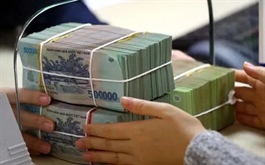
Banks, particularly small and medium institutions with weaker deposit bases, are likely to continue raising deposit rates in the short term to attract funding and sustain credit growth.

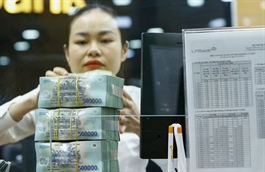
A customer conducts a transaction at a Vietcombank office in Hà Nội. — VNA/VNS Photo |
Rising deposit rates and tightening liquidity across Việt Nam's banking system are eroding the appeal of equities, as investors increasingly favour savings products and fixed-income instruments despite relatively high dividend yields on some listed shares.
A review by VPBank Securities found deposit rates continued to edge up last week, with common six-month terms at around 6.4 per cent per year, while actual offered rates may be 0.1–0.2 percentage points higher than advertised.
Longer-term deposits of 13 months or more offered little additional return compared with six-month products, the report said.
Banks have also introduced bespoke instruments with competitive yields. VPBank, for instance, is offering a one-month certificate of deposit at 6.9 per cent per year, while some bank-issued corporate bonds trading in the market, including those linked to Techcombank, offer yields exceeding 9 per cent per year.
According to a mid-March report by VIS Rating, deposit mobilisation remains under pressure. The banking sector's current account and savings account (CASA) ratio fell by 80 basis points year on year to 19.9 per cent in 2025, largely due to deposit declines at mid-sized lenders such as Orient Commercial Joint Stock Bank (OCB), SeaBank (SSB) and Vietnam International Commercial Joint Stock Bank (VIB).
Interbank overnight rates have risen sharply since October 2025, averaging 10.8 per cent per year in February, up 5.9 percentage points. Funding costs have also increased by around 60 basis points amid slower deposit growth and ongoing liquidity constraints.
VIS said banks, particularly small- and mid-sized institutions with weaker deposit bases, are likely to continue raising rates in the near term to attract funding and support credit growth.
Meanwhile, foreign investors have become net sellers in the government bond market, with cumulative net sales exceeding VNĐ3.1 trillion (US$119.4 million) by March 6, in contrast to net purchases of about VNĐ3.6 trillion in the same period last year. VPBank Securities said the shift is adding pressure to funding conditions.
High dividends, limited inflows
Against this backdrop, high dividend yields have not been enough to attract broad-based inflows into equities.
A screen by Mirae Asset identified a group of liquid, high-yield stocks with strong balance sheets and low leverage, typically seen as defensive plays during volatile periods. The selection criteria included minimum trading liquidity of VNĐ10 billion per session, dividend yields of at least 5 per cent and price-to-earnings ratios generally ranging from 5 to 11.
Among the companies highlighted were Sai Gon Cargo Service Corporation (10.5 per cent), TNG Investment and Trading JSC (9.7 per cent), Song Hong Garment (11.1 per cent), Vietnam Engine and Agricultural Machinery Corporation (13.9 per cent), Sabeco (6.7 per cent), Vinamilk (7.8 per cent) and Binh Minh Plastics (8.9 per cent).
Announced cash dividends included VNĐ12,750 per share at Binh Minh Plastics, VNĐ4,600 at Vietnam Engine and Agricultural Machinery Corporation, VNĐ4,800 at Vinamilk and VNĐ4,000 at Song Hong Garment.
However, market reaction has been largely subdued. Following dividend announcements last week, only Song Hong Garment recorded a notable price increase, while most other stocks edged lower and showed weakening cash flow signals.
Gelex Group and Gelex Electricity bucked the trend with price recoveries after unveiling sizeable dividend and bonus share plans. Even so, net inflows into these stocks have not offset the broader decline in market liquidity, and both companies have set lower profit targets for the year.
Gelex Group expects profit before tax of VNĐ3.6 trillion, about 22 per cent below the previous year, while Gelex Electricity targets VNĐ2.7 trillion, down roughly 36.5 per cent. Both trade at relatively elevated valuations, with price-to-earnings ratios of around 21 times and above 18 times, respectively.
In the banking sector, Asia Commercial Joint Stock Bank (ACB) is seen as attractively valued at about seven times earnings, supported by improving asset quality after significant provisioning in the fourth quarter of 2025.
The bank has proposed a 20 per cent dividend comprising both cash and shares, equivalent to around 8.5 per cent based on the current market price. However, the 13 per cent share component could dilute the effective yield, potentially limiting immediate investor interest despite the headline rate exceeding deposit returns.
Kafi Securities estimated ACB's fair value at above VNĐ29,000 per share, implying upside of roughly 23 per cent from prevailing levels at the time of the assessment.
Operational constraints also persist. Banks reported that credit growth quotas for the first quarter of 2026 were largely exhausted soon after Tết (Lunar New Year), and lenders are awaiting fresh allocations in the second quarter before expanding lending further.
With interest rates elevated and liquidity conditions tight, investors are weighing dividend returns against higher funding costs and increased market risk, keeping overall cash flows into equities subdued.
- 07:44 27/03/2026