2026 bank outlook depends on Gov’t directions, interest rate, bad debts
2026 bank outlook depends on Gov’t directions, interest rate, bad debts
With the factors, experts forecast that this year will witness unprecedented differentiation in market share and profits of banks. Some banks with advantages in scale, management capacity and specific supporting policies will become bright spots.

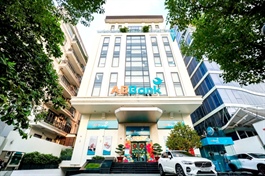
Interest rate is a key factor weighing on banks’ net interest margin and directly impacting the capital demand of the economy. —Photo cafef.vn |
Macroeconomic policy decisions, interest rate movements and the management of bad debts are expected to shape the banking sector in 2026, with experts warning that shifting conditions could widen gaps between lenders.
Nguyễn Văn Trúc, head of analysis at National Securities Company (NSI), said the most important factor determining the industry’s outlook will be the Government’s direction on macroeconomic management.
He noted that while the Government is targeting double-digit economic growth in 2026, the State Bank of Vietnam (SBV) has set a credit growth target of about 15 per cent for the banking system, down from 19 per cent in 2025. The slowdown is viewed as a deliberate move to steer capital towards priority sectors such as manufacturing, business, trade and services, while restricting flows to more speculative areas.
In a context where monetary policy space is increasingly constrained, fiscal policy is expected to play a larger role. The planned disbursement of around VNĐ1 quadrillion (US$38 billion) in public investment is forecast to stimulate economic activity and improve liquidity in the banking system.
Interest rates are another key factor affecting the sector, as they directly influence banks’ net interest margins and overall credit demand. After rising sharply in late 2025, deposit interest rates in 2026 are projected to be about 2–3 percentage points higher than a year earlier, increasing funding costs for banks.
Đỗ Thanh Tùng, manager of analysis at Viet Dragon Securities Company (VDSC), said that since the start of 2026, most banks have raised lending rates for new loans by around 3 percentage points compared with 2025 levels.
As a result, banks will need to secure more stable medium and long-term funding sources, as deposit rates are expected to remain elevated in the near term.
Asset quality will also be a decisive factor. Although non-performing loans improved in 2025, persistently high lending rates may weaken the repayment capacity of businesses and individuals, raising the risk of a renewed increase in bad debts and creating a potential bottleneck for the sector.
Given these factors, experts expect 2026 to see increasing divergence in market share and profitability among banks. Institutions with strong scale, governance and policy support are likely to outperform.
One group includes banks that have taken the lead in restructuring. Lenders involved in the mandatory transfer of weak banks, such as MB, VPBank and HDBank, are expected to benefit from incentives including higher credit growth quotas, enabling faster expansion.
State-owned banks, often referred to as the 'Big 4,' are also seen as well-positioned due to their extensive networks, lower funding costs and key role in financing major public investment projects.
Meanwhile, banks with advanced digital ecosystems are forecast to gain a competitive edge. Institutions such as Techcombank may stand out thanks to large customer bases and diversified income streams from service fees, digital payments and bond market activities, reducing reliance on traditional lending.
- 07:14 20/03/2026