HCM City firms adjust markets to maintain jobs amid global shipping disruptions
HCM City firms adjust markets to maintain jobs amid global shipping disruptions
Escalating geopolitical tensions in the Middle East are driving up shipping costs and disrupting global logistics, placing additional pressure on supply chains and export activities.
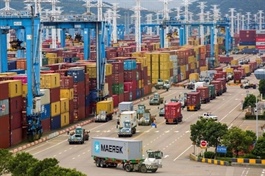
Saigon Port’s Hiệp Phước terminal in HCM City has seen vessel schedules frequently adjusted in recent days as Middle East tensions disrupt global shipping routes. —VNA/VNS Photo |
Rising geopolitical tensions in the Middle East are disrupting global shipping routes and pushing up logistics costs, forcing businesses in HCM City to adjust production plans, diversify markets and seek new supply sources.
The disruptions are already rippling through exporters in HCM City, forcing companies to adjust production schedules, diversify markets and rethink supply chains in order to maintain export orders and protect employment.
Following the outbreak of conflict in the Middle East, several key maritime routes such as the Red Sea, the Suez Canal and the Strait of Hormuz have faced heightened security risks.
The disruptions have caused major changes in global shipping routes, pushing up logistics costs and lengthening delivery times, particularly on Asia–Europe trade lanes.
Shipping disruption
At Saigon Port’s Hiệp Phước terminal, shipping schedules have been frequently adjusted in recent days, reducing operational stability.
Cargo turnover has slowed as incoming and outgoing shipments have become uneven, affecting businesses’ cash flow.
The decline in vessel calls has also reduced workloads for port operators, shipping lines, freight forwarders and logistics companies.
Port workers involved in container handling and operations have been directly affected.
Nguyễn Anh Hào, acting director of Saigon Port Hiệp Phước, said many shipping lines serving Europe-bound routes had been forced to alter their itineraries, rerouting vessels around the Cape of Good Hope instead of passing through the Suez Canal.
The detour would extend shipping time by around seven to 15 days, leading to higher fuel, insurance and freight costs.
“However, thanks to a diversified customer base and a significant share of intra-Asia cargo, the port’s throughput remains within controllable levels,” Hào said.
“We are working closely with shipping lines and logistics firms to update information early and adjust operational plans, helping minimise additional costs for customers.”
Export pressure
Phạm Văn Xô, chairman of the city Import-Export Association, said longer shipping routes had reduced vessel availability while demand for cargo transport remained high.
This resulted in shortages of container space and rising fuel costs, insurance premiums and security surcharges.
“Disruptions in global shipping routes not only increase production costs but may also affect employment in export industries,” he said.
“When export orders are delayed or logistics costs rise too sharply, businesses are forced to adjust their production plans.”
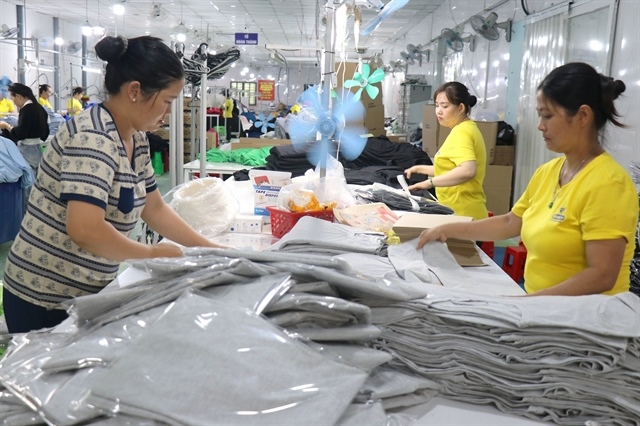
In the garment sector, Phạm Quang Anh, general director of Dony Garment Company, said the Middle East remained a key export market for the firm, particularly Jordan, which had accounted for more than 20 per cent of the company’s export revenue for many years.
However, rising shipping costs and longer delivery times are raising concerns among buyers about missing seasonal sales windows.
“Dony is currently increasing production capacity to meet delivery schedules. But even after production is completed, securing shipping slots on schedule remains uncertain,” Anh said.
Fortunately, most of the company’s orders were shipped before mid-February, leaving only a final container awaiting departure.
Anh noted that most of Dony’s contracts follow FOB (Free on Board) terms, meaning the company does not bear direct responsibility for ocean freight costs.
However, if high shipping costs affect buyers’ ability to sell products, the company would be willing to share part of the cost by supporting between US$500 and $1,000 per container to maintain long-term partnerships.
“If the disruptions continue, we have contingency plans to diversify markets,” he said.
“Besides the US and the Middle East, we are expanding exports to Africa, Europe and Southeast Asia, while strengthening the domestic market starting from 2025.”
Seafood exporters have also expressed concerns as shipments already at sea face uncertain arrival times while new orders are being postponed.
This situation has affected businesses’ cash flow and created pressure to maintain payroll and labour stability.
Experts warn that if disruptions persist, not only the logistics sector but also major export industries such as garments, footwear, wood products, agriculture and seafood may face ripple effects.
Declining orders or rising costs could force companies to scale down production, directly affecting workers’ income and employment.
Despite the challenges, businesses in HCM City are actively seeking solutions such as diversifying shipping routes, expanding markets and strengthening negotiations with partners.
These flexible strategies are helping companies sustain exports while maintaining jobs and livelihoods for workers.
|
Saigon Port’s Hiệp Phước terminal in HCM City has seen vessel schedules frequently adjusted in recent days as Middle East tensions disrupt global shipping routes. —VNA/VNS Photo |
Market shift
Rising tensions in the Middle East are not only disrupting global shipping routes but also highlighting the urgent need for Vietnamese businesses to expand markets and find alternative partners.
Phan Văn Có, marketing director of Vrice Rice Company, said many international shipping lines had temporarily suspended cargo services to ports in the Middle East and Africa.
As a result, some shipments currently in transit were unable to dock at their intended ports, forcing companies to wait for updates from shipping lines or consider redirecting cargo to other markets, he said.
Có said the company was negotiating with buyers to resolve shipments stranded at ports.
However, additional costs for container storage and port handling had become a significant burden.
To reduce risks, the company was accelerating exports to alternative markets.
According to Anh of Dony, recent geopolitical events have prompted businesses to rethink market strategies and production models.
Experiences from the COVID-19 pandemic and the Russia-Ukraine war showed that companies should avoid over-reliance on a single market or supply chain.
“We believe the period from 2020 to 2030 will remain unpredictable,” he said.
“Our strategy is to stay lean, simple and efficient. Instead of expanding factories excessively during peak orders, we integrate resources and cooperate with satellite partners for production.”
Adapting strategies
This flexible production model helps maintain stable employment even when orders decline suddenly, while also reducing operational costs during market volatility, according to Anh.
Seafood exporters are facing similar challenges.
Lê Hằng, deputy secretary-general of the Việt Nam Association of Seafood Exporters and Producers (VASEP), said geopolitical tensions were forcing businesses to restructure markets and supply chains.
Companies need to optimise logistics costs, renegotiate freight contracts and diversify shipping routes to limit additional surcharges, according to Hằng.
Businesses are also advised to plan shipments earlier than usual to reduce the risk of transport disruptions.
Maintaining cold storage facilities at regional transit hubs and prioritising long-term shipping contracts are also considered effective measures.
From a logistics perspective, Nguyễn Lê Chơn Tâm, general director of Saigon Port and chairman of Saigon Port Hiệp Phước, said the port was implementing three groups of solutions to adapt to market fluctuations.
In the short term, the port was optimising berth and container yard operations, controlling internal costs and providing flexible storage arrangements for customers.
In the medium term, it was accelerating digital transformation in port management, increasing automation and expanding cooperation with logistics companies to offer integrated services.
In the long term, the port aimed to diversify markets, develop integrated logistics ecosystems and invest in greener, more sustainable infrastructure.
Meanwhile, HCM City's Export Processing and Industrial Zones Authority (Hepza) said geopolitical tensions were affecting import-export activities and supply chains of enterprises operating in the city’s industrial zones.
Companies were facing rising surcharges due to security risks, higher transport costs and potential shortages of raw materials.
Some businesses were also encountering difficulties in international payments due to disruptions in regional banking systems.
Hepza said it would strengthen support for enterprises in administrative procedures related to import-export activities, including certificates of origin and work permits for foreign experts.
Authorities would also closely monitor the situation, particularly for companies heavily dependent on Middle Eastern and European markets.
Economic experts emphasise that Vietnamese businesses need long-term market strategies, diversified partners and flexible transport routes to better adapt to the increasingly volatile global trade environment.
- 09:13 21/03/2026