Risk warning for Vietnamese firms trading with UAE amid Middle East tensions
Risk warning for Vietnamese firms trading with UAE amid Middle East tensions
Disruptions to shipping routes through the Strait of Hormuz have affected food trade flows, while rising fuel and transportation costs have pushed up prices of fruits and vegetables in the UAE.
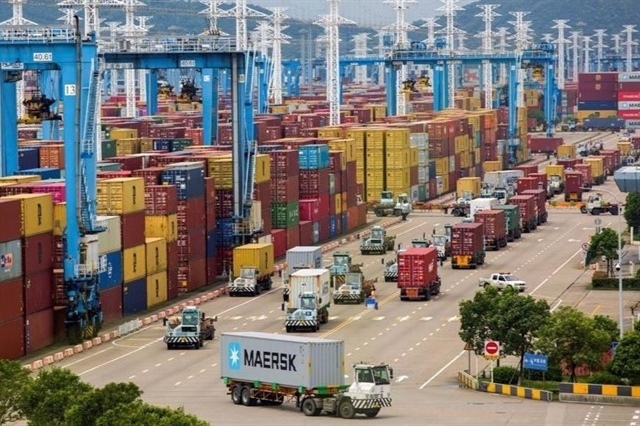
Trade data shows that bilateral trade between Việt Nam and the UAE exceeded US$1.047 billion in the first two months of this year. — Photo baochinhphu.vn |
Vietnamese businesses are being urged to navigate carefully as Middle East tensions ripple into the UAE market.
The Việt Nam Trade Office in the United Arab Emirates (UAE) has warned that escalating geopolitical conflict involving the US, Israel and Iran is beginning to affect trade flows and costs across the region.
Disruptions to shipping routes through the Strait of Hormuz have hit food trade, while rising fuel and transportation costs have pushed up prices of fruits and vegetables in the UAE. Gulf countries, which rely on imports for 80–90 per cent of their food supply, are particularly vulnerable to these disruptions.
The trade office highlighted several risks facing Vietnamese exporters. Logistics and transportation challenges are growing as maritime routes may be disrupted, war risk insurance premiums rise and delivery times lengthen, affecting perishable goods such as seafood and fresh produce. Price volatility and rising costs are also expected, driven by higher fuel prices, increased logistics expenses and elevated maritime insurance fees.
Payment risks are another concern, with some UAE importers potentially delaying payments or renegotiating contract terms. Vietnamese exporters may also face stronger competition from established suppliers such as India, South Africa and Egypt, which benefit from closer proximity and lower transport costs.
Trade data shows bilateral trade between Việt Nam and the UAE exceeded US$1.047 billion in the first two months of 2026, a modest 3.6 per cent increase year-on-year. Exports to the UAE reached $986 million, up 7.4 per cent, while imports fell sharply by 34.2 per cent to $60.7 million, resulting in a trade surplus of $925 million.
The trade office noted that the Comprehensive Economic Partnership Agreement (CEPA), which came into effect on February 3, is expected to give a significant boost to bilateral trade.
Key export sectors such as agricultural and food products, seafood, paints and coatings, and consumer goods and electronics are set to benefit from improved market access and enhanced competitiveness in the UAE.
- 11:54 20/03/2026