Vietnam’s pivotal year for advancing sustainability
Vietnam’s pivotal year for advancing sustainability
The Ministry of Agriculture and Environment identifies 2026 as a pivotal year in advancing the sector’s sustainable development goals and contributing to the country’s overall development trajectory.
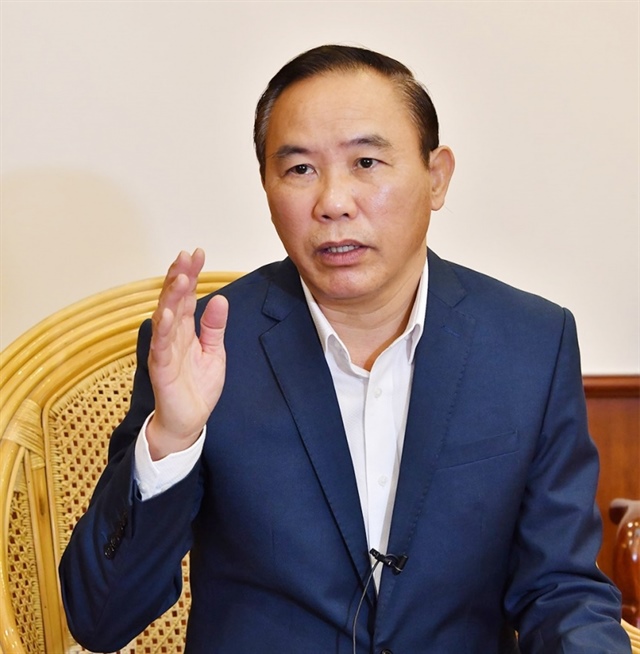
Phung Duc Tien |
The Ministry of Agriculture and Environment (MAE) aims to further strengthen the management of natural resources, enhance environmental protection, and improve resilience to climate change, while maximising the effective use of land, water, forest resources, and biodiversity to support sustainable agricultural development and socioeconomic growth, ensure food security, safeguard livelihoods, and maintain social stability.
Looking back at 2025, the agriculture and environment sector implemented its annual plan amid a context of intertwined opportunities and challenges. From the very beginning of the year, the ministry decisively issued the sector-wide action programme, directing the formulation and implementation of coordinated initiatives and work plans across all state management domains in line with practical conditions and development requirements.
As a result of strong leadership and synchronised implementation of solutions, the sector achieved significant and meaningful outcomes. Growth of the agriculture, forestry, and fisheries sector was estimated at 3.9-4 per cent, exceeding the government-assigned target. Total export turnover of agricultural, forestry, and fishery products in 2025 reached $70.09 billion, an increase of 12 per cent compared to 2024, substantially surpassing the target of $65 billion. These figures not only reflect recovery and growth but also reaffirm agriculture’s role as a key pillar of the economy amid global uncertainty.
Taking in 2026, the domestic and international context is forecasted to remain fraught with risks and challenges, particularly as climate change impacts become increasingly profound, complex, and unpredictable, which directly threaten food security, livelihoods, and the long-term objective of sustainable agricultural development.
In the context of the MAE being restructured with expanded functions and responsibilities, state management requirements have become more comprehensive and complex, necessitating closer coordination between natural resource and environmental management and the organisation of agricultural production.
At the same time, implementing international commitments on greenhouse gas emission reductions, green growth, nature conservation, and ecosystem restoration – together with pressures to accelerate the transition towards ecological agriculture, circular economy models, and low-emission agriculture – places significant demands on resources, data systems, science and technology capacity, and governance capabilities.
Comprehensive solutions
Against this backdrop, the ministry identified the need to deploy synchronised and comprehensive solutions, with priority given to improving institutions and policies to support sectoral growth and promote exports of agricultural, forestry, and fishery products. It will continue reviewing, amending, and supplementing legal documents in the fields of agriculture and environment to ensure consistency, coherence, and alignment with the new organisational model of state management, particularly at the local level under the two-tier local government system.
At the same time, effective implementation of Resolution No.19-NQ/TW on agriculture, farmers, and rural areas; the strategy for sustainable agriculture and rural development for 2030 with a vision to 2050; and approved national and sectoral strategies and plans will remain a central focus.
Another key pillar is the continued acceleration of agricultural restructuring to improve productivity, quality, added value, and efficiency in production and business activities. Restructuring of sub-sectors will be closely linked with growth model innovation through stronger application of science and technology, digital transformation, and innovation to enhance competitiveness and adaptive capacity.
The sector will promote a shift from low-value agricultural products to higher-value products; convert low-yield, single-crop rice areas to higher economic value crops and livestock; and develop large-scale, sustainable, climate-resilient, and low-emission raw material zones for key commodities.
At the same time, the MAE emphasises the development of an ecological, efficient, transparent, and responsible agricultural system; strengthened protection of ecological environments; encouragement of green, organic, and circular agriculture; and expansion of large-scale, high-tech agricultural production that leverages the comparative advantages of each region and locality.
Cooperative economic development and value chain links will be further promoted, alongside the formation and scaling up of new agricultural cooperation models. Reorganising production based on specialised sones associated with geographical indications, traceability systems, planting and farming area codes to meet increasingly stringent market requirements is identified as a cross-cutting priority.
In the fisheries sector, efforts will continue to promote sustainable marine aquaculture and fisheries exploitation, resolve outstanding recommendations of the European Commission, and strive to remove the “yellow card”. Strict measures will be taken against vessels engaged in illegal fishing in foreign waters. Proactive prevention, response, and timely control of diseases in crops, livestock, and aquaculture will remain a priority.
Alongside production development, it places strong emphasis on building modern, comprehensive, and sustainable new rural areas that are resilient to climate change. This includes the synchronised development of rural socioeconomic infrastructure, promotion of rural economies driven by science and technology, digital transformation, and innovation, and improvement of incomes, quality of life, and access to essential services for rural residents, gradually narrowing the gap with urban living standards.
To enhance governance effectiveness, the MAE will continue reviewing and streamlining organisational structures, particularly through the consolidation and restructuring of public service units under its authority in accordance with legal provisions. Close coordination with two-tier local governments, especially at the commune level, will be strengthened to promptly address difficulties and emerging issues in agriculture and environment management, ensuring smooth and effective system operations.
In parallel, the arrangement and deployment of civil servants and public employees in leadership and management positions will be reviewed to align with the new organisational framework.
Administrative reform is identified as a top priority. The ministry will intensify efforts to reduce and simplify procedures related to investment, production, and business activities in environmental management, specialised inspections, land, and mineral resources. Targets include reducing at least 30 per cent of procedures, processing time, and compliance costs, while eliminating a minimum of 30 per cent of unnecessary business conditions. The expansion of electronic administrative procedures will be accelerated to ensure transparent, efficient, and seamless public service delivery.
Fostering cooperation
In an era of deepening globalisation, international cooperation plays an important role in the development of the agriculture and environment sector. International cooperation provides access to financial resources, technology, and knowledge, simultaneously helping to strengthen a favourable external environment and enhance Vietnam’s position and credibility internationally. In 2026, the objective is to pursue effective external engagement, participate responsibly in cooperation mechanisms, and seize opportunities arising from emerging global trends.
The issuance of Resolution No.59-NQ/TW in 2025 on international integration in the new context provides a critical foundation for the sector’s external affairs. In line with this resolution, the agriculture and environment sector has shifted decisively from a mindset of participation to one of proactive integration design, viewing international integration as a driving force for sectoral restructuring, green transition, and enhanced resilience to global shocks.
The integration of agriculture and environmental functions has been highly regarded by international partners as an innovative and integrated approach aligned with global trends in sustainable food system development. This model enables Vietnam to better connect production, conservation, adaptation, and livelihoods, creating improvements for international dialogue and cooperation in major schemes such as Mekong Delta transformation, low-emission agriculture, water resource management, implementation of the EU Deforestation Regulation, and sustainable fisheries and marine economy development.
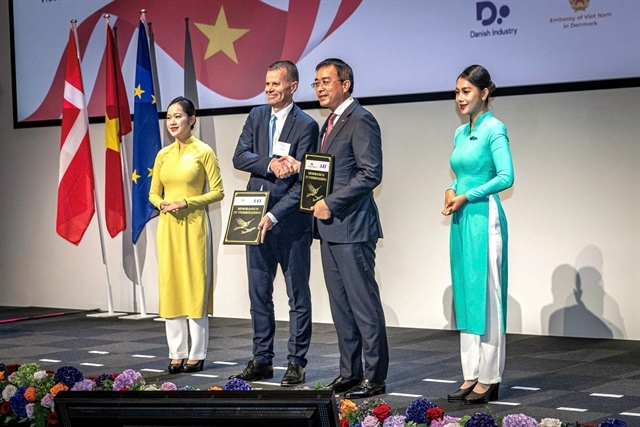
Through the Department of International Cooperation, the MAE has organised many high-level overseas missions while hosting many international delegations in Vietnam. Leaders from several African countries’ agricultural sectors have visited Vietnam to learn from its experience in agricultural production, One Commune, One Product development, and agricultural value chains. International engagements are increasingly substantive, focusing on removing market barriers and opening new opportunities for cooperation in technology, investment, green finance, and knowledge transfer.
At the same time, the country has made a strong impression at major multilateral forums, where the voice of the sector is increasingly both heard and respected.
- 08:44 19/02/2026