Strengthening the core role of industry and trade
Strengthening the core role of industry and trade
The industry and trade sector has made significant and comprehensive contributions to Vietnam’s socioeconomic development. Phan Thi Thang, Deputy Minister of Industry and Trade, looks at the urgent priorities that the sector must tackle.

The industry and trade sector has advised on the formulation of strategic mechanisms to boost economic growth, industrial development, trade and investment, while addressing major issues to support the issuance of key resolutions and conclusions by the Party Central Committee, the National Assembly, and competent bodies. These have provided an important institutional foundation for development.
With its core and strategic pillar role, the sector continues to serve as one of the main drivers of economic growth, contributing to the realisation of development objectives towards autonomy, modernisation, green and digital transformation, and deep, effective international integration.
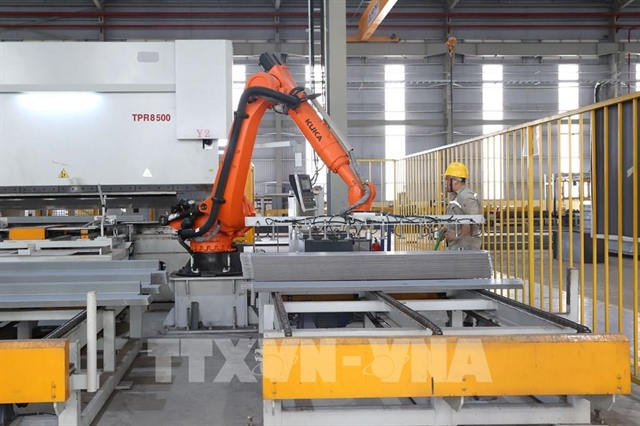
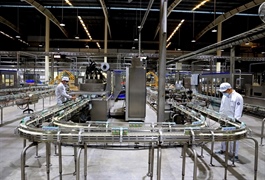
Industrial production has recovered strongly and maintained solid growth momentum, with an average annual growth rate of 6.1 per cent. Notably, the processing and manufacturing industry, the central engine of growth, recorded an average growth rate of 6.9 per cent per year, while the overall scale of the sector expanded by nearly 1.5 times compared to the beginning of the term.
Localisation rates continued to improve, and key industries such as electronics, textiles and garments, footwear, and agricultural and food processing have successfully integrated into global markets, reinforcing Vietnam’s position in global value chains.
The energy system has expanded rapidly, with the power system now ranking among the world’s top 20 and leading Southeast Asia. National energy security has been fundamentally ensured, meeting the requirements of socioeconomic development and people’s livelihoods. At the same time, the energy mix has shifted towards a greener and more sustainable structure, in line with global trends.
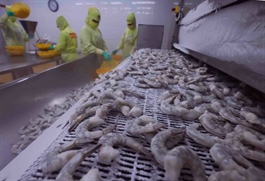
Import and export activities have remained a bright spot of the economy, recording an average annual growth rate of 10.9 per cent. Total import-export turnover has continuously set records, surpassing $930 billion in 2025 alone, double that at the start of the term. Many key export products have maintained high rankings in global markets, while sustained trade surpluses have strengthened foreign exchange reserves and reinforced market confidence.
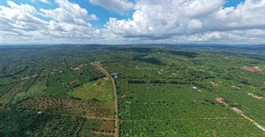
The domestic market has continued to grow steadily, with an average annual growth rate of 7.7 per cent, increasingly emerging as an important pillar of the economy. Ensuring adequate supplies of raw materials, fuels and essential goods has enabled the domestic market to play a critical supporting role, helping the economy remain resilient and recover rapidly from external shocks, particularly during the 2020 pandemic.
In parallel, e-commerce has expanded by over 20 per cent annually, placing Vietnam among the world’s fastest-growing markets and providing impetus for the digital economy and enterprise-level digital overhaul.
International economic integration has been implemented in a coordinated and increasingly effective manner. Participation in 17 free trade agreements has opened access to a market of nearly six billion consumers, contributing to export market diversification, foreign investment attraction, and enhanced national competitiveness.
Lifeblood of development
National energy security is a key pillar underpinning macroeconomic stability and sustainable development, closely linked to security, defence, and people’s livelihoods. To meet the requirements of rapid and sustainable growth, particularly in achieving the strategic milestones of 2030 and 2045, energy must take the lead, ensuring sufficient supply for national defence and security, and improvements in living standards.
In implementing the Party’s guidelines and the government’s directives, the industry and trade sector has focused on deploying a comprehensive set of solutions in the energy field. These include diversifying energy sources through a balanced combination of traditional and renewable energy; enhancing the efficiency of domestic fossil fuel exploitation and utilisation; promoting new forms of energy; and accelerating energy conservation and efficiency.
At the same time, efforts have been intensified to complete institutional frameworks and policies for a competitive and transparent energy market, thereby mobilising social investment resources into energy development.
The Ministry of Industry and Trade has prioritised leadership and direction in completing institutional frameworks and accelerating the implementation of key projects to ensure the synchronous development of energy policies and infrastructure. National power planning has been advanced in close coordination with ministries, sectors, and localities, with integration into provincial planning and accelerated progress on key power generation and grid projects, particularly major transmission lines.
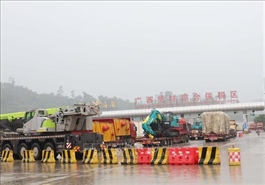
These efforts have contributed to the gradual completion of power infrastructure, with Vietnam’s power generation and transmission system now ranking among the largest in ASEAN.
Against the backdrop of rapid and complex global and regional economic developments, accelerating energy transition, increasingly urgent requirements for green transition, emissions reduction and climate change adaptation, and growing energy demand for growth, ensuring energy security remains a critical and overarching task.
Looking ahead, the sector will focus on implementing long-term and comprehensive solutions to firmly ensure energy security. Priorities include improving the legal framework for energy, institutionalising energy and power plans, building feasible roadmaps for the electricity market, and finalising electricity pricing mechanisms in accordance with market principles under state regulation.
Alongside institutional reform, investment and financial mechanisms will be innovated to encourage public–private partnerships, green finance and the mobilisation of domestic and international capital, while digital transformation will be applied more extensively to enhance system efficiency and governance capacity.
Paving the way
Vietnam is entering a new era defined by science and technology, innovation, green and digital transformation, and deep international integration. This period presents significant opportunities alongside complex challenges.
Despite notable achievements, the industry and trade sector continues to face a number of limitations. Industrial development has yet to achieve sufficient depth, value added remains modest, and foundational industries and core technologies are underdeveloped. Links between domestic enterprises and foreign investors remain weak, while progress in green and smart transformation has been relatively slow.
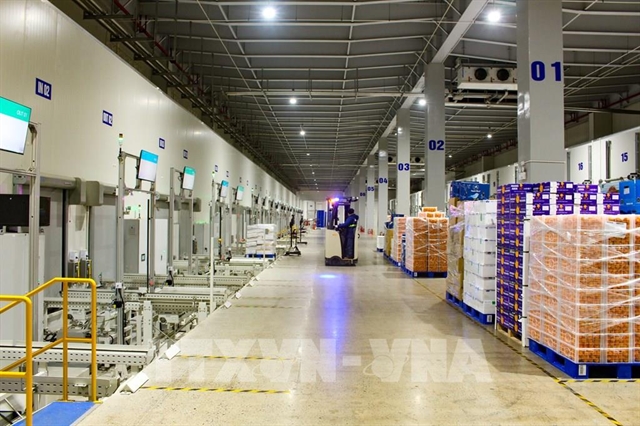
Energy infrastructure and institutional frameworks have not fully kept pace with requirements. Exports continue to rely heavily on the foreign investment sector and imported inputs, with limited diversification of markets and products. Trade and logistics infrastructure remains fragmented and costly, while the effectiveness of international economic integration has yet to fully reflect its potential.
In this context, the sector will focus on several key priorities. First is to continue institutionalising the Party’s viewpoints, guidelines and resolutions on industrialisation into coherent and feasible policies, with institutional reform prioritised in line with the green and digital overhauls.
Second is to restructure industry and trade towards higher productivity, quality, value added and competitiveness, with science and technology, innovation, digital/green transformation, and private sector development as the main drivers, while fostering competitive enterprises.
Thirdly, it is necessary to upgrade production and supply chains to enhance economic autonomy and elevate Vietnam’s position in global value chains, supporting deeper participation by domestic enterprises and boosting technology transfer and localisation.
Fourth is accelerating international economic integration in tandem with restructuring and growth model innovation, effectively leverage free trade agreements, strengthen trade defence measures, diversify markets and supply chains, and promote e-commerce and the digital economy.
Fifth, to encourage comprehensive digital utilisation in industry and trade, accelerate administrative reform, simplify procedures, expand online public services and reduce compliance costs.
The final aspect is to focus on high-quality workers, strengthen policy communication to build social consensus, improve mechanisms to protect officials who dare to think and act, and shift towards risk-based and standards-based regulation, creating a transparent and favourable business environment.
The industry and trade sector will continue to seek autonomy and modernity, as well as deep international integration. Processing and manufacturing industries and energy will serve as the material foundation of an independent and self-reliant economy.
- 10:47 19/02/2026