Resilience as new benchmark for smarter infrastructure
Resilience as new benchmark for smarter infrastructure
Global supply chains, energy systems, and climate patterns are shifting faster than ever, challenging businesses to rethink how they operate. Dr. Pham Thai Lai, CEO of Siemens ASEAN and Vietnam, discussed with VIR’s Thanh Thu why resilience has become the defining benchmark for smart infrastructure, and how digitalisation, AI, and advanced technologies are reshaping the path forward.
Why has resilience become such a crucial benchmark for businesses today?
Businesses around the world are operating in a very different environment than even a few years ago. We’re facing global uncertainties, supply chain disruptions, rising energy demands, and more frequent climate related challenges.
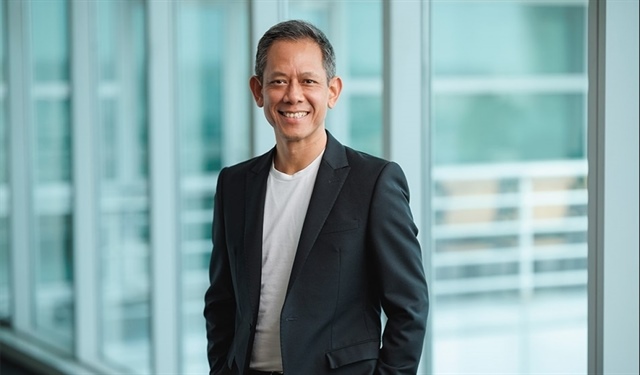
Dr. Pham Thai Lai |
Here in Vietnam, 2025 was a stark reminder of this reality, with the country experiencing a series of severe natural disasters, from prolonged heatwaves and record–breaking storms to widespread flooding that disrupted industries, logistics networks, and daily life. These events made it clear that external shocks are no longer rare; they are becoming part of the operating landscape.
Efficiency still matters – it always will – but efficiency alone is no longer enough. Companies now need resilience, meaning the ability to anticipate disruption, withstand shocks, and recover quickly while keeping operations stable. What is especially important is that resilience and decarbonisation are no longer opposing forces – they actually reinforce one another.
If you think about it, a system that is cleaner, more flexible, and more distributed is also less vulnerable to single point failures. Decarbonised systems tend to be electrified, decentralised, and digitally enabled. Those are precisely the characteristics of resilient infrastructure.
The common foundation that enables both resilience and sustainability is digitalisation. Digital technologies give us transparency, speed, and precision. They allow systems to sense conditions in real time, respond dynamically, and adapt proactively. Without digitalisation, neither resilience nor decarbonisation can advance at the speed the world requires.
Electrification plays a major role in decarbonisation. What challenges does it create for current infrastructure?
Electrification is the most widely accepted and practical pathway towards a net zero future. It is proven, scalable, and applicable across sectors – from manufacturing and transportation to buildings and logistics. In our global Infrastructure Transition Monitor, 64 per cent of leaders agreed that electrification is the most realistic route to net-zero.
But electrification also adds complexity. When companies adopt electric vehicles, electrified machinery, heat pumps, or rooftop solar, they introduce new loads and variable two way power flows. The grid must handle unpredictable peaks, integrate distributed energy sources, and stay stable even as usage patterns shift quickly.
Many grids, globally and across ASEAN, were not built for this level of variability. That is why infrastructure is often cited as the biggest barrier to meeting sustainability targets. The challenge is not ambition; it’s system readiness.
To move forward, we must make infrastructure smarter, not just bigger. Digital grid software, smart transformers, intelligent switching devices, and automated controls give operators real time visibility and better control. These tools help balance loads, reroute power, prevent congestion, and integrate renewables more efficiently. This is how we build a grid that is both electrified and resilient.
Where does digitalisation, and especially AI, fit into building resilient energy systems?
Digitalisation is the engine of resilience. It turns rigid, analogue systems into intelligent networks that can sense, predict, and respond instantly. But it only works when organisations have access to the right data. Many still struggle with data gaps, siloed systems, or limited analytical capabilities, making decarbonisation harder.
This is where AI makes a real difference. Two thirds of leaders in our research believe AI will transform infrastructure operations, and we already see it happening. AI can forecast demand spikes, detect anomalies, and warn operators about potential failures long before they escalate. In regions facing extreme weather or rapid growth, these capabilities can prevent outages and strengthen system stability.
To support this shift, Siemens developed the Industrial Copilot, a generative AI assistant for the entire industrial value chain. It helps generate automation code, assists with troubleshooting, speeds up maintenance planning, and simplifies knowledge transfer. Work that once took days can now be completed in minutes, reducing effort and error rates.
By combining AI with real time operational data, companies move from reactive management to proactive optimisation. This dramatically boosts resilience because systems can adjust automatically and intelligently – even before human intervention is needed.
Siemens recently announced an expanded AI partnership. What does this mean in practical terms for customers and resilience?
Our expanded partnership with Nvidia is about bringing AI into every stage of the industrial value chain. Together, we’re building an Industrial AI operating system to help companies innovate faster, optimise continuously, and operate more resiliently.
Practically, this means three things. First, we are delivering AI accelerated tools – from electronic design to simulation and adaptive manufacturing – allowing faster, more accurate engineering and real time optimisation.
Second, we are enabling an “AI Brain” for factories. By combining Siemens automation and operations software with Nvidia’s AI and simulation platforms, factories can analyse digital twins continuously and convert insights into action on the shop floor. The Siemens Electronics Factory in Erlangen will be the first blueprint, and companies like Foxconn and PepsiCo are already evaluating these capabilities.
Third, we are accelerating GPU powered engineering and AI physics models. This allows autonomous digital twins and 2-10× faster design workflows, improving both reliability and speed.
For customers, the benefits are clear: faster design cycles, shorter commissioning, more reliable operations, and stronger resilience through AI driven prediction and autonomy.
What does all this mean for Vietnam, and what must the country focus on in the coming decade?
Vietnam stands at an important turning point. Its economy is expanding rapidly, its manufacturing base is growing, and its energy demand continues to rise. At the same time, the country remains one of the most climate exposed in Asia, which makes the need for resilient infrastructure more urgent than ever.
Digitalisation gives Vietnam a tremendous advantage. Instead of following a linear development path, Vietnam can leapfrog older models and adopt modern technologies from the outset. Smart grids, AI enabled platforms, digital twins, and AI-driven engineering tools – like Industrial Copilot – allow us to plan more precisely, operate more efficiently, and adapt to change more effectively.
With strong renewable energy potential and a clear national commitment to sustainability, Vietnam is well positioned to become a regional leader in smart infrastructure. But to achieve this, resilience must become the new benchmark – not just a target, but a guiding principle for how we design, build, and operate our energy and industrial systems. If we embrace that mindset, Vietnam can secure a cleaner, stronger, and more stable future for decades to come.
As global conditions continue to shift, resilience is the new benchmark for smart infrastructure. Electrification, digitalisation, and AI are reshaping how systems are designed, operated, and future proofed. For businesses across ASEAN and for nations like Vietnam, those who prioritise resilience today will be best positioned to grow sustainably, adapt quickly, and thrive in an increasingly dynamic world.
- 20:35 19/02/2026