Vietnam making the leap into AI and semiconductors
Vietnam making the leap into AI and semiconductors
Vietnam is increasingly focusing on AI and semiconductor-related activities as part of a broader recalibration of its industrial development model. Among European and international investors, this ambition is no longer seen as aspirational. It is increasingly seen as executable, underpinned by a clear national strategy and two decades of industrial upgrading.

Crucially, Vietnam’s approach does not seek to compete directly with established global technology leaders in frontier research or advanced chip design. Instead, policymakers and investors recognise that the country’s comparative advantage lies in selective positioning within the AI and semiconductor value chains. In these segments, operational execution, manufacturing discipline, and scalability tend to matter more than being at the technological frontier.
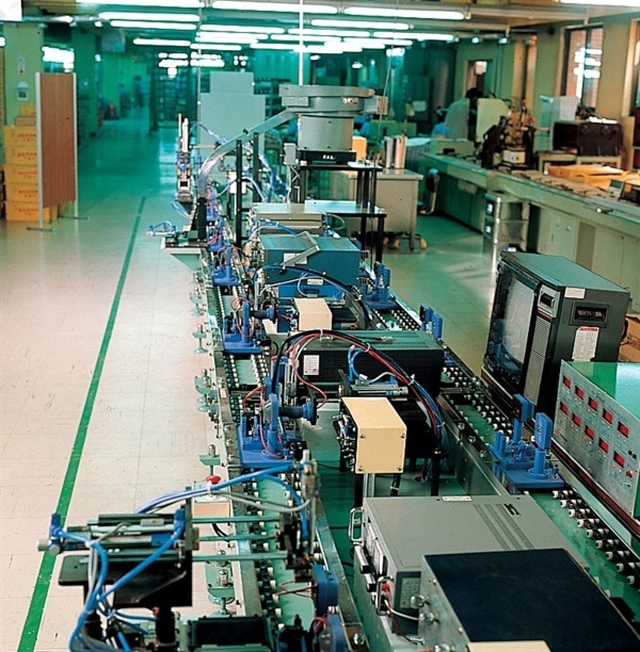
This positioning builds on Vietnam’s existing strengths. The country already benefits from a well-established industrial base in electronics manufacturing and high-tech foreign funding. Global firms have developed large-scale production platforms in Vietnam, creating a dense ecosystem of suppliers, skilled labour, and logistics infrastructure. These capabilities provide a practical foundation for semiconductor-related activities such as assembly, testing, packaging, and advanced electronics manufacturing.
Human capital further reinforces this foundation. Vietnam has steadily expanded its pool of engineers and technology graduates, enabling the development of applied AI solutions, industrial automation, and embedded systems. These technologies are closely aligned with the needs of the real economy, delivering productivity gains across manufacturing, logistics, healthcare, energy management, and public services.
However, the limited availability of senior developers and systems architects with experience in complex, state-of-the-art solutions at scale remains a constraint that will need to be addressed to sustain momentum.
Investor interest is also shaped by Vietnam’s wider external positioning. Political stability, deep integration within ASEAN, and an extensive network of free trade agreements reduce geopolitical and trade-related risks at a time of global supply chain reconfiguration. Reinforced by Vietnam’s “bamboo diplomacy”, these factors support its role as a reliable and politically neutral base for technology manufacturing and deployment. For European backers in particular, this risk profile increasingly supports long-term engagement rather than purely cost-driven decisions.
Such long-term commitments place a premium on policy stability. For deep-tech and semiconductor projects, regulatory predictability consistently outweighs short-term fiscal incentives. Large-scale AI infrastructure and semiconductor investments involve high capital intensity and extended payback periods, making them especially sensitive to regulatory risk.
Vietnam can reinforce confidence by establishing clear and transparent pathways for nationally important technology projects, including streamlined licensing, predictable land-use arrangements, and more effective coordination between central and local authorities.
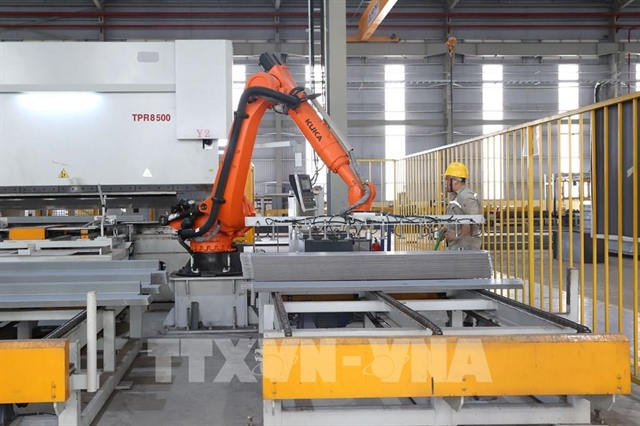
Within this policy environment, targeted incentives tend to deliver stronger results than broad-based support schemes. Priority areas include semiconductor packaging, testing, and supporting industries; AI computing infrastructure and data centres; and industrial and applied AI solutions aligned with Vietnam’s manufacturing and services base. These segments offer the greatest potential for scale, technology spillovers, and productivity gains while remaining consistent with existing capabilities.
As investment scales up, infrastructure constraints become more visible. Energy reliability has emerged as a decisive factor in technology funding decisions. AI infrastructure and data centres are highly energy-intensive and sensitive to power disruptions, making grid stability, energy availability, and renewable integration strategic enablers of Vietnam’s technology ambitions. Investors increasingly view energy policy as an integral component of the AI and semiconductor funding environment, rather than a separate consideration.
Regulatory credibility also extends beyond energy and investment licensing. Closer alignment with international standards on intellectual property protection, data governance, and AI ethics would further strengthen Vietnam’s standing with global technology corporations. European companies, in particular, operate under strict compliance frameworks and require confidence that intellectual property rights and data security will be enforced in practice. Strengthening implementation capacity, rather than relying solely on formal legal provisions, remains a key priority.
Financing represents another structural constraint. AI infrastructure, data centres, and semiconductor-related projects typically require substantial upfront investment and long payback periods that cannot be fully met through traditional bank lending alone. Vietnam has scope to combine state leadership, market mechanisms, and international capital into a balanced model suited to deep-tech development.
A practical financing framework could include long-term institutional capital and project finance for AI infrastructure and data centres; growth equity and venture capital to scale AI-enabled industrial technologies; and public–private co-funding mechanisms to reduce early-stage risk and crowd in private capital. Targeted tax incentives for technology companies, venture capital funds, and angel investors can further support ecosystem development. The central objective is to mobilise patient capital that supports long-term capability building rather than short-term returns.
Experience from Europe highlights the importance of ecosystem design. Successful innovation systems connect research, scale-up, manufacturing, and market access rather than treating them as isolated stages. Mission-driven innovation drives help align public funding with clear national and industrial priorities, ensuring that technological development addresses concrete economic needs.
Vietnam can accelerate the development of its AI and semiconductor ecosystem by strengthening university–industry collaboration, promoting cross-border research and development partnerships that facilitate knowledge transfer, and developing technology clusters linked to existing manufacturing and logistics strengths. Encouraging technology owners to establish regional or Asian headquarters in Vietnam would further enhance technology diffusion and managerial spillovers.
International cooperation should extend beyond technology transfer to include human capital development, institutional learning, and long-term competitiveness. Fast-track immigration and work permit procedures for highly skilled technology professionals and venture capital experts, alongside stronger enforcement of intellectual property protection, would help sustain confidence.
- 10:01 20/02/2026