Việt Nam signals strategic shift in State-owned economy ahead of 14th National Party Congress
Việt Nam signals strategic shift in State-owned economy ahead of 14th National Party Congress
Issued ahead of the 14th National Party Congress, Resolution No 79-NQ/TW sets a decisive policy course for Việt Nam’s economy, reinforcing the State-owned sector as a central lever for macroeconomic stability, strategic autonomy and national competitiveness in the years ahead.

A corner of Hà Nội. — VNA/VNS Photo |
The Politburo has issued Resolution No 79-NQ/TW outlining a strategic roadmap to strengthen the role of the State-owned economy, positioning it as a key pillar of Việt Nam’s economic development towards 2030 and with a long-term vision to 2045.
Issued ahead of the 14th National Party Congress, the resolution is seen as a major policy orientation guiding the country’s economic trajectory over the next five years and beyond. It reaffirms the State-owned economy’s leading role as an important material tool for the State to guide, regulate and stabilise the macroeconomy while ensuring strategic autonomy, self-reliance and national competitiveness.
However, the resolution also acknowledges persistent shortcomings. Legal and policy frameworks for the State economy have been slow to adapt to practical developments, while the management and use of State resources and assets remain inefficient, with waste and losses still occurring. Many State-owned enterprises (SOEs), regarded as the core of the State economy, are operating below their potential, with limited international competitiveness and an insufficient pioneering role in innovation and key strategic sectors.
To address these issues, the resolution calls for the decisive, synchronised and effective implementation of policies to restructure and develop the State-owned economy. By 2030, Việt Nam aims to have 50 SOEs ranked among the top 500 enterprises in Southeast Asia and between one and three SOEs among the top 500 globally.
It also targets the formation of several large, strong State-owned economic groups with modern technology and regional and international competitiveness, capable of leading domestic enterprises’ deeper participation in global production and supply chains, particularly in strategic sectors. All SOEs are expected to adopt modern digital-based corporate governance systems, while State-owned economic groups and corporations will apply governance standards aligned with those of the Organisation for Economic Co-operation and Development (OECD).
In the banking sector, the resolution sets a goal of having at least three State-owned commercial banks among Asia’s 100 largest banks by total assets. For public service units, the focus will remain on accelerating socialisation, streamlining organisational structures and retaining only units that serve political tasks, State management and the provision of basic and essential public services.
Looking ahead to 2045, the resolution envisions the State-owned economy as a solid foundation ensuring national strategic autonomy and comprehensive competitiveness. Targets include national reserves reaching 2 per cent of GDP, around 60 SOEs ranking among Southeast Asia’s top 500 enterprises, five SOEs among the world’s top 500 and at least half of public service units becoming financially self-sufficient or operating effectively under market mechanisms.
Clarifying the State economy under new policy thinking

A corner of Hà Nội. — VNA/VNS Photo |
Dr Trần Du Lịch, former director of the Ho Chi Minh City Institute for Development Studies, said the resolution marked a shift in policy thinking by clearly defining the scope, structure and role of the State economy.
Its most significant contribution lies in reshaping how the State economy is understood, while clarifying the functions and responsibilities of each of its components, according to Lịch. Under the new framework, the State economy encompasses a broad range of assets and resources, including land, mineral and water resources, maritime areas, airspace, underground space, State-invested infrastructure projects, the State budget, national reserves and State-owned enterprises.
“The State must clearly define the role and function of each component and how to use them effectively for development,” he said.
The resolution explicitly identifies SOEs as one component of the State economy. While the State economy plays a dominant role overall, SOEs are expected to move beyond purely commercial activities and work in coordination with the State to lead development efforts, create breakthroughs in key sectors and drive economic restructuring and digital transformation.
Lịch described this as a significant shift in thinking, emphasising that SOEs are assigned a dual role of business operation and development leadership in strategic areas.
According to Lịch, Resolution No.79 is the first to comprehensively define the State economy in terms of all its constituent elements, rather than focusing solely on SOEs. It also explains why the State economy holds a leading position, given that critical assets such as land, infrastructure, airspace, maritime zones and national reserves require the State to take the primary role in investment and management.
“This reflects a profound synthesis of theory and practice after many decades of reform,” he said.
Associate Professor Trần Thọ Đạt of the National Economics University said that in the past, discussions of the State economy often equated it solely with SOEs. Under Resolution 79, however, the concept had been broadened to include not only SOEs but also key resources and assets controlled by the State, including land, natural resources, infrastructure, the State budget, national reserves, off-budget financial funds, State-owned credit institutions and the system of public service units.
He said the expanded definition represented an important change in governance thinking, shifting the focus from the management of individual enterprises to the management, allocation and effective use of overall national resources.
Under this approach, SOEs would remain the core force of the State economy but no longer represent its entirety. This, he said, would allow policymakers to take a more comprehensive and systemic view, while avoiding the tendency to place all expectations or criticism solely on the State-owned sector.
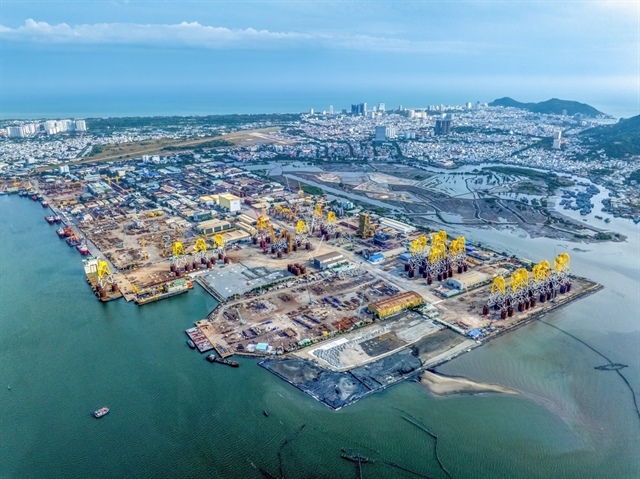
A corner of Hà Nội. — VNA/VNS Photo |
Meanwhile, Dr Bùi Quý Thuấn, head of the research department at the Vietnam Industrial Park Finance Association, said the resolution was expected to serve as a critical theoretical and practical framework for shaping the economic content of documents to be presented at the 14th National Party Congress.
Thuấn said the resolution reaffirmed the leading role of the State-owned economy while signalling a shift in development thinking. Rather than relying on administrative intervention, the new approach emphasised a constructive and leading role driven by operational efficiency, innovation and the application of technology.
He noted that the resolution directly addressed long-standing structural bottlenecks that persisted across multiple Party terms, particularly issues related to capital management mechanisms and the degree of autonomy granted to SOEs.
He said effective implementation of the resolution would provide an important foundation for the Party to set breakthrough growth targets in the coming period, including ambitious objectives such as achieving double-digit economic growth from 2026, as outlined in resolutions linked to the 14th National Party Congress.
Thuấn added that the resolution sent a strong message not only on reforming the State-owned sector but also on how the State participates in and manages the economy in a new phase of development.
He said the effectiveness of the resolution should not be assessed solely by the number of enterprises or projects created, but by the breadth of its influence, its leadership role and the substantive contribution of the State-owned economy to sustainable national economic growth.
However, according to Associate Professor Trần Thọ Đạt, effective implementation will depend largely on how quickly the resolution is institutionalised and translated into concrete legal and administrative mechanisms.
Without timely incorporation into laws, decrees and clear implementation frameworks, the resolution risks remaining a policy statement rather than delivering tangible impact.
Đạt also stressed the need for a shift in management thinking, moving from a mindset of fear of making mistakes to one focused on risk management. This, he said, should be accompanied by mechanisms that protect officials willing to take initiative and act in the common interest.
In addition, he noted that the performance of SOEs must be assessed using specific and transparent indicators, with clear links between individual accountability and operational results.
Dr Trần Du Lịch agreed, saying the National Assembly will need to institutionalise the resolution through a comprehensive review of the legal system and amendments to multiple laws. These include the Law on Management and Investment of State Capital in Enterprises and legislation related to venture capital investment.
He cited governance reforms such as piloting the hiring of general directors and chief executive officers under clearly defined conditions as examples of measures requiring explicit legal frameworks.
“Only with clear and consistent regulations can the Party’s resolutions be effectively put into practice,” he said.
- 12:32 20/01/2026