Integration, regional linkages fuel Việt Nam's investment growth
Integration, regional linkages fuel Việt Nam's investment growth
The country's economic momentum in 2025 was powered not only by macroeconomic stability but also by a reconfiguration of economic space through strategic consolidation, regional linkages, and infrastructure development.
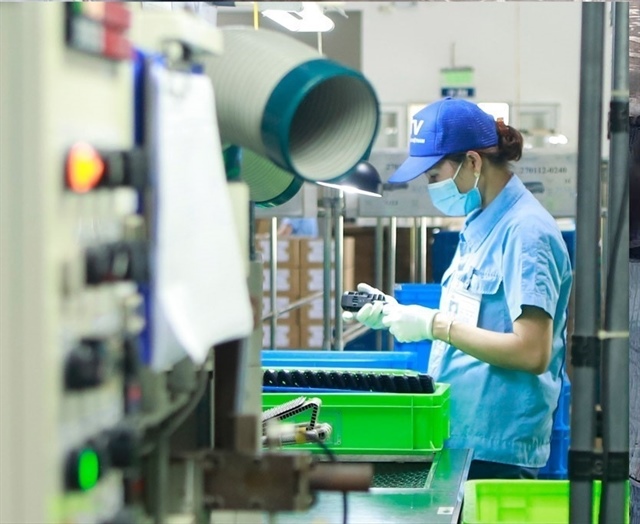
A worker at a production line of a company in Phú Thọ Province. — VNA/VNS Photo |
Amid persistent global economic volatility, Việt Nam continues to stand out with robust growth and a dynamic foreign direct investment (FDI) landscape. The country's economic momentum in 2025 was powered not only by macroeconomic stability but also by a reconfiguration of economic space through strategic consolidation, regional linkages and infrastructure development.
These factors are increasingly shaping the map of strategic investment hotspots for the period 2026–30.
Việt Nam's gross domestic product (GDP) in 2025 is estimated to have reached 8.02 per cent, underscoring the nation’s position as one of the most dynamic economies in Asia, according to economists. This growth has been accompanied by strengthening confidence among international investors, reflected in realised FDI of US$27.62 billion last year, an increase of 9 per cent over 2024.
Vũ Đăng Vinh, CEO of Vietnam Report, observed that policy stability, an improving investment environment and competitive costs are foundational factors helping Việt Nam maintain its appeal to investors. However, he emphasised that future growth drivers will not rest solely on these traditional advantages. Instead, they stem from efforts to restructure the economy, particularly through the formation of large economic regions, promoting regional linkages and strategic infrastructure investment.
It is this emerging emphasis on regional cooperation and connectivity that is reshaping where and how investment flows are directed. The recent Top Ten Most Attractive Localities for Large Enterprises in 2025 list by Vietnam Report highlights this trend, showing a clear shift of capital toward provinces and cities offering not only favourable investment policies but also integrated regional networks and synchronised infrastructure systems.
New strategic investment
Among the emerging centres of growth, Phú Thọ stands out as a new ‘growth pole’ in the northwest gateway of the Red River Delta. Its strategic location west of the capital, coupled with modern transport links such as the Nội Bài–Lào Cai and Việt Trì–Ba Vì expressways, has positioned Phú Thọ as a key connector between the economic heartland and the broader northwest.
This regional linkage has facilitated the province’s evolution into a multi-sector economic hub, spanning industry, logistics and tourism services. The provincial leadership has articulated a long-term vision to develop Phú Thọ into a major national centre for high-value industries, including electronics, automotive and new technology sectors.
Phú Thọ’s administrative strategy reflects a deliberate effort to cultivate three distinct economic zones: a central core focused on urban development, education, health care and high-quality services; an eastern industrial belt oriented to heavy manufacturing, technology clusters and logistics; and a western ecological zone prioritising agri-industry, organic farming, wellness tourism and community-based leisure services.
This diversified spatial structure demonstrates how regional integration and specialisation are being used to build competitive economies that extend beyond traditional urban centres.
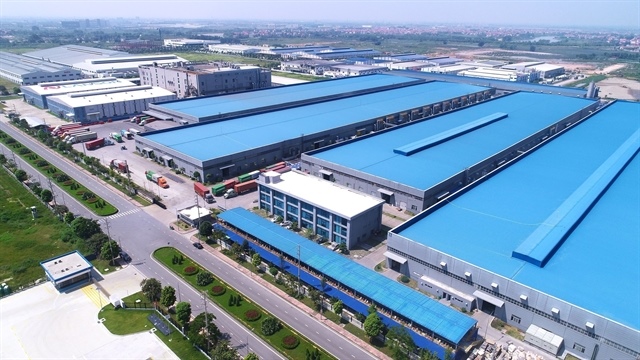
A worker at a production line of a company in Phú Thọ Province. — VNA/VNS Photo |
Industrial dynamics in growth centres
Other localities in the Top Ten list, including Bắc Ninh, Quảng Ninh, Hải Phòng, Hà Nội, HCM City, Hưng Yên, Ninh Bình, Đồng Nai and Tây Ninh, also play diverse roles in the national economic landscape.
Bắc Ninh, for example, continues to strengthen its position as a high-tech manufacturing hub near the capital. The province’s advantages in transport connectivity and skilled human capital have attracted world-class FDI players, particularly in electronics and semiconductor supply chains, fostering a dynamic industrial ecosystem.
Meanwhile, Quảng Ninh is emerging as one of the fastest-growing poles in the Northern Key Economic Region, driven by its maritime economy, modern transport and logistics infrastructure, and an increasing focus on sustainable tourism and environmental stewardship. Investors from South Korea, especially in automotive components, shipbuilding, high-tech agriculture and green industries, cite Quảng Ninh’s integrated advantages as a key factor in their investment decisions.
Lee Young Ho, CEO of SAP Vietnam Company Limited, noted the company’s remarkable progress in establishing automated production capable of delivering 1.5 million safety belt units annually. He praised the province’s modern industrial parks, efficient connectivity with ASEAN and China, and proactive government support, while highlighting the strong prospects for further Korean investment across multiple sectors.
The 2025 ranking underscores that enterprise prosperity increasingly depends on the quality of local governance, regional linkages and the strength of regional value chains. Vũ Đăng Vinh said localities must proactively reform, promote regional cooperation and redefine their growth models to remain attractive destinations for capital, talent and innovation.
The report also underlines that regional integration is crucial not only for economic growth but for climate resilience. Linked economic spaces with robust infrastructure networks improve the continuity of supply chains and enhance capacity to mitigate and respond to natural hazards, factors that large investors now consider essential in their decisions.
- 07:50 19/01/2026