Vietnam’s private capital market enters selective recovery phase
Vietnam’s private capital market enters selective recovery phase
Vietnam’s private capital market has moved past the most fragile stage of the 2022-2024 adjustment cycle and is now entering a recovery phase, with capital returning in a more selective and disciplined manner.
According to 'Vietnam’s Venture Capital & Private Equity Outlook 2026', released by Thien Viet Securities (TVS) at the Founder Codex 2026 Forum in Ho Chi Minh City on January 15, the country's private capital market is expected to be shaped by three main trends in the period ahead: a selective recovery of venture capital (VC) and private equity (PE) flows, a stronger focus on sectors with long-term growth potential, and improving exit prospects, although investors will continue to require a patient, long-term approach.

The Founder Codex 2026 Forum was held on January 15 in Ho Chi Minh City |
From a macroeconomic perspective, TVS noted that Vietnam continues to be regarded as one of the region’s fastest-growing and most resilient economies.
The report noted that Vietnam continues to post one of the highest GDP growth rates in ASEAN, with a growth target of 10 per cent for 2026.
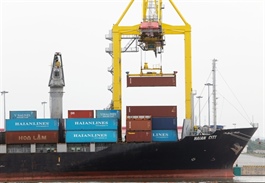
“Total import–export turnover in 2025 is estimated at $920 billion, up 16.9 per cent on-year,” the report said. “At the same time, the Innovation 2.0 strategy – focused on science and technology, institutional reform, international integration, and private-sector development – is strengthening investor confidence in Vietnam’s economic outlook, both domestically and internationally.”
Nguyen Hoa Chung, head of Private Investment at TVS, commented that 2025 marked a recovery period for Vietnam’s private capital market, with total investment value rising more than twofold on-year, albeit with capital returning in a more selective fashion.
“Investors are shifting their focus from rapid growth to capital efficiency, profitability roadmaps, and execution capabilities, with higher investment discipline and larger deal sizes,” Chung said.
Total VC and PE investment value in 2025 more than doubled compared to 2024, signalling a clear rebound and approaching 2023 levels, even as the number of deals remained relatively low.
This trend indicates that the market is entering a phase of selective capital reallocation, with funding increasingly concentrated on companies that have moved beyond the pilot stage and entered a growth phase.
Compared to the 2021-2022 peak, deal volumes have yet to return to previous highs, but the average deal size has increased markedly.
This reflects a fundamental shift in investor appetite, with greater emphasis on businesses with solid product or service foundations, clear profitability pathways, and efficient capital utilisation, rather than growth at all costs.
“There is ample evidence that some foreign investment funds have become more cautious and, in some cases, have withdrawn capital from Vietnam,” the report said. “At the same time, the emergence of new funds such as ThinkZone Global Minds Fund, alongside sector-focused vehicles like the Touchstone Green Transition Fund for climate technology and the GenAI Fund targeting generative AI, indicates that the private capital ecosystem is becoming more diverse and specialised.”
TVS’s report indicates that private investment flows in Vietnam are concentrating on sectors that simultaneously meet three criteria: clear policy support, long-term market demand, and the ability to generate sustainable cash flows.
Healthcare continues to be viewed as a sector with strong medium- and long-term potential.
Healthcare spending in Vietnam is projected to rise from around $22 billion in 2022 to nearly $30 billion by the end of 2026, amid rapid population ageing and mounting pressure on the public healthcare system.
Many public hospitals are currently operating at 80–150 per cent capacity, while the doctor density remains at about nine per 10,000 people. The gap between demand and supply capacity presents significant growth opportunities for the private healthcare sector.
Sectors linked to the green transition and sustainable infrastructure, such as electric vehicles and clean energy, continue to entice capital.
Notable examples include Dat Bike’s $26 million fundraising round led by FCC, with participation from Jungle Ventures and TVS. The green economy is seen as one of the pillars for long-term capital inflows, benefiting both from the scale of the domestic market and from policy commitments such as Vietnam’s Net Zero 2050 target.
At the same time, the consumer sector, with substantial growth headroom driven by a population of nearly 100 million and a rapidly expanding middle class, has attracted significant investment. A prominent example is Coolmate, which raised $20 million from Vertex Growth and Cool Japan.
Education and training, particularly private education and edtech, have also drawn strong investor interest.
“Demand for high-quality education continues to rise alongside household incomes, while the public education system remains under pressure in terms of scale and resources,” Chung noted.
The market has recorded notable deals such as Galaxy Education’s $10 million fundraising round, reflecting investor confidence in stable demand and long-term potential, especially suited to growth equity and merger and acquisition strategies.
In addition, AI and digital infrastructure are emerging as key pillars for long-term capital attraction.
AI is projected to contribute around $120 billion to Vietnam’s economy by 2040, becoming a major growth engine alongside traditional industries.
Representative deals in this space, such as AI Hay’s $10 million raise and NamiTech’s $4 million funding round, demonstrate investors’ preference for technology solutions that enhance productivity and operational efficiency, rather than short-term trends.
- 11:49 19/01/2026