Việt Nam certifies 71,000 tonnes of low-emission green rice, industry body says
Việt Nam certifies 71,000 tonnes of low-emission green rice, industry body says
Việt Nam has become the world’s first country to produce and export low-emission rice.
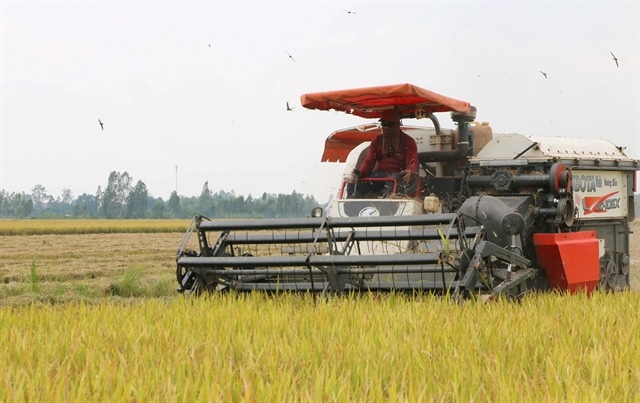
Việt Nam has harvested a new milestone in sustainable agriculture, with up to 71,000 tonnes of rice certified under the Low-Emission Green Vietnamese Rice label over the past two years, the Vietnam Rice Sector Association (VIETRISA) said on Wednesday.
The label is granted by VIETRISA to rice produced in line with technical standards set under the One Million Hectare Programme and verified by commune-level authorities or accredited international organisations.
Certified rice must meet traceability requirements covering production areas, varieties and cropping seasons and comply fully with low-emission, high-quality cultivation protocols.
VIETRISA has so far issued label-use certificates to eight enterprises cultivating a combined area of about 18,000ha, its vice chairman Lê Thanh Tùng said at a meeting in Cần Thơ.
According to Tùng, Việt Nam has become the world’s first country to produce and export low-emission rice.
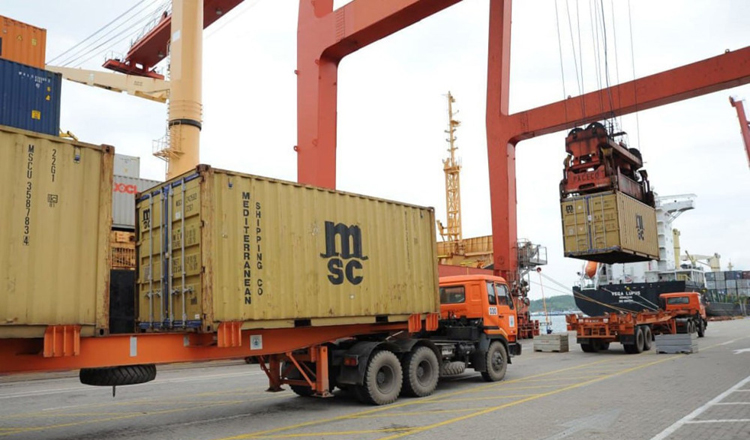
Eight companies are currently exporting about 70,000 tonnes of low-emission rice under the One Million Hectare Programme, out of roughly 400 rice exporters nationwide.
While the number of participating companies remains limited, Tùng said, the exports mark an important milestone, reflecting the project’s early progress and the challenges of its initial implementation.
Vice Chairman of the National Assembly Lê Minh Hoan said changes in human behaviour are a critical but often overlooked factor in implementing the One Million Hectare Programme.
Discussions on the programme frequently focus on rice varieties, cultivation techniques, irrigation, fertiliser reduction and emissions targets, Hoan said, but behavioural change cannot be measured by machines or found in rice fields.
He said the media play a distinct role in supporting that transition, not by directing or enforcing change but by accompanying farmers and encouraging them through practical examples.
“If policy is a blueprint, then the press is the storyteller of life within that blueprint,” Hoan said, adding that farmers respond more to stories of real people and familiar fields than to technical terms such as carbon targets.
Rather than emphasising emissions, he said media coverage should highlight farmers who sow less densely and achieve healthier crops, reduce post-harvest burning or lower costs while maintaining yields, making change appear practical and attainable.
Hoan also described cooperatives as a key pillar of the project, noting that their reform cannot rely solely on administrative measures. He said the media could contribute by showcasing successful cooperatives, explaining management changes and identifying gradual but sustainable improvements.
The press should neither exaggerate achievements nor focus solely on shortcomings, he said, but clearly outline pathways for others to follow, acting as a practical guide to innovation rather than portraying it as an abstract goal.
Meanwhile, Vietnamese businesses participating in the programme need not only financial incentives but also credibility, trust and a socially responsible image.
Hoan said the media could support this process by recognising companies that make long-term investments alongside farmers, telling brand stories linked to sustainable farming practices.
Such coverage creates constructive pressure, encouraging companies to adjust their behaviour towards sustainability to protect their reputation, meet market expectations and secure long-term development, Hoan said.
- 17:13 31/12/2025