Strategic fiscal steering underpins growth momentum: minister
Strategic fiscal steering underpins growth momentum: minister
The investment and business environment continued to improve, public investment disbursement accelerated, and resources were mobilised for development.
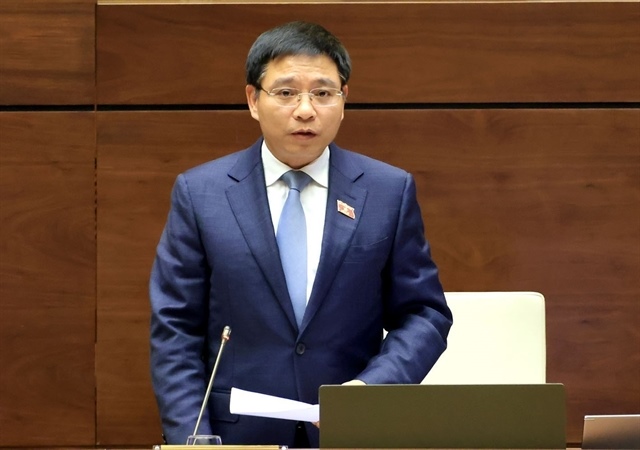
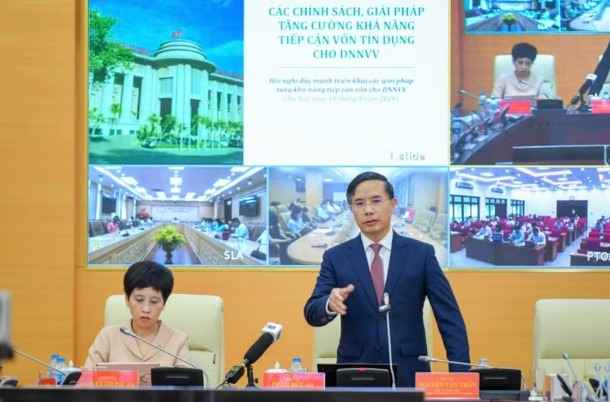
Minister of Finance Nguyễn Văn Thắng. VNA/VNS Photo |
Strategic policy advice and flexible fiscal management enabled Việt Nam to maintain macroeconomic stability and achieve growth of over 8 per cent in 2025, despite global uncertainty and severe natural disasters, Minister of Finance Nguyễn Văn Thắng told the Vietnam News Agency
In 2025, despite global volatility and severe domestic natural disasters, Việt Nam maintained macroeconomic stability and achieved growth of over 8 per cent. What key measures did the financial sector implement to support this outcome?
Minister Nguyễn Văn Thắng: Indeed, 2025 was a particularly challenging year. Global economic volatility remained high, while domestically, natural disasters and floods caused damage estimated at hundreds of trillions of đồng.
Yet Việt Nam succeeded in maintaining macroeconomic stability and achieving growth of over 8 per cent. These results reflect the significant contribution of the financial sector through proactive, coordinated, timely and effective policy formulation and implementation in public finance and the state budget.
First and foremost, the Ministry of Finance focused on improving institutions and the legal framework governing finance, budgeting and investment to remove legal bottlenecks and mobilise resources for development.
This included implementing breakthrough resolutions of the Politburo, such as Resolution No. 57-NQ/TW on science, technology, innovation and national digital transformation and Resolution No. 66-NQ/TW on reforming law-making and law enforcement in a new era, alongside appropriate decentralisation aligned with the two-tier local government model.
In 2025 alone, the ministry advised and contributed to the issuance of a substantial volume of policy documents, including one Politburo resolution, 28 laws and National Assembly resolutions and 93 Government decrees, resolutions and Prime Ministerial decisions.
These efforts were accompanied by renewed legislative thinking and stronger decentralisation, helping remove practical obstacles, cut administrative procedures and business conditions, reduce compliance costs for citizens and enterprises and secure resources for implementing major strategic resolutions. At the same time, we gradually improved the legal framework for new economic models, creating fresh momentum for future growth.
Second, fiscal policy was managed in a reasonably expansionary manner, with clear priorities, while remaining closely aligned with the goal of maintaining macroeconomic stability and national financial security.
By the end of 2025, state budget revenue was estimated to exceed projections by 33–35 per cent, even as the Government implemented extensive tax and fee reductions and extensions totalling about VNĐ241 trillion (US$9.2 billion) to support production and business activities.
Public debt and budget deficits were tightly controlled, ensuring the sustainability of major economic balances.
Third, the ministry proactively developed growth scenarios and advised the Government on assigning growth targets linked to specific tasks and solutions for each sector, industry and locality, aiming for national growth of at least 8 per cent.
Flexible and coordinated policy measures were also proposed to ease difficulties, unlock resources and foster new growth drivers.
Fourth, we continued developing the stock market as a key channel for medium- and long-term capital mobilisation.
In 2025, efforts focused on improving institutions, reorganising the market and modernising infrastructure to meet all criteria for an upgrade to secondary emerging market status. Market capitalisation was estimated at VNĐ9.6 quadrillion, up 35 per cent from the end of 2024, equivalent to 84.1 per cent of GDP.
Finally, comprehensive modernisation and digital transformation of the financial sector were accelerated, particularly in taxation, customs, budgeting, public assets, enterprises and social insurance.
All administrative procedures under the Ministry were standardised and integrated into information systems, while 13 national and sectoral databases were connected to support the effective operation of the two-tier local government model and the development of a digital government, digital economy and digital society.
As Việt Nam targets double-digit growth from 2026 while safeguarding macroeconomic stability, what breakthrough priorities and policy solutions will the financial sector focus on?
Minister Nguyễn Văn Thắng: In the coming period, to achieve double-digit growth while safeguarding macroeconomic stability, the financial sector will continue to implement assigned tasks decisively and effectively, focusing on several key priorities.
First, we will prioritise growth alongside inflation control and the safeguarding of major economic balances, public debt and budget deficits. The ministry is currently submitting the draft Resolution No. 01/NQ-CP for 2026, which includes management scenarios aimed at achieving growth of 10 per cent or higher, with clear targets and responsibilities for each sector and locality.
Fiscal policy will remain proactive and reasonably expansionary, with focused priorities. We will strengthen the central budget’s leading role while encouraging initiative and creativity at ministerial and local levels and closely coordinate fiscal and monetary policies to stabilise the economy while promoting high-quality growth and new development models.
At the same time, we will enhance the effectiveness of budget revenue and expenditure management, ensuring accurate, sufficient and timely collection, nurturing revenue sources and targeting a state budget mobilisation rate of around 18 per cent of GDP during 2026–2030.
Expenditure will be restructured to raise the share of development investment to about 40 per cent of total spending, focusing on strategic infrastructure, social security, defence and security, while managing public debt and deficits in line with repayment capacity to improve national credit ratings.
In the context of emerging economic models and the need to mobilise diverse resources, what solutions will the financial sector implement to create sustainable long-term growth momentum?
Minister Nguyễn Văn Thắng: To create sustainable growth space, the financial sector will focus on synchronously developing financial markets, particularly the capital and stock markets, to form efficient medium- and long-term funding channels.
Stock market upgrading presents a significant opportunity to attract stronger domestic and foreign investment flows.
At the same time, we will continue improving the legal framework for new economic models and trends such as the digital economy, green transition and digital assets, while enhancing corporate governance and market transparency.
Regarding foreign investment, we will pursue selective attraction, prioritising large-scale, high-technology, environmentally friendly projects with strong spillover effects and strengthening linkages between domestic enterprises and foreign-invested firms to deepen participation in global value and supply chains.
- 08:29 08/01/2026