Leadership, culture drive gender equality at work
Leadership, culture drive gender equality at work
Gender equality in the workplace is not about favouring one gender, but about removing invisible barriers and designing systems that allow all talent to realise its full potential, speakers said at a forum held in HCM City on January 15.
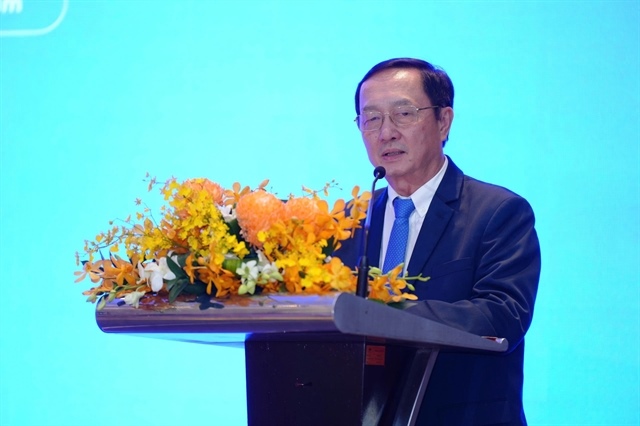
Huỳnh Thành Đạt, Deputy Head of the Party Central Committee’s Commission for Information, Education and Mass Mobilisation, speaks at the GEARS@VIETNAM Annual Forum 2026. — Photo courtesy of BSA |
Gender equality in the workplace is not about favouring one gender, but about removing invisible barriers and designing systems that allow all talent to realise its full potential, speakers said at a forum held in HCM City on Thursday.
Under the theme “The Role of Leadership and Culture in Creating a Sustainable Workplace,” the 2026 GEARS@VIETNAM Annual Forum brought together business leaders, experts, representatives of industry associations and development organisations.
Discussions focused on the links between leadership, corporate culture and gender equality – factors increasingly seen as indicators of governance quality, workforce resilience and workplace attractiveness.
GEARS@VIETNAM is jointly implemented by the Business Studies and Assistance Centre (BSA) and Hà Nội-based social enterprise ECUE, with support from Investing in Women, an initiative of the Australian Government. The programme helps enterprises measure and strengthen environmental, social and governance (ESG) practices in human resource management through the GEARS (Gender Equality Assessment, Results and Strategy) toolkit, thereby enhancing competitiveness in global supply chains.
Addressing the forum, Huỳnh Thành Đạt, Deputy Head of the Party Central Committee’s Commission for Information, Education and Mass Mobilisation, gender equality is an integral component of social progress and a prerequisite for fully unlocking human resources, the central factor in Việt Nam’s industrialisation and modernisation.
These principles are reflected in the National Strategy on Gender Equality for 2021–2030, which sets targets to narrow gender gaps in employment, income and promotion opportunities; increase women’s participation in management and leadership; build safe, respectful and bias-free workplaces; and ensure both women and men can fully develop their capabilities and contribute to national development, he said.
According to Đạt, leadership and organisational culture are the two decisive factors in advancing gender equality in the workplace. Leaders shape environments that are fair in opportunity, transparent in evaluation and remuneration, safe and respectful, while encouraging innovation and individual potential.
He described GEARS@VIETNAM as an important mechanism for translating Party policies and national gender equality goals into concrete practice. Beyond advocacy, the programme provides practical tools to measure gender equality, advise on human resource policy reform, support ESG implementation and build a community of pioneering enterprises.
To ensure continued impact, he called on GEARS@VIETNAM to focus on four priorities: expanding support to more enterprises, particularly those in export supply chains and key economic sectors; aligning programme activities closely with national gender equality and sustainable development objectives; strengthening cooperation with industry associations, local authorities and the media to create wider spillover effects; and recognising and scaling up exemplary models to embed gender equality as a core corporate value.
Sarah Hopper, Australian Consul General in HCM City, said ensuring gender equality in the workplace is not only a matter of fairness, it is a driver of competitiveness and long-term prosperity. Companies that embrace gender equality are better positioned to attract and retain top talent, reduce costly turnover and build resilient, loyal teams.
Inclusive workplaces also enhance reputation and stakeholder trust, positioning businesses as forward-thinking and responsible. Gender-diverse leadership delivers measurable financial benefits, fosters innovation, strengthens ESG outcomes and improves profitability.
Ultimately, these advantages extend beyond individual firms to benefit the wider economy, she said.
Huỳnh Thành Đạt, Deputy Head of the Party Central Committee’s Commission for Information, Education and Mass Mobilisation, speaks at the GEARS@VIETNAM Annual Forum 2026. — Photo courtesy of BSA |
Sharing experience from the higher education sector, Professor Ngô Thị Phương Lan, president of the University of Social Sciences and Humanities, said women account for around 80 per cent of students and 60 per cent of staff at the institution. Women hold 53 per cent of leadership positions, including 32 per cent of top executive roles.
She noted that management decisions at the university prioritise competence, suitability and contribution rather than gender. While Việt Nam is widely recognised for having strong gender equality policies, lasting change depends more on leadership commitment and organisational culture than on regulations alone.
Recent international studies show that organisational culture is a key competitive advantage in attracting and retaining high-quality human resources. In this context, gender equality has become an important indicator of how progressive and appealing a workplace is, she added.
From awareness to data-driven action
At the forum, Lê Quang Bình, director of ECUE and head of the GEARS@VIETNAM Programme, presented the 2025 summary report, highlighting a clear shift among participating enterprises from awareness to data-driven action.
According to Bình, managing gender equality is not simply about counting the number of male and female employees. Many businesses want to promote gender equality but struggle with how to measure, monitor and improve it systematically.
GEARS is not a checklist for corporate image-building but a management tool that helps leaders confront organisational realities. When data clearly identify structural barriers, enterprises are better equipped to develop concrete, measurable commitments, he said.
Beyond gender equality, GEARS also functions as a risk management tool, helping businesses identify legal, reputational and governance risks. Importantly, it provides critical input for ESG reporting, particularly under the Social (S) and Governance (G) pillars, which are increasingly scrutinised in global supply chains.
From a business perspective, Đặng Huỳnh Ức My, chairwoman of Thành Thành Công – Biên Hòa JSC (AgriS), said that in today’s context of international integration, gender equality and ESG are no longer goodwill options but prerequisites for deeper participation in global supply chains.
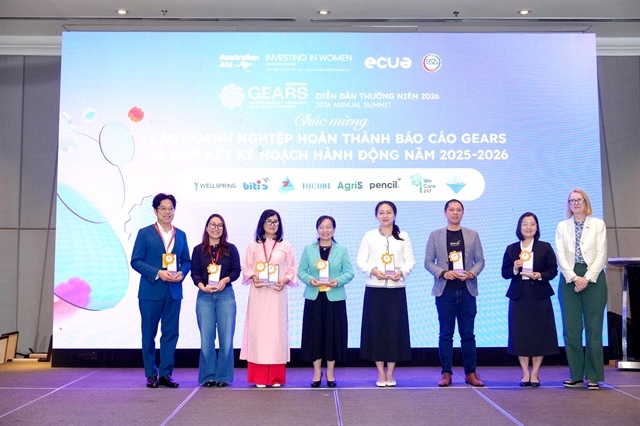
The forum also witnessed the signing of memoranda of understanding between GEARS@VIETNAM and major industry associations, including the Vietnam Association of Seafood Exporters and Producers, the Vietnam Textile and Apparel Association, and the Vietnam Leather, Footwear and Handbag Association, aimed at promoting gender equality across industries, strengthening ESG compliance, improving working conditions and reinforcing the position of Vietnamese enterprises in global supply chains.
- 07:05 16/01/2026