Double duties, tightening rules: a critical test for shrimp exports
Double duties, tightening rules: a critical test for shrimp exports
If the preliminary anti-dumping duty of 35.29 per cent imposed on certain companies is upheld in the final ruling expected in early 2026, the industry could face a major turning point.
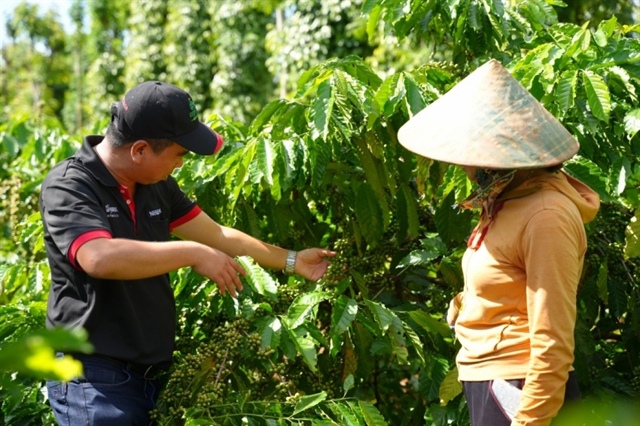
Shrimp harvested at a farm in Cà Mau Province, where farmers are increasingly squeezed by rising compliance costs and shrinking margins amid tightening export barriers. VNA/VNS Photos |
As 2026 approaches, Việt Nam’s shrimp export industry is entering its most uncertain period in more than a decade, caught between escalating US anti-dumping and countervailing duties and a tightening web of non-tariff barriers in its most important export market.
According to Nguyễn Hoài Nam, general secretary of the Vietnam Association of Seafood Processing and Exporters (VASEP), this month marks a critical period for the shrimp industry.
This is when enterprises must finalise data submissions to the US Department of Commerce (DOC), while the 19th administrative review (POR19) for frozen warm water shrimp imported from Việt Nam moves to a decisive stage.
If the preliminary anti-dumping duty of 35.29 per cent imposed on certain companies is upheld in the final ruling expected in early 2026, the industry could face a major turning point, Nam told thesaigontimes.vn.
Risk of double taxation
After years of relative stability, with anti-dumping duties at zero or near zero, shrimp exporters in 2025 are under dual pressure from US trade defence measures and its retaliatory tariffs, industry insiders said.
Combined with a 20 per cent retaliatory duty and the preliminary anti-dumping duty, the tax rate applied to frozen shrimp exported to the US could reach 55.29 per cent.
When the countervailing duty of 2.84 per cent, imposed since late 2024, is added, the total tax burden on Vietnamese shrimp exports to the market would rise to nearly 60 per cent. This pressure is particularly concerning given the importance of the US market.
As of November 15, 2025, shrimp exports to the US reached US$731 million, up 8 per cent year-on-year, maintaining the country’s position as the second-largest consumer market for Vietnamese shrimp.
VASEP said that if the preliminary tariff remains unchanged, exporters would face significant financial pressure, potentially undermining the industry’s ability to maintain market share in the year ahead.
More broadly, non-tariff barriers are tightening rapidly, with the US stepping up quality inspections and traceability requirements. Each additional requirement prolongs customs clearance times, increases documentation costs and heightens the risk of shipments being returned, industry insiders say.
Ngô Tiến Chương, senior technical expert at the Deutsche Gesellschaft für Internationale Zusammenarbeit (GIZ), said that compliance costs associated with non-tariff barriers would place the greatest pressure on seafood processing enterprises, followed by aquaculture farmers, who operate with the thinnest and most vulnerable profit margins in the supply chain.
Change in trade landscape
|
Shrimp harvested at a farm in Cà Mau Province, where farmers are increasingly squeezed by rising compliance costs and shrinking margins amid tightening export barriers. VNA/VNS Photos |
Experts say the trade landscape with the US is undergoing significant change, with growing pressure on businesses stemming not only from specific tariff measures but also from a broader shift in how US trade policy is designed and implemented.
Trần Toàn Thắng from the Ministry of Finance's National Institute for Economics and Finance, said tariffs could no longer be viewed solely as a matter of tax rates. In the current global context, trade was increasingly intertwined with investment, supply chains and a range of strategic considerations.
He told thesaigontimes.vn that trade was now being used to pursue non-trade objectives, while non-trade measures were simultaneously being incorporated to serve trade goals. As a result, reciprocal tariffs were increasingly functioning as policy tools rather than purely trade-related measures.
Ngô Chung Khanh, deputy director general of the Ministry of Industry and Trade's Multilateral Trade Policy Department, who has been directly involved in negotiations with the US on the reciprocal tariff framework described the talks as highly complex, noting that the US is adopting an unprecedented approach by negotiating with multiple partners simultaneously.
In his speech at a recent forum, Khanh said Việt Nam and the US reached a joint statement agreeing to continue reciprocal negotiations toward a fair and balanced trade agreement and were working to narrow differences in order to achieve a final outcome as soon as possible.
However, he noted that US policies remained unsettled, with forthcoming rulings by US judicial authorities potentially reshaping broader policy directions – developments being closely watched not only by Việt Nam but by the global community.
Khanh said Việt Nam should view the US not only as an export market but also as a source of imports, noting that increased purchases of US technology and raw materials could help rebalance trade and strengthen the long-term bilateral relationship.
He also emphasised the importance of supply chain transparency and traceability, which he said were increasingly becoming a prerequisite for access to major markets, from the US to Europe.
Global competition
From this perspective, the pressure facing Việt Nam’s shrimp industry is no longer limited to a single tariff or legal case, but reflects the combined impact of three forces: US trade defence measures, shifts in the global competitive landscape and increasingly stringent compliance requirements, according to experts.
India is facing total tariffs exceeding 58 per cent, Indonesia has encountered technical issues leading to shipment returns, while Ecuador continues to struggle to expand market share due to its reliance on whole shrimp products. These developments point to significant supply disruptions and potential market opportunities.
However, such opportunities will only materialise if Việt Nam successfully navigates the POR19 review and adapts to the new regulatory environment in the US market, they note.
As 2026 approaches, the outlook remains uncertain. In response, companies say they are strengthening legal documentation, reviewing supply chains, working more closely with US importers and diversifying their markets.
- 08:32 03/01/2026