Cambodia’s trade surpasses $64B in 2025, up 16.8%
Cambodia’s trade surpasses $64B in 2025, up 16.8%
The sustained growth in trade underscores the Kingdom’s deepening integration into the global economy, supported by rising demand for both exports and imports and the country’s expanding role within regional and international trade networks.
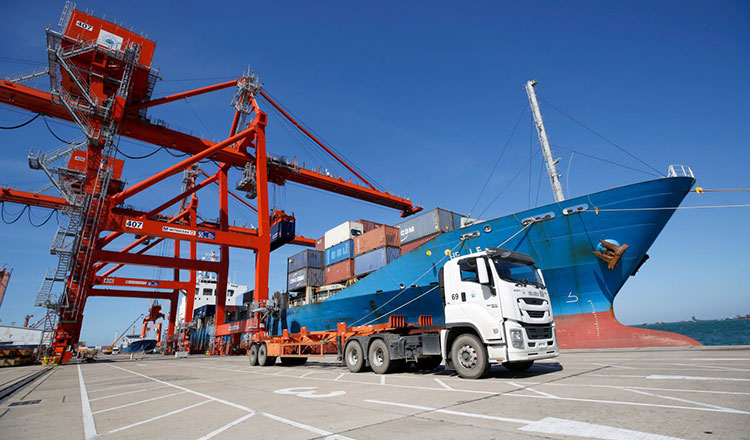
Cambodia’s total trade with international partners exceeded $64 billion in 2025, marking a year-on-year increase of 16.8 percent compared with the same period in 2024, according to data released by the General Department of Customs and Excise (GDCE) on Friday.
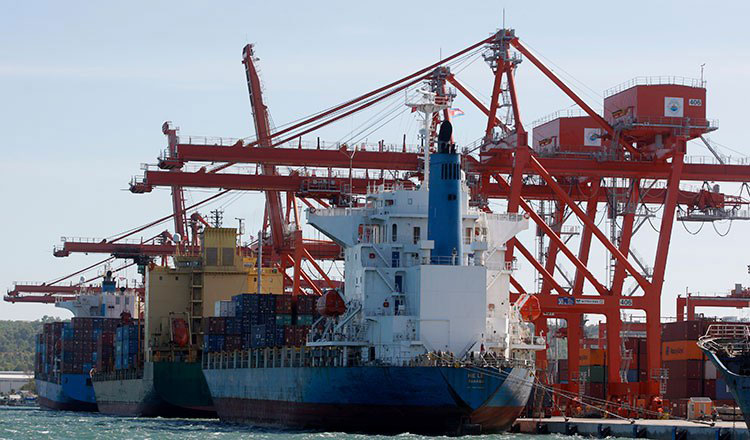
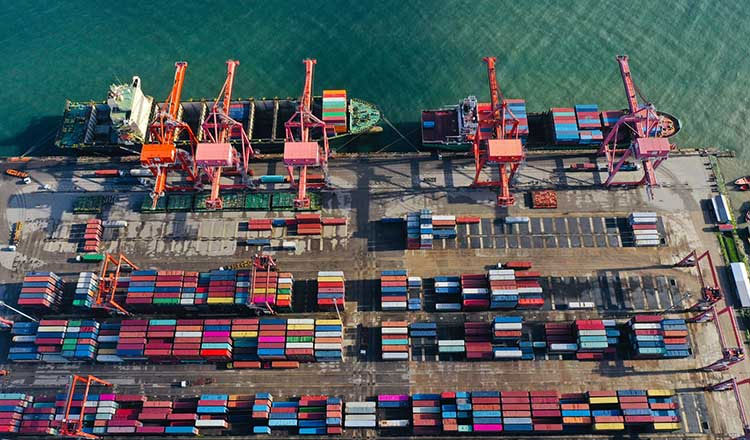
The GDCE reported that from January to December 2025, the combined value of exports and imports reached $64.02 billion, up from around $54 billion a year earlier. Exports were valued at $30.14 billion, representing a 14.7 percent increase, while imports rose more sharply to $33.88 billion, up 18.7 percent year-on-year.
As a result, Cambodia recorded a trade deficit of approximately $3.73 billion over the period, the data showed.
China remained Cambodia’s largest trading partner, with bilateral trade exceeding $19 billion. The United States ranked second at over $13 billion, followed by Vietnam with more than $7.7 billion. Other key partners included Japan at $2.53 billion and Singapore at about $1.4 billion.
The GDCE figures also point to strong trade activity with a wide range of other markets, including Germany, the Netherlands, France, Canada, Indonesia, Thailand, Spain, the United Kingdom, Italy, Belgium, South Korea, India, Malaysia, Taiwan and Hong Kong.
The sustained growth in trade underscores Cambodia’s deepening integration into the global economy, supported by rising demand for both exports and imports and the country’s expanding role within regional and international trade networks, the data indicated.
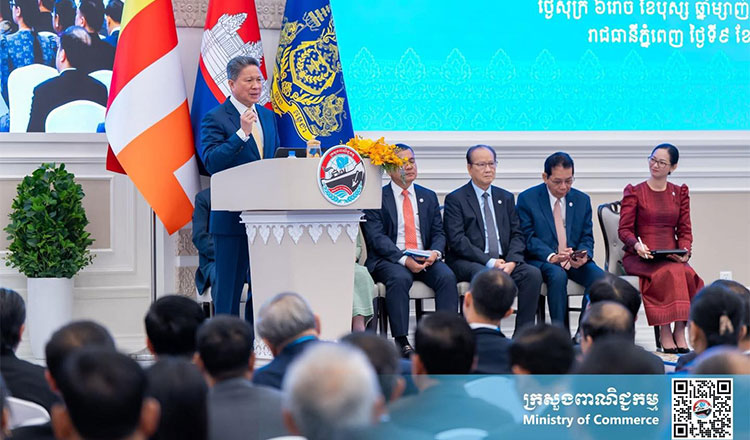
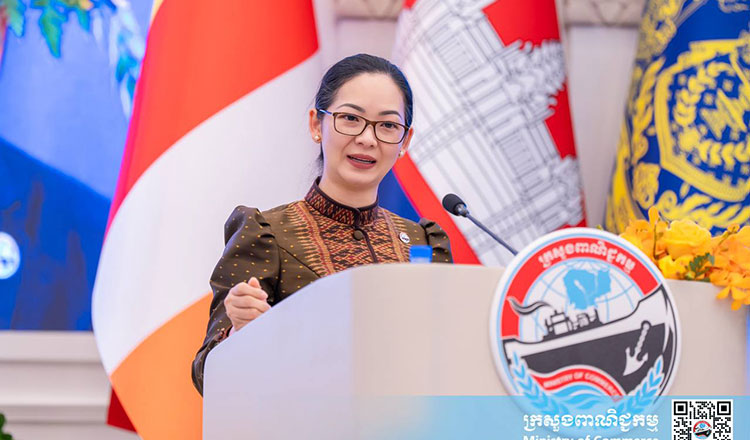
Cambodia has recorded a historic improvement in its trade position, with exports and imports now at near parity, Deputy Prime Minister Sun Chanthol, First Vice-President of the Council for the Development of Cambodia (CDC), said.
Speaking at the Ministry of Commerce’s annual meeting on Thursday, Chanthol described the development as a significant milestone for the country’s economic stability.
“At present, Cambodia’s exports and imports are broadly equal in value, resulting in an exceptionally strong trade balance,” he said. “This represents a marked departure from the past, when the economy depended heavily on imports while exports remained relatively modest.”
The announcement comes against a backdrop of global uncertainty, with supply chains continuing to shift amid rising protectionism and heightened geopolitical tensions.
Representing Prime Minister Hun Manet at the meeting, Chanthol cautioned that global economic fragmentation and regional conflicts could pose ongoing risks to Cambodia’s growth prospects.
“The rapid and unpredictable evolution of the global economic environment could place pressure on growth and disrupt the Royal Government’s socio-economic development efforts,” he said.
To address these challenges, the Deputy Prime Minister urged the Ministry of Commerce to remain “sharp and focused” in shaping its 2026 strategy, ensuring close alignment with the Royal Government’s Pentagonal Strategy–Phase 1.
He stressed the importance of adopting practical and realistic measures to turn global headwinds into opportunities for domestic investment and job creation.
Cambodia’s increasingly attractive investment environment, underpinned by pro-business policies and a network of free trade agreements, is helping to accelerate both foreign and domestic investment, according to Lim Heng, Vice-President of the Cambodia Chamber of Commerce.
Speaking with Khmer Times, Heng said these advantages have translated into strong growth in manufacturing and processing exports.
He pointed to the government’s leadership and proactive trade diplomacy as key drivers. “Engagement with international partners has been vital,” Heng said. “When the Prime Minister travels abroad, he meets directly with world leaders and investors, reinforcing Cambodia’s reputation as a credible and appealing investment destination. This has led to an exceptional level of interest in projects approved by the Council for the Development of Cambodia (CDC).”
Investment approvals at the CDC are said to be at historic highs, supported by a consistent pipeline of new projects. Heng noted that 2025 is expected to see substantial growth in industrial output, processing activities and the importation of raw materials, all of which are set to boost export performance.
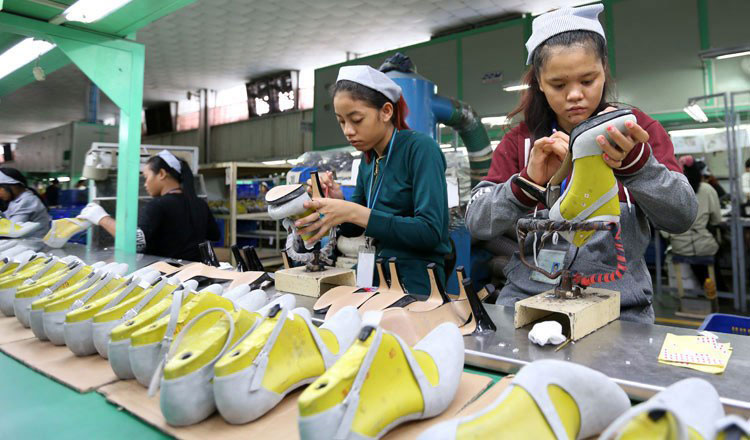
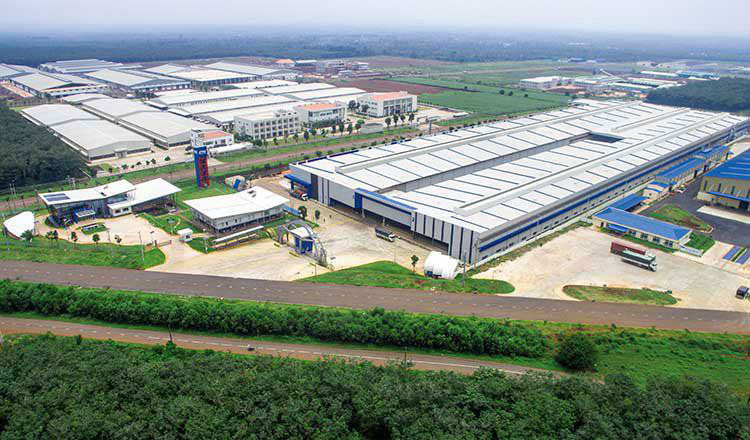
Manufacturing segments such as garments, footwear and electronics continue to anchor Cambodia’s industrial sector. Heng observed that investor confidence is rising, with new entrants joining the market and established manufacturers expanding their operations.
“Political stability and ongoing reforms place Cambodia in a strong position to consolidate its role as an emerging manufacturing centre in the region,” he said.
The current investment momentum supports the government’s longer-term ambition to build a more dynamic economy with a broader export base, underscoring the need for continued investment in infrastructure and sustained policy backing.
In 2024, the government urged the Ministry of Commerce (MoC) to deepen cooperation with international companies in order to widen export markets for Cambodian goods.
Recognising the contributions of the MoC, other government institutions and the private sector in attracting investment and driving trade expansion, the government encouraged all stakeholders to maintain the approach of “consolidating existing markets while opening new ones”, so that Cambodian products can strengthen their presence both domestically and internationally through closer integration with regional and global markets.
- 07:37 13/01/2026