Cambodia’s electrical goods exports surge in 2025
Cambodia’s electrical goods exports surge in 2025
Exports of electric wires and components rise by 51.6 percent to $575 million and that of automotive spare parts by 11.34 percent to $294 million.
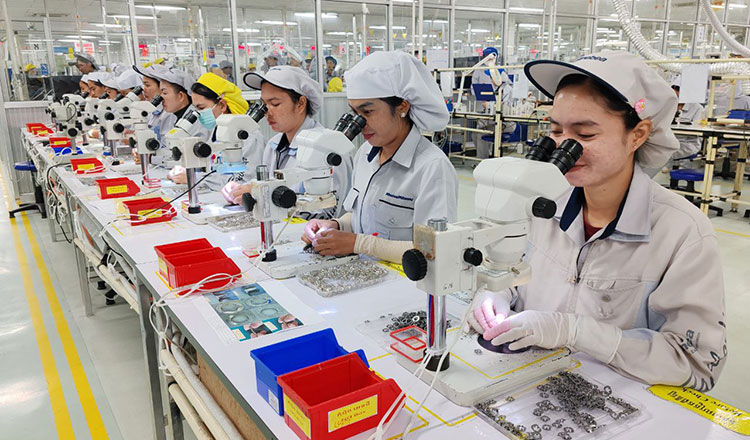
Cambodia’s exports of electrical equipment and electronic components saw significant growth in 2025 as the country is moving beyond garment manufacturing to electronics and automotive parts.
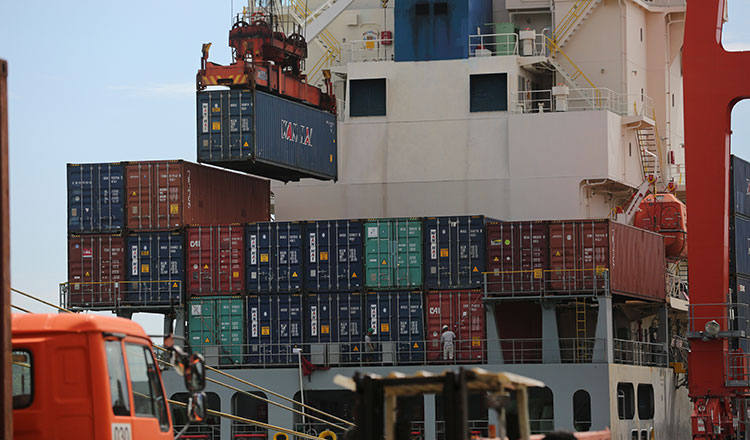
Figures from the Ministry of Commerce showed that the Kingdom exported electronic equipment and parts valued at $924 million in 2025, up 35.7 percent from $681 million in 2024.
Exports of electric wires and components rose by 51.6 percent to $575 million and that of automotive spare parts by 11.34 percent to $294 million last year, the report stated.
The Cambodia Chamber of Commerce expressed happiness over this trend and termed the surge in the exports of electrical equipment and electronic components as a crucial turning point for the national economy, indicating the rising demand for Cambodian products in foreign markets.
“The growth in electronics and auto parts shows that our investment climate is maturing. It shows success in the efforts of Cambodia to diversify its products beyond garments,” CCC Vice-President Lim Heng told Khmer Times.
He linked the growth in the exports of these items to advantageous trade agreements such as bilateral free trade agreements with China and South Korea, besides the mega regional free trade agreement RCEP.
Though the garments, footwears and travel goods sector remains the largest employer in Cambodia, the significant growth in the exports of electrical equipment and electronic components has opened another positive front in the economic development of the country.
This shift is largely attributed to the Cambodia Automotive and Electronics Sectors Development Roadmap, a strategic government initiative designed to transform the country into a regional hub for component manufacturing.
Over the years, the share in the exports of garments, footwears and travel bags decreased from 91 percent of the country’s total exports in 2000 to 37.89 percent in 2025, while in the case of non-garment manufacturing goods such as electronic components, bicycles, vehicle tyres, furniture and processed agricultural products, the share increased from nine percent to 62.11 percent during the same period, according to the Council for the Development of Cambodia (CDC).
The Kingdom has made significant progress in transforming its economic structure by diversifying exports and reducing dependence on the garments sector, an important step towards achieving the country’s long-term development vision of becoming a high-income country, Deputy Prime Minister and CDC First Vice Chairman Sun Chanthol said recently.
“Such structural changes are crucial for the government to transform Cambodia into a high-income country by 2050, as we cannot rely on the garments, footwears and travel goods sector alone to achieve this vision,” Chanthol said at the closing ceremony of the Ministry of Commerce’s annual meeting earlier this month.
To achieve this goal, the government has introduced multiple policies encouraging investments in priority sectors, including automotive and electronics, agriculture and agro-industry, health and pharmaceuticals, renewable energy, tourism, transport and logistics infrastructure.
Meanwhile, the exports of other major non-garment manufacturing products such as bicycles, vehicle tyres and processed woods have brought the Kingdom $609 million, $1.38 billion and $293 million, respectively, official data showed.
- 08:07 28/01/2026