Cambodia steps into a new era of trade balance
Cambodia steps into a new era of trade balance
Cambodia’s years of reform, investment and policy consistency largely went unnoticed. But a mere glance at last year’s total trade exceeding $64 billion is something that makes analysts sit up and evaluate the miracle figure. Not many nations in the region experienced 16.8 percent growth. With the sole exception of Vietnam, which stood at 18.2 percent; others including Thailand’s exports recorded 12.6 percent increase and imports 12.4 percent, Indonesia around 5.6 percent growth in exports, and Malaysia’s total trade soared by 5.8 percent. Notably, the Kingdom’s exports and imports are now approaching parity in value, reflecting a structural shift in the country’s trade dynamics. The new trend points to three factors: improved competitiveness, stronger production capacity and deeper integration into global value chains. What should Cambodia do next? It should now remain focused in shaping its 2026 strategy, akin to the Royal Government’s Pentagonal Strategy–Phase 1, which prioritises economic diversification, competitiveness and institutional reform. This should go hand in hand with “consolidating existing markets while opening new ones”. Still, economists tell Khmer Times that the trade structure is still not without vulnerabilities, a reminder that economic transformation is a journey rather than a destination
Cambodia’s external trade has entered a new and potentially transformative phase, as the Kingdom records a historic narrowing of the gap between exports and imports — a development senior officials describe as a milestone for economic stability and long-term resilience.
According to data released by the General Department of Customs and Excise (GDCE), Cambodia’s total trade with international partners exceeded $64 billion in 2025, representing a 16.8 percent year-on-year increase compared to 2024. More significantly, exports and imports are now approaching parity in value, reflecting a structural shift in the country’s trade dynamics that has been decades in the making.
For an economy long characterised by heavy import dependence and a relatively modest export base, the near-balancing of trade flows marks a critical inflection point. While Cambodia continues to post a trade deficit, policymakers and analysts say the trend signals improved competitiveness, stronger production capacity and deeper integration into global value chains.
Trade volumes surge
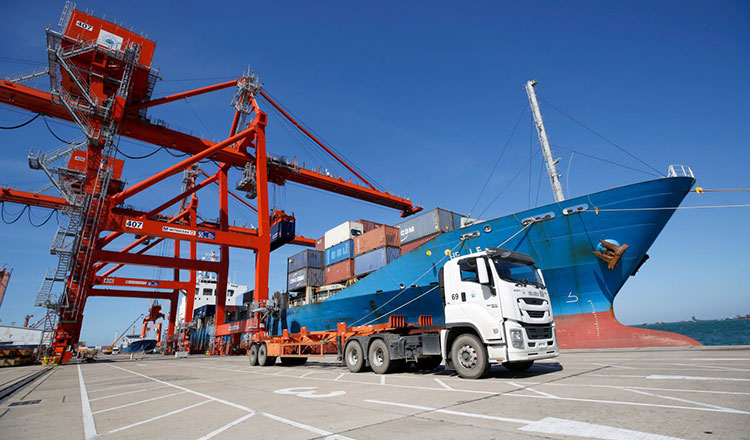
The GDCE reported that from January to December 2025, the combined value of exports and imports reached $64.02 billion, up from around $54 billion a year earlier. Exports rose to $30.14 billion, an increase of 14.7 percent, while imports climbed more sharply to $33.88 billion, up 18.7 percent year-on-year.
Despite the faster growth in imports, the resulting trade deficit — approximately $3.73 billion — is widely viewed as manageable in the context of Cambodia’s economic expansion and rising investment activity.
Officials point out that the structure of Cambodia’s trade deficit is fundamentally different from that of the past. Imports today are increasingly driven by capital goods, machinery, intermediate inputs and energy required to support manufacturing, infrastructure development and industrial upgrading, rather than purely consumption-led demand.
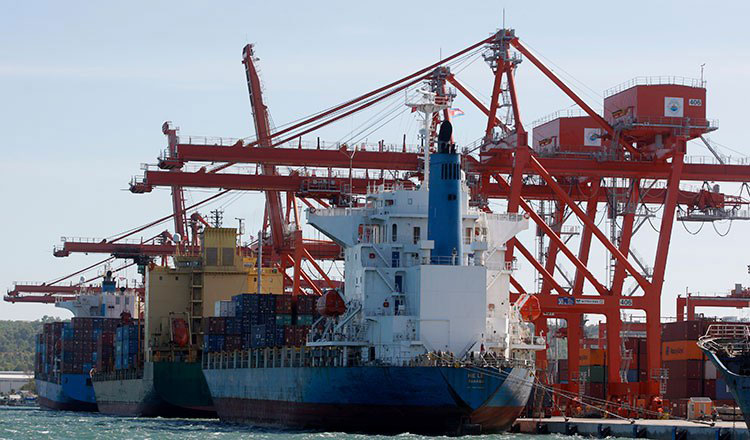
China remained Cambodia’s largest trading partner in 2025, with bilateral trade exceeding $19 billion. The United States ranked second at more than $13 billion, followed by Vietnam with over $7.7 billion. Japan and Singapore completed the top five, with trade values of $2.53 billion and around $1.4 billion, respectively.
Beyond its core partners, Cambodia maintained strong trade links with a diverse range of markets, including Germany, the Netherlands, France, Canada, Indonesia, Thailand, Spain, the United Kingdom, Italy, Belgium, South Korea, India, Malaysia, Taiwan and Hong Kong — underscoring the breadth of the Kingdom’s commercial engagement.
The GDCE said the sustained expansion in trade reflects Cambodia’s deepening integration into the global economy, supported by rising demand for exports, growing import needs linked to investment and the country’s expanding role within regional and international trade networks.
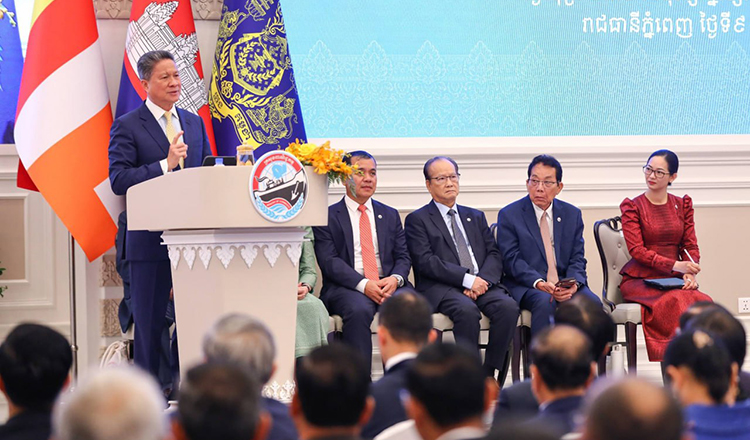
The significance of the latest figures was underscored by Deputy Prime Minister Sun Chanthol, First Vice-Chairman of the Council for the Development of Cambodia (CDC), who described the near-parity between exports and imports as a historic achievement.
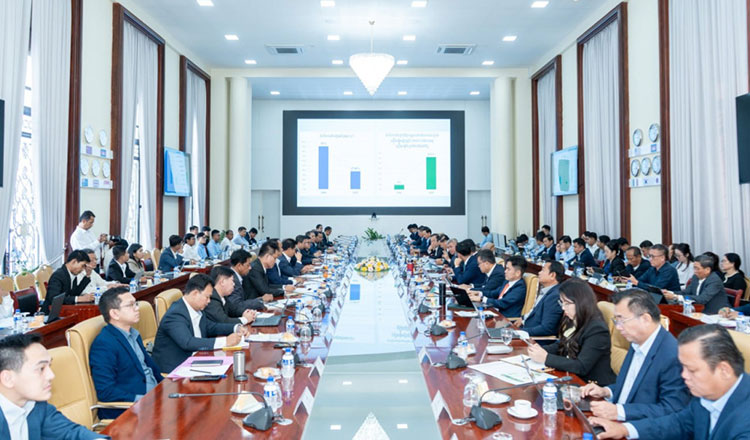
Speaking at the Ministry of Commerce’s annual meeting on January 9, 2026, Chanthol said Cambodia had reached a point that would have been difficult to imagine just a decade ago.
“At present, Cambodia’s exports and imports are broadly equal in value, resulting in an exceptionally strong trade position,” he said. “This represents a marked departure from the past, when the economy depended heavily on imports while exports remained relatively modest.”
For much of its modern economic history, Cambodia’s development model relied on import-intensive growth, with limited domestic production capacity and a narrow export base dominated by garments. The gradual rebalancing now underway, Chanthol said, reflects years of reform, investment and policy consistency.
However, he cautioned that the achievement must be viewed within the context of a volatile global environment, where external shocks can quickly reshape trade flows.
Global risks remain
Chanthol’s remarks came against a backdrop of persistent global uncertainty, with supply chains continuing to shift amid rising protectionism, geopolitical tensions and regional conflicts.
Representing Prime Minister Hun Manet at the meeting, the Deputy Prime Minister warned that economic fragmentation and geopolitical instability could continue to pose risks to Cambodia’s growth trajectory.
“The rapid and unpredictable evolution of the global economic environment could place pressure on growth and disrupt the Royal Government’s socio-economic development efforts,” he said.
From escalating trade tensions among major economies to conflicts affecting energy and logistics routes, Cambodia — as a small, open economy — remains exposed to developments beyond its control. Yet officials argue that improved trade balance dynamics provide a stronger buffer against such shocks.
To navigate these challenges, Chanthol urged the Ministry of Commerce to remain “sharp and focused” in shaping its 2026 strategy, ensuring close alignment with the Royal Government’s Pentagonal Strategy–Phase 1, which places strong emphasis on economic diversification, competitiveness and institutional reform.
He stressed the importance of adopting practical and realistic measures to transform global headwinds into opportunities for domestic investment and job creation.
In 2024, the government had already instructed the Ministry of Commerce to deepen cooperation with international companies to widen export markets for Cambodian products — a directive that continues to guide trade policy.
Recognising the collective efforts of the Ministry, other government institutions and the private sector, the government encouraged all stakeholders to maintain the approach of “consolidating existing markets while opening new ones”. The objective is to ensure that Cambodian goods strengthen their presence both domestically and internationally through closer integration with regional and global markets.
Digitalisation & reform
A recurring theme in the government’s trade agenda is digital transformation. Chanthol called on the Ministry of Commerce to accelerate the digitalisation of service delivery, particularly by reducing unnecessary documentation and replacing paper-based requirements with digital formats.
He made the remarks on January 9, 2026, while presiding — on behalf of Prime Minister Hun Manet — over the closing ceremony of the 2025 trade work review conference and the launch of the 2026 trade work plan.
On the occasion, he urged the Ministry to simplify procedures by cutting redundant documents or shifting to digital systems, including connecting trade services to the Cambodia Data Exchange (CamDX), the Cambodia Investment Data Centre (cdcIPM Hub) and the National Single Window (NSW).
The expansion of public service payments through mobile banking applications was also highlighted as a practical step to reduce transaction costs and improve efficiency for traders and investors.
Beyond facilitation, Chanthol emphasised the importance of strengthening private sector governance, including the development and revision of legal frameworks governing private trade associations and enterprises. He said these reforms are essential to promote competitiveness, consumer protection and food safety, while supporting both domestic and international trade growth.
Separately, a report released by the Ministry of Commerce placed Cambodia’s total international trade volume in 2025 at more than $65.25 billion — slightly higher than GDCE figures — marking an 18 percent increase compared with 2024.
The Ministry reported exports of $31.28 billion, up 17 percent from $26.75 billion in 2024, while imports rose by more than 18 percent to $33.96 billion.
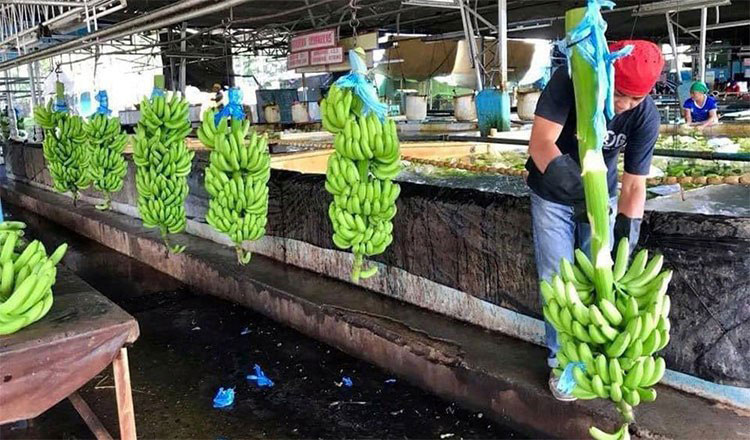
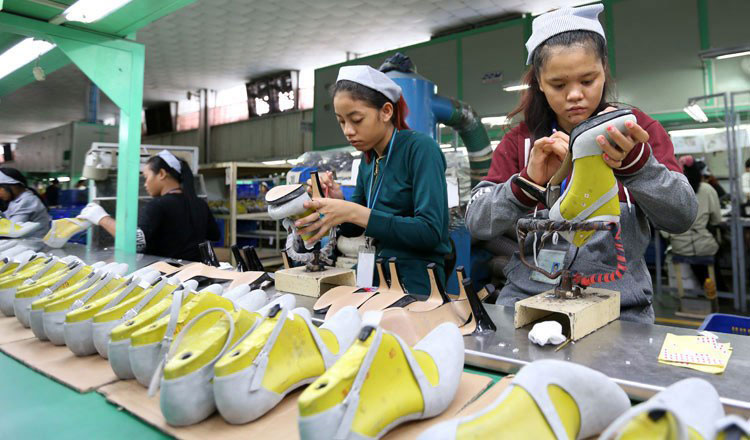
Cambodia’s export basket continues to expand, with major products including garments, machinery, electrical equipment, footwear, leather goods, grains, furniture, rubber, fruits, vegetables, pearls, toys and textiles.
China, the United States and Vietnam remained Cambodia’s largest trading partners, reflecting both geographic proximity and deepening economic ties.
Minister of Commerce Cham Nimul attributed the strong performance to the Royal Government’s sustained reform agenda aimed at diversifying both products and export markets.
“These figures reflect the results of targeted measures implemented by the Royal Government of Cambodia to strengthen diversification in domestic production and international exports,” she said at the opening ceremony of the Ministry’s annual meeting to review achievements in 2025 and outline objectives for 2026.
She also highlighted the Ministry’s efforts to facilitate trade activities, including strengthening trade capacity and simplifying export procedures through digital ecosystems.
Despite diversification efforts, the garment, footwear and travel goods sector remains Cambodia’s largest foreign exchange earner, accounting for approximately 50 percent of total export value.
Risks & realities
While the headline figures are encouraging, economists caution that Cambodia’s trade structure still presents vulnerabilities.
Arnaud Darc, Chairman and CEO of Thalias and Co-Chair of the Government–Private Sector Forum (Working Group D), told Khmer Times that Cambodia’s increasing concentration of trade among a few major partners — particularly China, the United States and Vietnam — heightens exposure to correlated shocks.
“China, the United States and Vietnam are interconnected through global demand cycles, trade policy decisions and regional supply chains,” he said. “When conditions tighten in one, they often tighten in the others at the same time.”
According to Darc, the issue is not dependency on individual partners, but the reduced availability of “shock absorbers” when multiple major markets are affected simultaneously.
“This matters because resilience cannot rely on external demand rebalancing across markets,” he said. “It depends instead on domestic competitiveness — cost structures, delivery reliability and firms’ ability to adjust quickly.”
He also addressed the faster growth of imports compared with exports, noting that the widening trade deficit reflects structural features of Cambodia’s growth model.
“Exports have a high import content, particularly energy, intermediate inputs, machinery and fuel,” Darc said. “Investment and consumption normalisation also drive imports of capital goods and consumer products, while export capacity adjusts more slowly.”
While this imbalance does not signal immediate macroeconomic instability, he warned that it limits resilience over time by constraining policy space.
“Improving export competitiveness depends on lowering structural costs and strengthening capabilities — competitive electricity pricing, faster customs clearance, reduced logistics costs and the development of domestic supplier ecosystems,” he said.
On diversification, Darc said Cambodia’s ability to expand beyond its top markets is realistic but will require sustained effort.
“Diversification is a medium-term process that must be earned through competitiveness, not assumed through market access alone,” he said.
Cambodia continues to benefit from preferential arrangements such as Everything But Arms (EBA) access to the European Union and integration under the Regional Comprehensive Economic Partnership (RCEP). However, these advantages remain underutilised.
“The binding constraints are not tariffs, but compliance capability — standards, traceability, rules of origin and reliable lead times,” Darc noted.
He said product diversification typically precedes market diversification, pointing to opportunities in electronics components, agro-processing, light manufacturing and services linked to tourism and the digital economy.
Investment momentum
Cambodia’s increasingly attractive investment climate is helping to support trade expansion, according to Lim Heng, Vice-President of the Cambodia Chamber of Commerce.
In comments to Khmer Times, Heng said pro-business policies, political stability and an expanding network of free trade agreements are accelerating both foreign and domestic investment.
“These advantages have translated into strong growth in manufacturing and processing exports,” he said.
Heng highlighted the role of government leadership and proactive trade diplomacy, noting that direct engagement between the Prime Minister and international investors has reinforced Cambodia’s reputation as a credible investment destination.
“This has led to an exceptional level of interest in projects approved by the Council for the Development of Cambodia,” he said, adding that investment approvals are at historic highs.
Manufacturing segments such as garments, footwear and electronics continue to anchor the industrial sector, with new investors entering the market and existing manufacturers expanding operations.
“Political stability and ongoing reforms place Cambodia in a strong position to consolidate its role as an emerging manufacturing centre in the region,” Heng said.
Cambodia approved 630 new investment projects worth a combined $10 billion in 2025, creating more than 430,000 jobs and marking the second consecutive year of record-breaking investment inflows, according to CDC.
The surge reflects the country’s ongoing transition from a garment-dependent economy to a more diversified manufacturing and export base, with strong growth in electronics and agro-industry.
The structural shift is strengthening Cambodia’s industrial resilience and positioning the country for more sustainable, value-added growth.
As Cambodia enters 2026, policymakers and business leaders agree that the near-parity between exports and imports represents more than a statistical achievement. It reflects gradual structural change — one that strengthens the Kingdom’s ability to withstand external shocks while laying the foundation for more balanced and sustainable growth.
Yet officials remain cautious. Sustaining momentum will require continued reform, investment in infrastructure, improvements in logistics and energy costs, and a relentless focus on competitiveness.
For now, Cambodia’s trade story is one of progress tempered by realism — a reminder that economic transformation is a journey rather than a destination.
- 07:57 19/01/2026