How Cambodia is reshaping its quality standards to grab export markets
How Cambodia is reshaping its quality standards to grab export markets
For the Cambodian economy that relies heavily on exports, sprucing up quality, safety, and traceability standards has become inevitable to expand its trade footprint. The government apparatus has begun strengthening its regulatory framework, improving enforcement mechanisms, and encouraging exporters to comply with international standards. The Ministry of Commerce (MoC), in particular, has geared up its efforts on two fronts: First, the ministry is engaged with over 400 companies in the European Union on the market intelligence on quality and standards for Cambodia’s local products. Second, it initiated measures by encouraging the private sector and local producers to adapt the quality and standard as it is placing this measure in its strategic programme to boost exports. As Samheng Bora, Secretary of State at the MoC and Chairman of the Export Promotion Task Force, bluntly puts it, without recognised standards, Cambodian products will not have access to international markets. Only by improving product standards will foreign markets accept Cambodian goods. True. For the ‘Cambodia Basket of Wonders’ to become a reality, market expansion must go hand in hand with efforts to improve the quality of investment
As global trade becomes increasingly competitive and regulated, quality standards have emerged as a decisive factor in determining access to international markets, Cambodia continues its journey towards sustainable and inclusive economic growth, export promotion has become a key national priority.
For Cambodia, an economy that is heavily dependent on exports, strengthening quality, safety, and traceability standards is no longer optional, it is a necessity. Major import markets, such as the US, the European Union (EU), and the Middle East, are tightening requirements on food safety, rules of origin, and production transparency, forcing exporters to adapt or risk losing market access.
In response, Cambodia has begun strengthening its regulatory framework, improving enforcement mechanisms, and encouraging exporters to comply with international standards. This shift reflects a broader strategy to move beyond low-value raw exports towards higher-value processed goods that meet global expectations.
By strengthening quality standards across the agriculture, agro-industry, and manufacturing sectors, Cambodia aims not only to protect existing markets but also to access new ones and enhance its position in the global value chain.
Addressing a forum during the 18th Cambodia Trade Expo 2025 (December 4-7) in Phnom Penh, Penn Sovicheat, Secretary of State and Spokesperson of the Ministry of Commerce (MoC), highlighted the Royal Government’s strategic vision.
He said that through the vision of the Royal Government of the 7th term of the National Assembly, under the leadership of Prime Minister Hun Manet, Cambodia continues to pursue progress and new achievements under the approach of “preserving the old and creating the new”.
Sovicheat highlighted that the Ministry of Commerce has worked to strengthen existing markets while expanding into new ones by enhancing efficiency and broadening the scope of operations under the first phase of the Pentagonal Strategy. This strategy outlines key policies, mechanisms, priorities, and directions to help the country respond to emerging global trends.
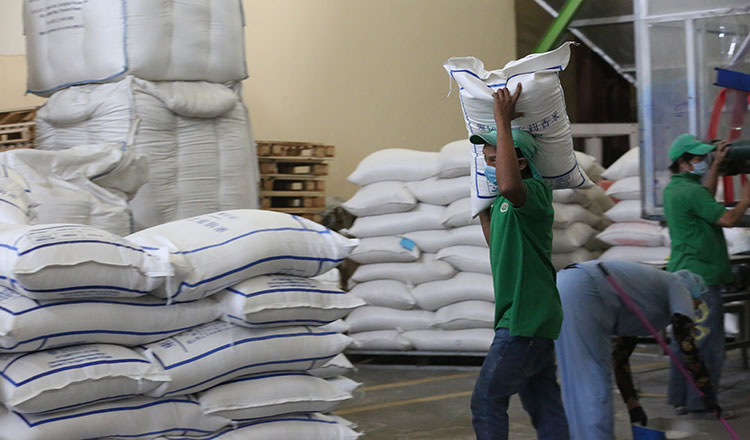
“Today, Cambodia has demonstrated strong potential in agriculture, agro-industry, and processing industries. Cambodia is currently the world’s fifth-largest rice exporter, according to the US Department of Agriculture,” he said.
He said that in the first 10 months of 2025, the country exported approximately 12 million tonnes of cashew nuts, generating more than $4 billion in revenue. Pepper exports earned around $27 million in the first eight months of 2025. Cambodia is also becoming an important international supplier of sugar, rubber, fresh fruits, and other agricultural products.
Sovicheat went on to say that to further promote exports, the Ministry of Commerce (MoC) has focused on improving the business environment for investors through key mechanisms such as trade facilitation, market access expansion, stronger collaboration with the private sector and trade associations, and targeted export promotion initiatives.
Regarding export promotion, Sovicheat explained that the ministry has facilitated meetings between local producers and supermarket operators to help potential Cambodian products enter domestic and international retail markets. The ministry has also established an export promotion working group to support the export of high-potential products—particularly cashew nuts and other agricultural goods—by acting as a bridge between domestic suppliers and overseas buyers.
He added that in addition, the Ministry of Commerce has launched an Export Service Center (ESC) and a Free Trade Agreement website, known as the FTA Portal, to provide accurate and reliable information, advice, technical assistance, and support to businesses seeking to export to foreign markets.
Sovicheat emphasised that the ministry’s efforts are not limited to agricultural products alone, but also extend to other exportable goods produced by traders and industrial manufacturers.
Strengthening standards
One of the most important foundations for export success is compliance with international standards. Cambodia has been continuously strengthening its National Quality Infrastructure (NQI) to ensure that domestically produced goods meet global requirements for safety, reliability, and performance. This system encompasses the development of national standards, metrology, testing, certification, and accreditation services.
The Standards Institute of Cambodia (ISC) plays a crucial role in aligning national standards with international benchmarks. Exporters are encouraged to adopt internationally recognised certifications such as International Organization for Standardization (ISO), Hazard Analysis and Critical Control Points (HACCP), Good Manufacturing Practices (GMP), and Global Good Agricultural Practice (Global GAP), particularly in key sectors including agriculture, agro-processing, manufacturing, and apparel.
These standards not only enhance product quality but also increase buyer confidence and open access to high-value international markets. By investing in quality assurance systems and compliance mechanisms, Cambodia is enabling its exporters to move up the value chain while reducing technical barriers to trade.
Samheng Bora, Secretary of State at the Ministry of Commerce (MoC) and Chairman of the Export Promotion Task Force, stated that Prime Minister Hun Manet, together with the Minister of Commerce and the Council for the Development of Cambodia (CDC), always strives and focuses on promoting exports, expanding export opportunities, and adding value to exports.
“What are the Royal Government and the Ministry doing this for?” Bora explained that the purpose is simply to make people more prosperous, improve the quality of exports, and further expand Cambodia’s economic activities so they become even stronger.
He noted that Cambodia’s export growth continues to show strong potential. During the first ten months of 2024, exports reached $26 billion, while during the same period in 2025, exports amounted to $25 billion, with expectations that the figure will rise further by the end of the year.
Bora said that the ministry has been working with over 400 companies in the EU on the market intelligence on quality and standards for Cambodia’s local products.
“We need to increase processing quality to align local products with standards in the EU market, so that we can make further exports to that market and can supply the amount that the market needs,” Bora said.
Market intelligence is the process of gathering and analysing information about a company’s market, including its customers, competitors, and overall environment, to make informed strategic decisions.
To facilitate the transition, Bora said that the MoC is collaborating with the EU-German Global Access and Trade Expertise (EU-German GATE) Team, focusing on setting, adopting, and implementing EU-quality standards across various products. This work will require local enterprises to fully comply with international trade rules, including complex EU regulations, to maintain strong market access.
The ministry has encouraged the private sector and local producers to adapt the quality and standard as it is placing this measure in its strategic program to boost export in the years to come, he said.
“As the EU is one of Cambodia’s trade partners, there is a need to think of market diversification in each market in each EU member, as there are different demands in each country,” Bora added.
He said that based on his experience in export promotion, Cambodia still has significant work to do to expand its markets. However, market expansion must go hand in hand with efforts to improve the quality of investment, which represents a critical opportunity for the country.
Upping the standards
Cambodia should combine stronger regulations, improved infrastructure, targeted support for small and medium-sized enterprises (SMEs), international coordination, and regional cooperation to advance standards sustainably.
Bora said the export promotion team aims to encourage producers and processors to seize the opportunity to upgrade their standards. As part of these efforts, he plans to lead a trade mission to the United Kingdom to meet with the British Retail Consortium (BRC) to explore ways to support Cambodian exporters in obtaining BRC certification, thereby expanding access to Cambodia’s potential export markets.
He stressed that without recognised standards, Cambodian products have no access to international markets. Only by improving product standards will foreign markets accept Cambodian goods.
“We need to work together to successfully expand our potential products into our target markets,” Bora emphasised.
An Dara, President of the Cambodia Cashew Federation (CCF), told Khmer Times that Cambodia produces some of the world’s highest-quality cashew nuts in terms of size, taste, flavour, and nutritional value. However, processing capacity remains limited because only a small number of companies are able to meet international food safety standards.
He said that currently, only about five companies in Cambodia process cashew nuts in accordance with internationally recognised standards and are able to fulfil export orders.
“For processing to be standardised, it is extremely important,” he said. “For example, in the European Union, without internationally recognised food safety standards—especially GMP and HACCP, which are the most basic requirements—it is very difficult to export. These standards are absolute requirements for the European market.”
Dara added that in Europe and the US, even higher food safety standards, such as BRC or Food Safety System Certification 22000 (FSSC 22000), are required. Therefore, any Cambodian factory wishing to export cashew nuts to European or American markets must comply with these food safety standards. He noted that major importing markets, including the United States, Europe, and China, also require additional certification related to pricing and quality.
“On behalf of the Cambodia Cashew Federation, we want the cashew sector to operate in line with international quality standards, including additional price and certification requirements,” he said.
Dara stressed that once standardised quality is achieved, large international companies will have greater confidence in sourcing from Cambodia. While Cambodia has high-quality cashew nuts, it lacks sufficient processing companies capable of meeting global standards and producing at competitive costs. He pointed out that cashew production is not unique to Cambodia, as many other countries also grow and process cashews at lower prices.
“Therefore, reducing production costs is also crucial,” he said. “If Cambodia can offer both high quality and internationally recognised standards at competitive prices compared with neighbouring countries, it will be able to strengthen processing capacity and significantly increase exports.”
What should Cambodia do? The Royal Government of Cambodia (RGC) has made significant efforts to expand the country’s export market, with key institutions such as the Ministry of Commerce playing a leading role in broadening market access.
Cambodia has positioned itself as a global trade hub, as it maintains free trade agreements with major partners such as China and the US, while also benefiting from preferential trade treatment from the European Union. These trade arrangements have helped expand Cambodia’s market reach and made the country an attractive base for producers to process, manufacture, and export goods to multiple international markets.
Suon Sophal, Deputy Secretary General of CDC’s Cambodia Investment Board, said that Cambodia has made strong efforts to promote its potential as a destination for investment, processing, and export-oriented production.
He noted that Cambodia’s existing advantages have helped position the country as a strategic location for investors.
“As we strive to fulfil our obligations under this international agreement, Cambodia always does what it commits to. The government, led by Prime Minister Hun Manet, has adopted a pro-business approach by providing investors with incentives, including tax incentives, and by creating mechanisms for direct dialogue with government representatives to jointly resolve challenges.
This demonstrates a strong, whole-of-government commitment to a pro-business environment that few countries in the world have been able to sustain,” Sophal stressed.
He added that the introduction of this pro-business approach reflects the Prime Minister’s leadership in strengthening institutions that support the private sector. This, he said, enables businesses to expand their operations, increase production and processing within Cambodia, and boost exports to international markets.
Gidon Windecker, Deputy Head of Development Cooperation of the German Embassy to Cambodia, said that in 2024, the European Union (EU), including Germany, were Cambodia’s fourth largest trading partner, accounting for 9.6 percent of Cambodia’s total trade in goods worth €6.4 billion or $7.4 billion.
“When it comes to the agricultural sector, our shared objective is clear. We are supporting Cambodia in building strong, competitive and sustainable value chains that benefit the farmers, the processors, SMEs and exporters alike, and enable them to enter the European and the German market,” he said.
“Over the past few months, we have seen impressive progress in Cambodia’s high-value agriculture, especially in cashew and pepper, where Cambodia has a strong natural advantage and growing interest from international markets”.
Gidon Windecker further added that with the right support systems, Cambodian products can meet the requirements of demanding markets such as the European Union. Another key milestone came just a few months ago at ANUGA 2025 in Cologne, Germany, the world’s largest food and beverage trade fair.
“We were proud to see Cambodia join for the first time with a national pavilion under the brand Cambodia Basket of Wonders,” he emphasised. “Germany and the European Union are standing alongside Cambodia as it builds sustainable, value-added and competitive export sectors and as it moves towards LDZ graduation in 2029”.
Looking ahead to next year, the momentum continues to grow. In 2026, Cambodia will have an even stronger presence at CL Paris, one of the most influential food trade fairs in Europe and the premier gateway for global buyers. In partnership with Germany and the EU, MOC is preparing a 200 square metre national pavilion proudly showcasing around 30 Cambodian companies from cashew, pepper and spices to dried fruits and other value-added food products.
- 08:15 29/12/2025