Developers that optimise costs will win out in green transition
Developers that optimise costs will win out in green transition
Vietnam’s green transition is unlocking hundreds of billions of US dollars in sustainable capital. Jerry Nguyen, a board member and deputy general-director of Investment and International Market Development at Hoa Binh Construction Group, explained to VIR’s Nguyen Huong why real estate developers will determine whether that capital flows into Vietnam’s cities.
In your recent analyses, you argue that the missing link in Vietnam’s green construction transition is real estate developers. Why do you think they are the overlooked players?
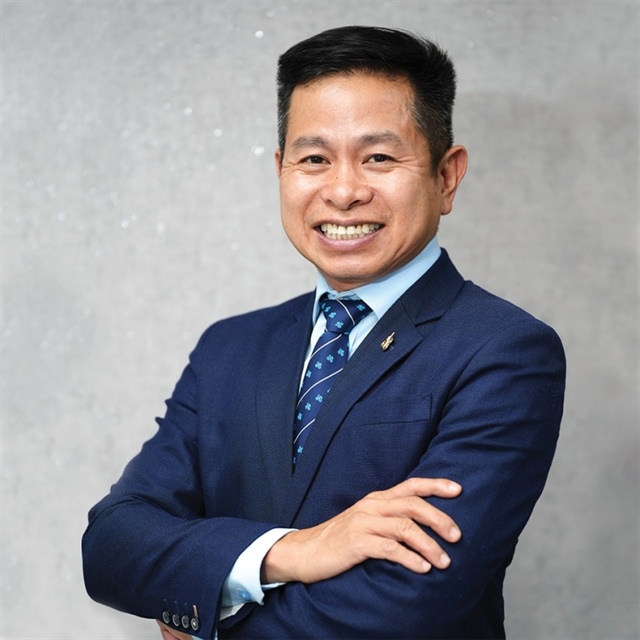
Jerry Nguyen, a board member and deputy general-director of Investment and International Market Development at Hoa Binh Construction Group |
That is correct. When people talk about greening Vietnam’s construction supply chain, the focus is usually on technical and operational actors. We discuss material producers obtaining environmental product declarations (EPD) and life-cycle assessments, controlling emissions from quarry to factory to project site.
We also discuss contractors building environmental, social, and governance (ESG) and measurement, reporting, and verification systems at both enterprise and project levels, or deploying the Internet of Things and AI to track cost, schedule, and carbon in real time.
What is often missing from this conversation is the role of the ultimate decision-makers: the real estate developers, particularly large domestic groups. Developers determine the project vision, the design brief, the tender requirements and the contractual obligations imposed on contractors and suppliers.
If a developer does not require EPDs in bidding documents, does not integrate emission-reduction targets into design terms of reference, or does not attach ESG commitments to engineering, procurement, and construction contracts, then even the most progressive contractors and material suppliers are limited in what they can deliver.
Could you outline the scale of green capital available for real estate from now to 2050?
At a high level, there are three layers of data that real estate leaders need to focus on. First is Vietnam’s overall green finance requirement. To achieve net-zero by 2050, Vietnam will need as much as $700 billion in green capital.
The second layer relates directly to cities and buildings, which are the primary domain of real estate developers. Globally, construction accounts for around 40 per cent of carbon dioxide emissions, with approximately 28 per cent coming from materials alone. Net-zero pathways typically allocate 30-40 per cent of all climate investment to urban areas and buildings.
The third layer focuses specifically on Vietnam’s real estate and construction outlook between now and 2050. Vietnam’s housing market is projected to grow from $33 billion in 2025 to $57 billion by 2030, making it one of the fastest-growing markets in the region. Urbanisation is expected to exceed 50 per cent by 2030 and reach around 70 per cent by 2050, with around 1,100 urban centres nationwide.
In parallel, the government’s programme to develop one million social housing units between 2025 and 2030 will generate substantial demand for green design and low-emission construction methods.
Given this massive green capital opportunity, how do you see the allocation between foreign investors, the Vietnamese government, and domestic private sector players?
Although there is no single report that isolates this breakdown for real estate alone, combining Vietnam’s climate finance structure, infrastructure investment patterns and global capital flows allows us to outline a realistic scenario.
Foreign investment and international capital are likely to account for 35-40 per cent of total green capital, equivalent to $80-100 billion. This will include equity and mergers and acquisitions in large-scale townships, industrial parks and green logistics assets, as well as green and sustainability bonds issued domestically or overseas.
The Vietnamese public sector is expected to contribute around 25-30 per cent, or approximately $60-70 billion. These funds will primarily support core infrastructure such as metro lines, bus rapid transit systems, ring roads, water and waste infrastructure and flood-control projects, as well as social housing and climate-resilient urban redevelopment. The remaining 30-40 per cent, equivalent to $70-90 billion, will come from domestic private sector sources.
Given these trends, what is your core message to the leadership of major real estate groups?
There are three points I would emphasise. Firstly, the capital structure has already shifted towards green priority. Without credible green compliance, access to affordable and long-term capital will become increasingly difficult.
Secondly, the market itself is sending a strong signal. International tenants, global supply chains and younger buyers consistently show a preference for green, energy-efficient and climate-resilient assets.
Thirdly, Vietnam’s planning framework has already committed the country to a pathway of green, smart, and climate-resilient urban development. Developers that can optimise lifecycle costs while meeting ESG standards will emerge as preferred partners for domestic and international capital. For major developers, the reality is straightforward: either evolve into a green urban producer capable of leading a $230-250 billion green wave, or risk being pushed to the margins.
| As global green supply chain reshapes, will Vietnam be left behind? Green finance offers 'passport' for Vietnamese construction, building materials firms Affordable housing emerges as driver of Vietnam’s urban growth Hoa Binh's restructuring strategy and goal to reclaim leadership in Vietnam’s construction industry Leveraging one million social housing units nationwide |
- 09:37 29/12/2025