Cambodia’s trade with int’l partners surpasses $58B
Cambodia’s trade with int’l partners surpasses $58B
With a stable political environment and ongoing reforms, Cambodia is well-positioned to further establish itself as an emerging manufacturing hub in the region.
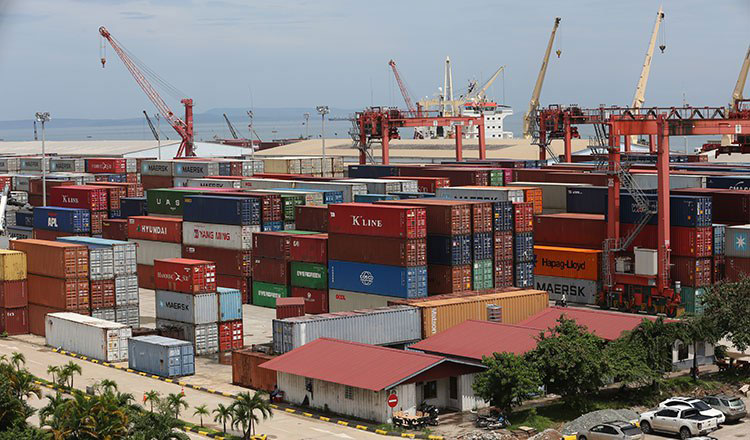
Cambodia’s trade with international partners reached more than $58 billion in the first 11 months of 2025, up 16.2 percent compared with the same period in 2024, when trade stood at around $50 billion, according to the General Department of Customs and Excise (GDCE), yesterday.
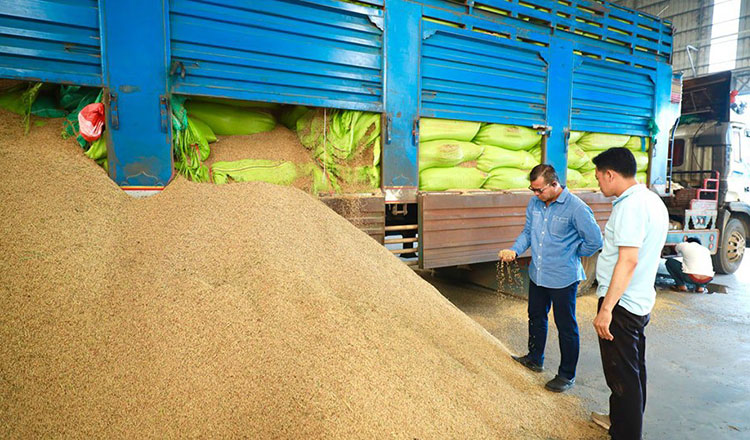
Data released by the GDCE showed that from January to November, the total value of exports and imports between Cambodia and its international partners amounted to $58.03 billion. Exports reached $27.37 billion, up 14 percent year-on-year, while imports were valued at $30.65 billion, a rise of 18.2 percent.
The figures indicate that Cambodia’s trade balance currently stands at a deficit of approximately $3.27 billion. Key trading partners include China, with trade exceeding $17 billion, the United States at over $11 billion, Vietnam at more than $7 billion, Thailand at $3.4 billion, and Japan at $2.3 billion.
The growth reflects Cambodia’s continuing integration into the global economy and rising demand for both exports and imports, underscoring the country’s expanding role in regional and international trade networks.
Cambodia also recorded robust trade performance with major markets including Germany, the Netherlands, France, Canada, Indonesia, Spain, the United Kingdom, Italy, Belgium, South Korea, Singapore, India, Malaysia, Taiwan and Hong Kong.
Cambodia’s favourable investment climate, supportive government policies, and strategic free trade agreements are fueling a surge in both foreign and domestic investment, according to Lim Heng, Vice-President of the Cambodia Chamber of Commerce.
Speaking to Khmer Times, Heng highlighted that these factors have contributed to a notable increase in the country’s manufacturing and processing exports.
“The leadership of the government is instrumental in this process,” Heng said. “Active trade diplomacy strengthens ties with international partners. Whenever the Prime Minister travels abroad, he engages directly with global leaders and investors, creating a positive image of Cambodia as an attractive investment destination. This has sparked unprecedented interest in projects registered with the Council for the Development of Cambodia (CDC).”
Investment figures at the CDC are reportedly reaching record levels, with a steady inflow of new projects. Heng added, “In 2025, we expect significant growth in production, processing, and the import of raw materials, all of which will drive exports to new heights.”
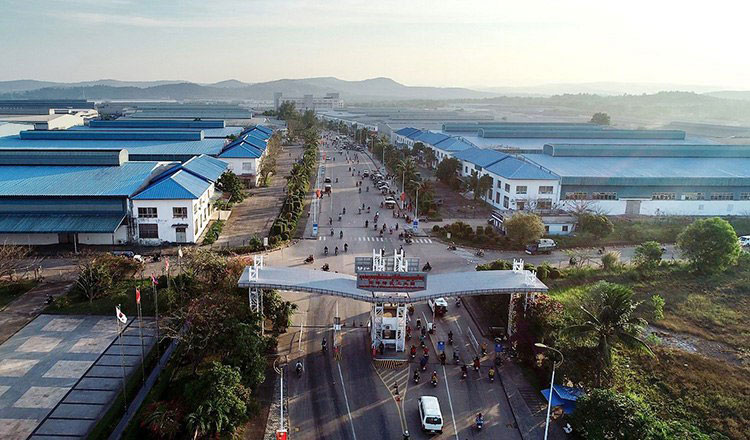
Key manufacturing sectors, including garments, footwear, and electronics, remain the backbone of Cambodia’s industrial landscape. Heng noted that new players are entering the market while existing factories are expanding their capacities, reflecting growing investor confidence.
“With a stable political environment and ongoing reforms, Cambodia is well-positioned to further establish itself as an emerging manufacturing hub in the region,” he said.
This investment-led growth aligns with the government’s broader vision of transforming Cambodia into a dynamic economy with a diversified export base, underscoring the importance of continued infrastructure development and policy support.
Speaking to Khmer Times recently, Lor Vichet, Vice President of the Cambodia Chinese Commerce Association (CCCA), highlighted that Cambodia’s export sector remains heavily dependent on traditional industries. “Most of the goods we export come from sectors such as textiles, clothing, footwear, bags and suitcases,” he said. “These are not technology-intensive and contribute little added value to our exports.”
“We import high-value raw materials while exporting lower-value finished products, such as shirts, which cannot compete on price with items like mobile phones,” Vichet explained.
He emphasised the need for a strategic roadmap to develop domestic industries capable of producing the raw materials currently imported. “If we can manufacture these materials locally, it would go a long way towards reducing our trade deficit,” he added.
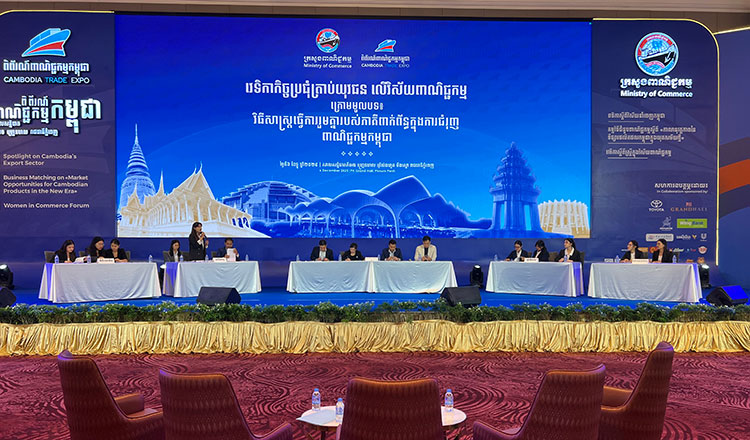
Last year, the government called on the Ministry of Commerce (MoC) to strengthen cooperation with international companies to expand markets for Cambodian products.
Acknowledging the efforts of the MoC, other ministries, and the private sector in attracting investors and boosting trade growth, the government encouraged stakeholders to continue the strategy of ‘strengthening existing markets while expanding new ones’ to ensure the products gain traction both domestically and internationally through deeper integration into the global economy.
- 07:58 11/12/2025