Rice export prices rebound, but Vietnamese exporters remain cautious
Rice export prices rebound, but Vietnamese exporters remain cautious
Việt Nam exported approximately 6.8 million tonnes of rice in the first 10 months of this year, generating US$3.31 billion in revenue. This represented year-on-year declines of 4.6 per cent in volume and 9.7 per cent in value.
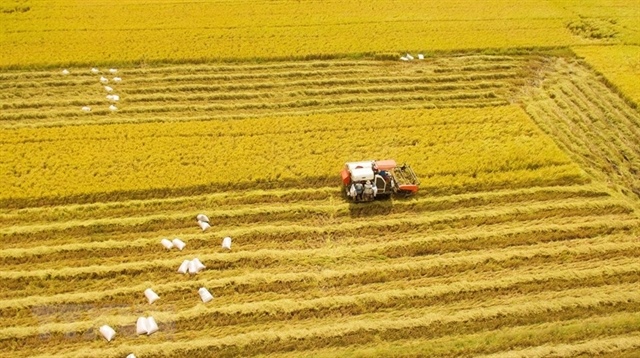
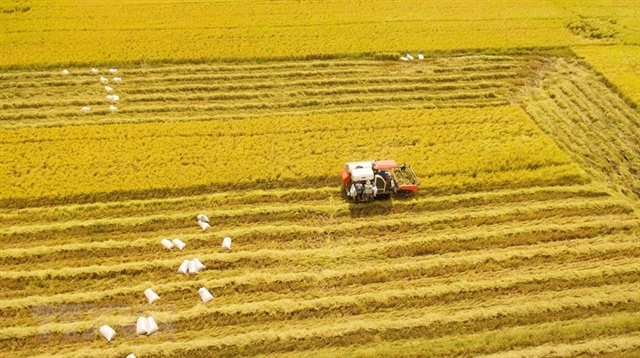
A rice field in the Mekong Delta. — VNA/VNS Photo |
Rice export prices are showing signs of recovery, particularly in the fragrant rice segment, with some premium products being offered at significantly higher prices, but the upturn has yet to persuade exporters to ramp up procurement.
Rising domestic paddy prices, tightening supplies toward year-end and continued uncertainty surrounding the Philippines’ import policies are making it increasingly difficult for businesses to calculate costs and margins.
Rising rice prices benefit exporters with existing stocks
After a prolonged period of subdued activity, the rice export market began to pick up in the first weeks of this month. Improving import demand from the Philippines, coupled with tightening year-end supplies, has helped push up prices for several rice varieties.
The price recovery has benefited businesses that proactively procured raw materials and built up inventories earlier. With selling prices rising, these companies can now sell their existing stocks at more favourable prices, thereby helping boost profits.
The Thời báo Ngân hàng (Banking Times) online newspaper quoted Nguyễn Văn Đôn, a representative of Viet Hung Company Limited, in Đồng Tháp Province, as saying that stronger purchasing demand from the Philippines had improved the company's sales prospects. The company currently holds rice inventories that can be sold at favourable prices while continuing to fulfill previously signed export contracts with African markets.
However, not all businesses are in a position to capitalise on the price recovery. For those purchasing raw materials at current market levels, the rapid increase in paddy prices has significantly raised production and trading costs.
Trần Thị Thanh Kiều, who owns a rice-drying and milling facility in Mỹ Đức Tây Commune, said rising raw material costs had forced her business to raise rice selling prices. However, profit margins remained thin. She said most of the profits came from inventories purchased earlier, while buying new raw materials for trading offered very limited profit potential.
Conditions at rice trading facilities across Đồng Tháp illustrate the widening gap in business performance. Companies with inventories purchased at lower prices are in a more favourable position, while those without sufficient stocks must carefully weigh procurement timing against potential selling prices.
Rising paddy prices are also increasing businesses' working capital requirements. For the same procurement volume, companies must now commit substantially more money than they did just a few months ago. This poses a significant challenge for businesses with limited capital or those relying on bank loans to finance production and exports.
A closer look at the sector's export performance since the beginning of the year underscores the challenges facing the industry. According to the Ministry of Agriculture and Environment, Việt Nam exported approximately 6.8 million tonnes of rice in the first 10 months of this year, generating US$3.31 billion in revenue.
This represented year-on-year declines of 4.6 per cent in volume and 9.7 per cent in value. The average export price stood at approximately $484 per tonne, down 5.4 per cent.
In Đồng Tháp alone, rice export turnover in the 10-month period was estimated at more than $822 million, down 18.5 per cent year on year and equivalent to 69.74 per cent of the province's annual target.
These figures suggest that the recent price recovery is not yet sufficient to offset the difficulties the rice export industry has faced for much of the year.
Exporters remain cautious
The Philippines continues to play a major role in shaping the price outlook for Vietnamese rice exports. According to the VFA, the country has authorised the import of 300,000 tonnes of rice from Việt Nam this month, primarily fragrant rice with 25 per cent broken grains.
The announcement has helped improve market sentiment and stimulated domestic procurement activity. Nevertheless, exporters remain concerned that further changes in import policies could disrupt contract execution.
Nguyễn Đức Thịnh, director of Duc Thinh Rice Company Limited in Đồng Tháp Province, said export prices edged up early last week due to the impact of storms and heavy rainfall before leveling off and stabilising at relatively steady levels.
Fragrant rice is currently priced at around $470–480 per tonne, approximately $10 higher than previously. Other varieties, including Japanese rice and glutinous rice, have also recorded price increases, while ST rice prices have remained relatively stable. Overall, however, trading activity remains sluggish.
One factor behind the price increase is market expectations that the Philippines will resume issuing rice import permits, said Thịnh. Previously, procedural bottlenecks in the country's import approval process had caused difficulties for some exporters in fulfilling their contracts.
In some cases, companies had already transported rice from warehouses to ports and even loaded shipments onto vessels, only to find that the necessary import procedures in the Philippines could not be completed.
They were subsequently forced to return the cargo to storage facilities. Such incidents generated additional transportation, loading, unloading and storage costs, directly undermining business profitability, he said.
In addition, proposals have emerged in the Philippines to impose safeguard duties of up to 55 per cent on imported rice. The measure remains a proposal under consideration as part of an ongoing trade safeguard investigation and has not yet become an official decision. Nevertheless, the prospect has prompted exporters to exercise greater caution when negotiating new contracts.
ThỊnh said that following the recent sharp price increase, rice prices could undergo a slight correction before stabilising or resuming their upward trajectory. The market outlook will depend largely on the Philippines' import policies and whether India moves to restrict rice exports, particularly broken rice.
Against this backdrop, businesses need to closely monitor market demand, select appropriate procurement windows and carefully review delivery and payment terms before signing contracts. Securing adequate working capital, avoiding prolonged inventory holding periods and controlling incidental costs will also help mitigate risks amid price volatility, he added.
- 08:05 20/11/2026