

VCCI proposes lower recycling targets for discarded mobile phones
VCCI proposes lower recycling targets for discarded mobile phones
The Vietnam Chamber of Commerce and Industry has proposed cutting the mandatory recycling rate for mobile phones from 15 to 3 per cent, and setting a rate of 4-6 per cent for glass packaging, arguing that the proposed targets are not aligned with Vietnam’s current collection and recycling capacity.
In a document sent to the Ministry of Agriculture and Environment on November 12, the Vietnam Chamber of Commerce and Industry (VCCI) provided comments on the draft amendments to the Law on Environmental Protection and its implementing regulations.
A draft decree sets a mandatory recycling rate of 15 per cent for mobile phones for 2026-2028, while Section A sets the same rate for glass packaging. The appendices also establish an automatic increase in recycling rates from 2026 to 2034.
The VCCI said the current regulations also failed to clearly distinguish between household electronic appliances and large-capacity commercial and industrial equipment.
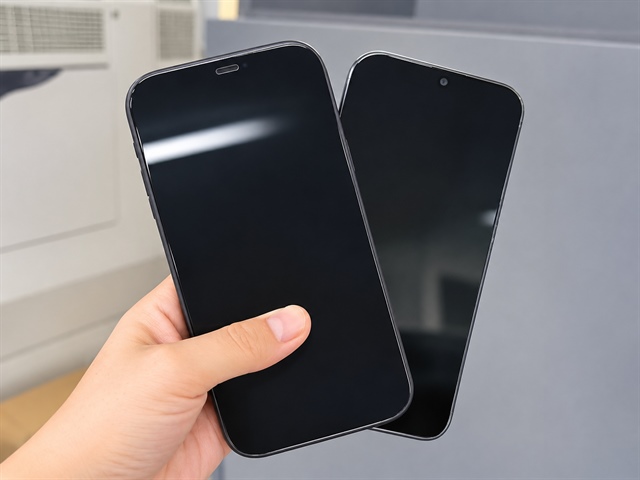
Photo: Hoang Oanh |
Based on feedback from industry associations and manufacturers, the VCCI identified four reasons why the proposed targets were considered unrealistic.
First, data collected over the past decade by Vietnam Recycles, a non-profit Producer Responsibility Organisation (PRO) funded and operated in Vietnam by technology groups Apple and HP, showed that the actual collection rate for mobile phones had never exceeded 1 per cent. Collection rates for laptops and tablets remained below 3 per cent.
“Vietnamese consumers tend to keep old mobile phones as keepsakes, give them to relatives, or resell them in the second-hand market to extend their useful life, rather than dispose of them through the general waste stream. Therefore, setting a target of 15 per cent is unfeasible and would unintentionally make most technology companies non-compliant with the law,” the VCCI said.
Second, glass packaging faces significant collection barriers. A 2024 survey by the Economy and Environment Partnership for Southeast Asia found that only 6 per cent of scrap dealers and 8 per cent of waste pickers in Vietnam collected glass, citing its low economic value, heavy weight, and high transport costs.
“Practical reports from the PRO Vietnam and beverage businesses show that the actual collection cost for coloured glass bottles can reach $1 per kilogram, 12 times the current contribution to the recycling fund of around $0.08 per kilogram, while the actual collection rate is only about 6 per cent. Imposing a 15 per cent target would create a substantial compliance cost burden for the food and beverage industries,” the VCCI said.
Third, VCCI argued that setting a rigid nine-year schedule for increasing recycling rates from 2026 to 2034 was inappropriate while Vietnam’s recycling market remained at an early stage of development.
It said international practices in the European Union, under the Waste Electrical and Electronic Equipment (WEEE) Directive 2012/19/EU, as well as in Singapore and South Korea, involved setting collection targets for each three-year cycle, followed by reviews of actual market capacity before new targets were introduced.
Fourth, the VCCI said commercial refrigeration equipment and industrial central air-conditioning systems should be treated differently from household appliances. These products typically have lifespans of 10–30 years, are managed as corporate fixed assets, and are disposed of through controlled industrial procedures.
In light of these concerns, the VCCI has proposed reducing the mandatory recycling rate for mobile phones under Appendix XI from 15 to 3 per cent for the initial 2026-2028 period. It also recommended setting the rate for glass packaging at 4-6 per cent, in line with the actual capacity for waste sorting at source.
The VCCI also proposed amending Clause 2, Article 113 of the draft decree to set mandatory recycling rates only for the first three-year cycle, from 2026 to 2028, and remove the automatic nine-year increase schedule. Instead, the government should review and assess market capacity at the end of each three-year cycle before setting new rates.
The chamber also called for a mechanism allowing recycling volumes to be offset across broader product categories on a weight basis, following approaches adopted in the EU, South Korea, and Singapore. Under the proposal, excess collection volumes from office equipment and computers could compensate for shortfalls in mobile phone recycling within the same electronic equipment group.
Beyond the proposed recycling targets, the VCCI called for businesses to retain the option of making financial contributions to the Vietnam Environmental Protection Fund to fulfil their extended producer responsibility obligations until at least the end of 2033, while the country’s recycling infrastructure is being developed.
- 16:00 12/11/2026