

OECD calls for stronger governance, transparency at state-owned enterprises
OECD calls for stronger governance, transparency at state-owned enterprises
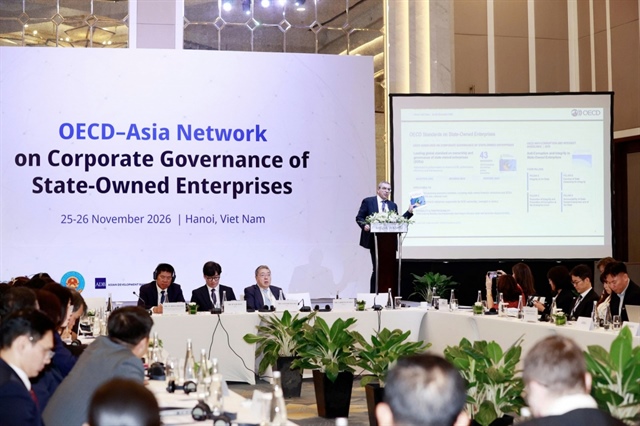
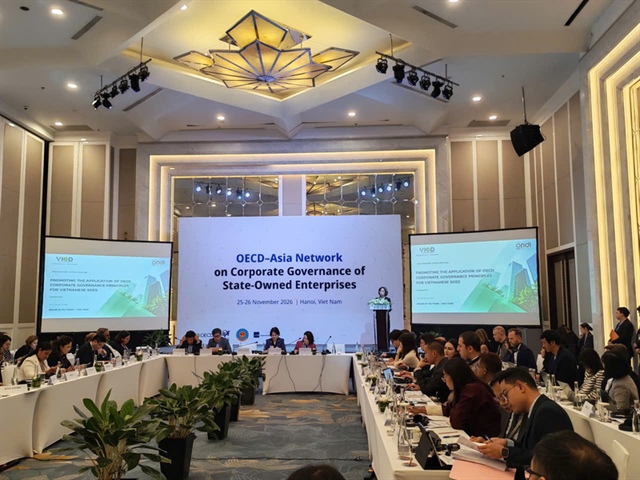
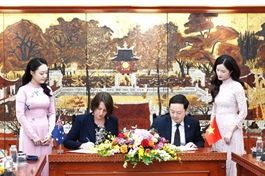
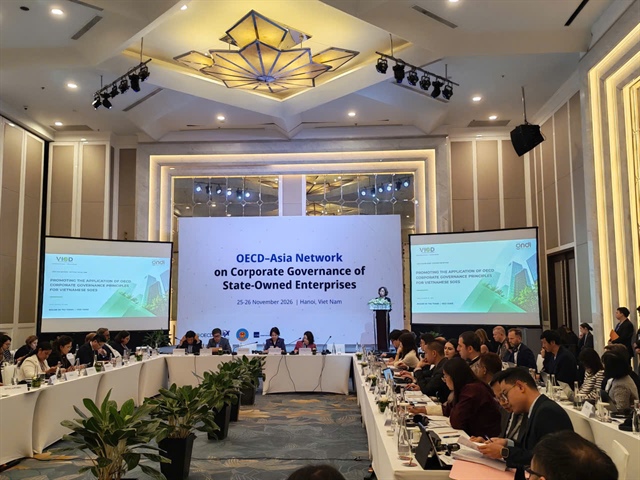
The 2026 edition of 'Ownership and Governance of SOEs' was launched regionally within the framework of the two-day OECD-Asia Network on Corporate Governance of SOEs in Hà Nội.
 |
Governments need to strengthen ownership policies, improve transparency and ensure greater independence of corporate boards at state-owned enterprises (SOEs) to enhance accountability and maintain a level playing field, according to a report launched by the Organisation for Economic Cooperation and Development (OECD) on November 25.
The 2026 edition of Ownership and Governance of SOEs was launched regionally within the framework of the two-day OECD-Asia Network on Corporate Governance of SOEs in Hà Nội.
Examining ownership and governance practices across 58 economies, the report provides an overview of the growing economic footprint of SOEs and evolving approaches to state ownership, corporate governance and accountability, with particular attention to developments in Asia.
Carmine Di Noia, OECD director for Financial and Enterprise Affairs, highlighted the increasingly important role of SOEs in the global economy, particularly in strategic sectors such as energy, infrastructure, mining, transport and finance.
By 2024, approximately 33,800 large SOEs operated worldwide, holding combined assets of US$141 trillion, equivalent to 126 per cent of global GDP, according to the report.
Their economic footprint has roughly doubled over the past decade, underlining the need for sound governance frameworks to ensure that state-owned businesses create public value while competing fairly with private sector enterprises.
Emerging economies accounted for 80 per cent of global SOE assets and 83 per cent of SOE employment, reflecting the particularly significant role of state ownership in developing markets.
Strengthening accountability and transparency
Despite progress in professionalising state ownership, the report pointed to shortcomings in institutional arrangements and accountability.
Only 43 per cent of the surveyed economies have a government-wide policy setting out the objectives and rationale for state ownership. In many others, ownership responsibilities and objectives remain scattered across different legal, regulatory and policy instruments, potentially weakening consistency and accountability.
The report also highlighted differences in the legal treatment of SOEs and private businesses. Only 57 per cent of economies apply the same legal rules to both, with exemptions often relating to bankruptcy, public procurement, competition law and regulatory oversight.
Public service obligations also require clearer financial arrangements. While such obligations are widespread, only 48 per cent of economies directly link compensation to the costs incurred and require separate accounts, according to the report.
The OECD said transparent compensation mechanisms were important to distinguish commercial activities from public service responsibilities and prevent unfair competitive advantages.
The report also identified room for improvement in the authority and independence of SOE boards.
Only 54 per cent of surveyed economies require SOE boards to include a minimum number of independent directors. Meanwhile, boards have full authority to determine corporate strategy in only 43 per cent of economies, while in 47 per cent they must submit their strategies for approval by the state shareholder.
The OECD said transparent nomination procedures, merit-based appointments and boards with an appropriate balance of skills, experience and independence were essential to strengthening oversight and supporting long-term value creation.
Sustainability requirements are also becoming more formalised, with 73 per cent of economies requiring some or all SOEs to report on sustainability issues.
However, the integration of sustainability considerations into due diligence, risk management and reporting remains uneven, with requirements applying mainly to larger or listed enterprises.
Around 60 per cent of economies also incorporate sustainability information into consolidated reporting on their SOE portfolios, although the scope and depth of disclosure vary.
To address these challenges, the OECD recommended that governments clarify their objectives as owners, separate ownership functions from policymaking and regulatory responsibilities, enhance financial and non-financial disclosure, and strengthen board effectiveness.
The OECD-Asia Network on Corporate Governance of State-Owned Enterprises was hosted by Việt Nam's Ministry of Finance and supported by the Korea Institute of Public Finance and the Asian Development Bank.
The network provides a platform for policymakers, practitioners and experts across Asia to exchange experience and good practices in SOE ownership and governance as well as drawing on the OECD Guidelines on Corporate Governance of SOEs and its Guidelines on Anti-Corruption and Integrity in SOEs.
- 11:37 25/11/2026