SME sector shows resilience, but growth remains uneven
SME sector shows resilience, but growth remains uneven
After a period of significant market shakeout, Vietnam’s small and medium-sized enterprise (SME) landscape has become increasingly differentiated.
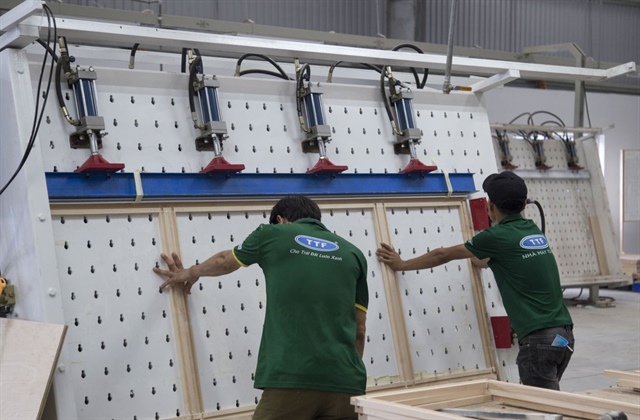
Photo: baodautu.vn |
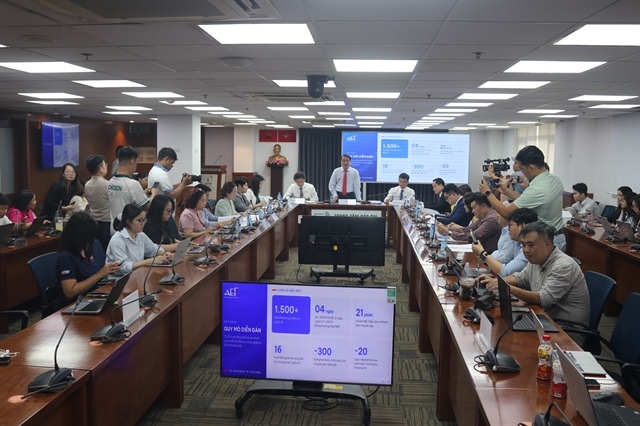
FiinGroup's Vietnam SME Business Report 2026, released on August 24, noted that while some active SMEs show more favourable risk profiles, closure pressure remains high and growth potential is not evenly distributed across the sector.
Vietnam is targeting double-digit economic growth, with enterprises identified as a key driver. As SMEs account for the majority of businesses, their ability to sustain operations, scale up and access financing is critical to the overall growth objective.
While policies continue to support SMEs in financing, digital transformation, governance and market access, financial institutions are also placing greater focus on this segment. Assessing SME maturity, financial health and risk is therefore essential to identify growth potential and available credit headroom.
Based on FiinGroup's classification, SMEs account for approximately 94 per cent of all enterprises nationwide, yet their overall economic contribution remains limited – less than 20 per cent of revenue and around 8 per cent of total import-export turnover.
According to the report, only about 8.8 per cent of SMEs have access to loans, down 0.5 percentage points from 2025. The corresponding figure for large enterprises is 47.1 per cent. This highlights a major financing gap for SMEs, constraining business continuity and growth.
In 2026, nearly 43,000 enterprises moved up in size, higher than in 2025 and above the level recorded in 2023. The increase was mainly driven by micro-enterprises moving into the small and medium-sized segment, with the on-year rate rising from 7.5 per cent to approximately 9 per cent.
Meanwhile, only 0.7-0.9 per cent of micro, small and medium-sized enterprises moved into the large enterprise segment each year. This modest level of scale development and maturity indicates a continued need for support in financing, governance, technology and market access.
In 2025, FiinGroup statistics showed higher closure rates across all three enterprise-size groups. Micro-enterprises recorded the highest closure rate at approximately 22.7 per cent, followed by SMEs at 12.7 per cent and large enterprises at 4.9 per cent. While closure rates increased sharply, entry and reactivation rates declined across enterprise groups. This indicates more pronounced market filtering, with smaller enterprises facing the greatest pressure.
The report pointed out that commerce, manufacturing and construction have the highest concentrations of SMEs. Manufacturing and construction maintain relatively favourable risk positions compared with other industries, with closure rates of around 13 per cent and median FiinScores above 550. By contrast, real estate and accommodation and F&B have the highest closure rates, at 24 per cent and 23.5 per cent, respectively. Real estate has a median score below 500, indicating a risk level that warrants particular attention.
From 2022 to 2024, the share of SMEs rated high risk or above at year-end rose sharply, reaching 62.2 per cent at the end of 2024 before declining at the end of 2025. In the latest 2026 update, the share of high-risk-or-above SMEs fell to approximately 39 per cent, while the low and very-low-risk groups increased to 37.2 per cent.
However, the actual SME closure rate in 2025 rose to 17.3 per cent, the highest level in the observed period. This indicates strong market filtering over the past 1-2 years.
Nearly 90 per cent of SMEs in the sample have no recorded outstanding loans. Notably, banks and other financial institutions tend to select established customers: nearly 85 per cent of borrowing SMEs have operated for at least five years.
The risk profile of this group is also significantly stronger. However, around 45 per cent of enterprises with more than five years of operating history and medium-to-low risk still have no access to loans. This may represent a high-potential segment for credit institutions.
Enterprises without debt are significantly smaller, with lower median total assets and revenue. The share generating positive cash flow from operations is also lower, at 47.8 per cent versus 56.4 per cent. However, non-borrowers show higher median revenue growth (15.6 per cent versus 9.8 per cent), as well as stronger net margins, return on assets, and liquidity. This suggests that some enterprises may be self-financed or have limited borrowing needs.
Among them, 67,000 enterprises with both positive operational cash flow and revenue growth should be prioritised for outreach and financing-needs assessment.
The commerce industry shows relatively positive profitability, with a median gross margin of 11.6 per cent and a positive median net margin. However, only 23.4 per cent of enterprises generate positive cash flow operations, indicating that cash-flow quality remains a key consideration.
Meanwhile, fewer than 10 per cent of SMEs in this sector currently have access to loans. This creates a strong opportunity for banks to expand lending, particularly to medium- and low-risk SMEs.
- 09:00 25/08/2026