Tây Ninh promotes e-commerce in border areas
Tây Ninh promotes e-commerce in border areas
From digital sales training to upgraded logistics facilities, Tây Ninh is rolling out measures to help businesses in border areas reach more customers.
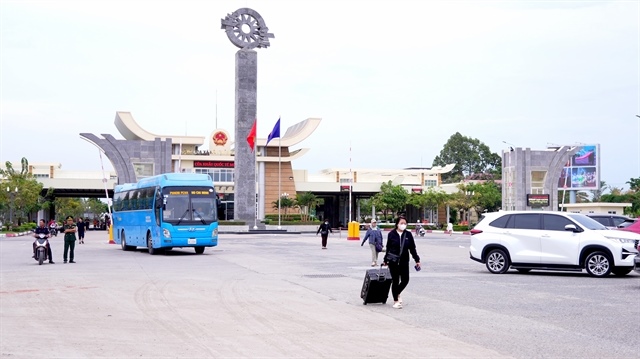
Mộc Bài International Border Gate in Tây Ninh Province is one of the largest land border gates in the southern region. — VNA/VNS Photo |
Tây Ninh Province is stepping up efforts to develop e-commerce in border areas to modernise trade, streamline goods distribution and expand export markets, capitalising on its nearly 369km border with Cambodia.
The initiative is part of the southern province's efforts to implement the Party’s Resolution 57 on breakthroughs in science and technology, innovation and national digital transformation, issued in December 2024.
The provincial People's Committee has developed a plan to promote e-commerce in border areas during the 2027-30 period.
The plan aims to improve trading efficiency, speed up digital transformation in production and business activities and make better use of the province's cross-border economic potential.
“The province aims to achieve average annual growth of 15-20 per cent in e-commerce sales in border communes by 2030,” Trương Thanh Liêm, vice chairman of the Tây Ninh People's Committee, said.
The province also aims to provide digital sales training to all production and business operators in border areas and ensure that all enterprises, cooperatives and business establishments adopt cashless payments, according to Liêm.
In addition, 60 per cent of enterprises, cooperatives and household businesses are expected to sell their products online, while 40 per cent are expected to generate annual revenue from e-commerce activities.
To achieve these targets, the province plans to upgrade telecommunications and digital infrastructure and improve internet access in border areas.
It is also considering providing free public WiFi in densely populated areas, border markets and commercial centres at border gates to make online transactions more convenient for residents and traders.
In addition, the province is encouraging investment in smart logistics centres, specialised bonded warehouses and cold storage facilities for agricultural products in the Mộc Bài and Xa Mát cross-border economic zones.
Another priority is to improve digital skills among officials, businesses, cooperatives and household traders through training programmes.
The training programmes will cover product photography, video production, livestream sales, online shop management and digital export procedures for the Cambodian market.
The province also aims to promote green e-commerce by encouraging the use of environmentally friendly packaging, more efficient delivery services and QR codes to trace product origins.
Expanding border trade
Tây Ninh's cross-border trade has recorded positive growth in recent years.
Import and export turnover under commercial contracts reached approximately US$3.51 billion last year.
The figure totalled $2.49 billion in the first eight months of this year, comprising exports worth around $662.5 million, up 223 per cent year-on-year, and imports of $1.82 billion, an increase of 48 per cent.
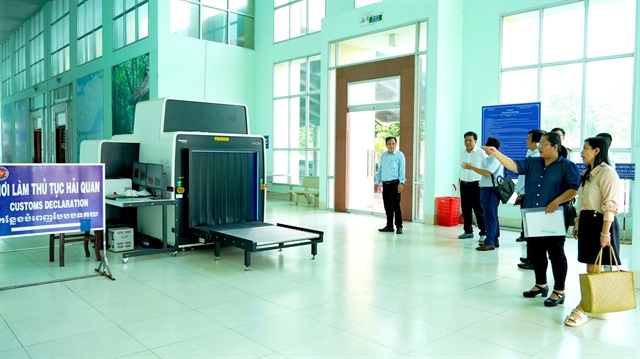
Mộc Bài International Border Gate in Tây Ninh Province is one of the largest land border gates in the southern region. — VNA/VNS Photo |
The province has four international border gates, four main border gates and 13 auxiliary border checkpoints.
To meet the growing demand for the cross-border movement of people, vehicles and goods, the province is increasing investment in transport, border control and logistics infrastructure.
During 2027–30, the province plans to allocate more than VNĐ49.6 billion ($1.93 million) to upgrade Bình Hiệp International Border Gate and over VNĐ962 billion ($37.4 million) to develop infrastructure at Mộc Bài International Border Gate.
These investments aim to boost customs clearance capacity, improve trade connectivity and promote cross-border trade as a key driver of socio-economic development, while strengthening ties with Cambodia and other ASEAN countries.
Overcoming bottlenecks
Despite its potential, Tây Ninh’s e-commerce in border areas continues to face several challenges, including inadequate logistics infrastructure, limited digital skills among local businesses and complicated administrative procedures.
Nguyễn Hồ Bảo Linh, director of Multimedia Van Hoa Ltd Co in Tân Ninh Ward, which operates the cholonghoa.com and vieclamgap.vn platforms, said traditional shopping habits remained widespread, while small businesses and household traders lacked digital skills.
“Uneven logistics infrastructure and a shortage of skilled technology workers are also limiting market expansion,” he said.
Experts say improving digital capabilities, upgrading logistics infrastructure, streamlining administrative procedures and standardising product quality are essential to unlocking the potential of e-commerce in border areas.
To make digital transformation more effective and deliver tangible results, the province has identified its key weaknesses and launched a 100-day action plan to tackle bottlenecks in infrastructure, data, administrative procedures and human resources across the political system, with the aim of better serving residents and businesses.
The province has stepped up efforts to promote e-commerce and expand markets for local products under the country’s “One Commune-One Product” (OCOP) programme through digital platforms and trade promotion activities.
It has established a Zalo group connecting OCOP producers to share market information and production experience, while its OCOP website supports online sales, livestreaming and brand development.

Mộc Bài International Border Gate in Tây Ninh Province is one of the largest land border gates in the southern region. — VNA/VNS Photo |
The provincial Department of Industry and Trade has also rolled out various trade promotion programmes, business matching activities and support schemes to help enterprises adopt e-commerce.
Trương Tấn Sơn, director of the department, said the province would continue working closely with businesses to help them gradually master online sales methods and expand their markets.
On October 22, the Department of Industry and Trade and the HCM City-based Live Channel Communications Ltd Co signed a memorandum of understanding on cooperation in developing e-commerce and digital trade and supporting the sale of Tây Ninh products during the 2026-30 period.
Speaking at the signing ceremony, Sơn said e-commerce and digital trade were increasingly becoming key drivers of business growth, helping enterprises reach consumers, expand markets and improve their competitiveness.
Sales by businesses in the province on five major e-commerce platforms exceeded VNĐ3.34 trillion ($130 million) last year, more than double the figure for 2024, he said.
- 09:19 21/11/2026