




Việt Nam’s growth prospects appeal to long-term investors
Việt Nam’s growth prospects appeal to long-term investors
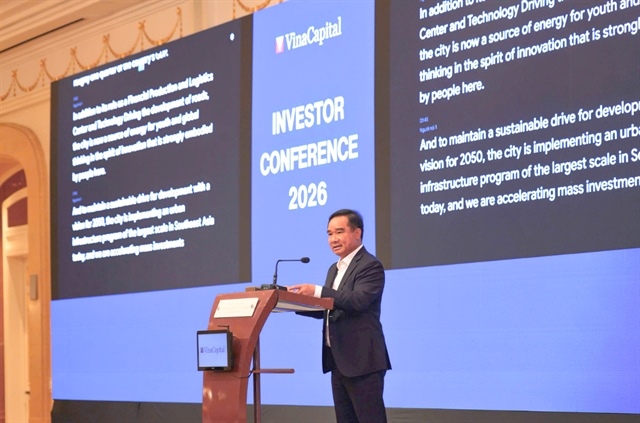
HCM City is focusing on investment in sectors expected to drive growth, its chairman, Nguyễn Văn Được, told VinaCapital’s 2026 Investor Conference on October 13.
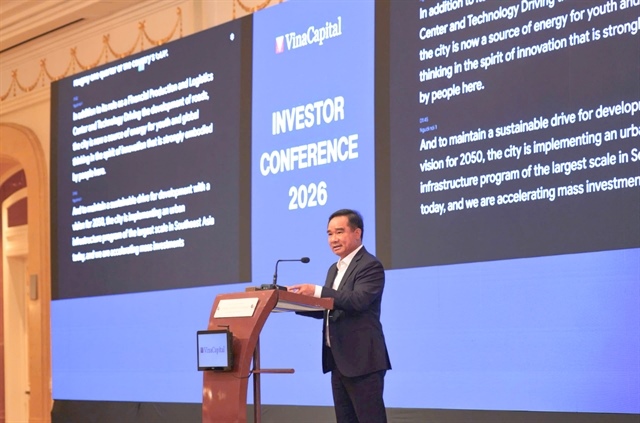
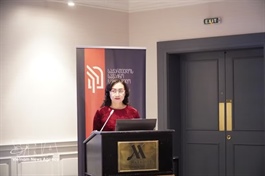
Nguyễn Văn Được, chairman of the HCM City People’s Committee, speaks at VinaCapital’s 2026 Investor Conference on October 13. — Photo courtesy of VinaCapital |
HCM City is focusing on investment in sectors expected to drive growth, its chairman, Nguyễn Văn Được, told VinaCapital’s 2026 Investor Conference on October 13.
Speaking at the conference held under the theme “Vietnam: From Frontier Opportunity to Core Asia Allocation,” he said: “HCM City is entering a pivotal stage of development. As Việt Nam’s economic powerhouse, the city is accelerating investment in infrastructure and prioritising the attraction of high-quality capital into sectors that will shape growth over the next decade, including technology and artificial intelligence, green energy, high-tech manufacturing, logistics, and financial services.”
Organised by investment fund VinaCapital Group, the event attracted more than 140 participants from Vietnamese and international organisations working in private capital, financial services, technology, infrastructure, energy, real estate, consumer goods, and sustainable investment.
It examined opportunities across Việt Nam’s major asset classes as the country enters a new phase of market development.
Russell Napier, a macroeconomic strategist and author of Anatomy of the Bear, delivered the opening keynote address, examining Việt Nam’s place in international investors’ portfolios against the global economic backdrop.
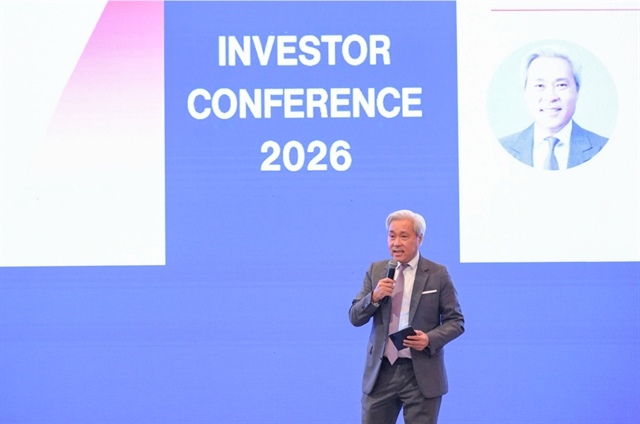
Nguyễn Văn Được, chairman of the HCM City People’s Committee, speaks at VinaCapital’s 2026 Investor Conference on October 13. — Photo courtesy of VinaCapital |
Don Lam, CEO and founding partner of VinaCapital Group, said Việt Nam remained resilient despite global economic headwinds, supported by strong high-tech exports and major infrastructure investment.
“Việt Nam is not immune to global headwinds. But once again, its resilience stands out.
“With favourable demographics and considerable room for further industrialisation, urbanisation, and productivity growth, Việt Nam’s long-term investment potential remains significant.
“The question is no longer whether Việt Nam deserves investors’ attention, but whether it deserves a permanent place in the portfolio, not at the edge of the allocation, but at its core.”
He also noted that more investors specialising in technology, AI, and semiconductors were attending the conference for the first time, reflecting growing interest in Việt Nam’s investment opportunities.
VinaCapital said FTSE Russell’s reclassification of Việt Nam as a secondary emerging market, effective September 21, 2026, had increased its visibility and accessibility to international investors.
Further market reforms, a potential MSCI emerging market upgrade, and an investment-grade sovereign credit rating could attract greater investor attention in the coming years.
Industrialisation and middle class drive growth
Speaking at a press briefing on the sidelines of the conference, Nguyễn Hoài Thu, deputy CEO of VinaCapital, said industrialisation and the rise of the middle class were two main drivers of Việt Nam’s long-term economic growth.
Nguyễn Văn Được, chairman of the HCM City People’s Committee, speaks at VinaCapital’s 2026 Investor Conference on October 13. — Photo courtesy of VinaCapital |
VinaCapital forecasts GDP growth of 8–10 per cent in 2027. Industrial production is projected to grow by around 10 per cent, while real retail sales growth is expected to recover to around 8 per cent, in line with pre-pandemic levels.
The company said the economic outlook remained supported by a trade surplus, manageable public debt, stable foreign direct investment, and foreign exchange reserves equivalent to around three months of imports.
Turning to equities, Thu said the market had faced a challenging 2026, with liquidity under pressure and foreign investors continuing to sell more shares than they bought.
High interest rates at home and overseas have weighed on market liquidity and made equities less attractive relative to bank deposits. Global interest rates and geopolitical tensions have also complicated international capital flows, while trade barriers could hurt exports in an economy heavily dependent on international trade.
Nevertheless, corporate earnings prospects continue to offer investment opportunities.
Corporate earnings are forecast to grow by nearly 18 per cent annually in 2027–2028, Thu said.
She said earnings growth is expected across several sectors, while shares trading at single-digit price-to-earnings ratios offered opportunities for long-term investors.
With one of the region’s highest earnings growth rates, Việt Nam’s stock market would eventually attract greater attention from international investors, she said.
The capital market also has considerable room to develop through new investment products and continuing reforms. VinaCapital expects the country to make further progress towards an MSCI emerging market upgrade over the next three years.
Thu said economic reform under Việt Nam’s “Đổi Mới 2.0” agenda was moving particularly quickly, with strong government commitment and stable economic conditions supporting the country’s longer-term development ambitions.
The conference featured one-to-one meetings and panel discussions on public markets beyond the FTSE upgrade, private markets, venture capital, growth equity, opportunities before and during initial public offerings, AI infrastructure, renewable energy, real estate, climate impact investment, banking, consumer sectors, and infrastructure financing, including the role of the Vietnam International Financial Centre.
VinaCapital held its first Investor Conference in 2005 to introduce Việt Nam to foreign investors and promote investment opportunities in the country.
- 11:36 14/10/2026