




HCM City shifts towards productivity-driven growth model
HCM City shifts towards productivity-driven growth model
After 40 years of đổi mới (Renewal), HCM City is entering a new phase of development, seeking to bring together capital, technology, people, infrastructure, and markets to raise productivity and strengthen competitiveness.
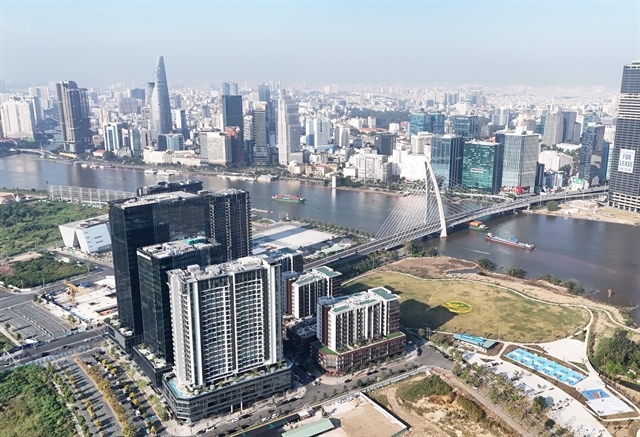
The core area of the Việt Nam International Financial Centre in HCM City is located on the Thủ Thiêm Peninsula. — VNA/VNS Photo |
After 40 years of Đổi mới (Renewal), HCM City is entering a new phase of development, seeking to bring together capital, technology, people, infrastructure, and markets to raise productivity and strengthen competitiveness.
Before the national Đổi mới reforms were launched in 1986, the centrally planned economy left businesses with limited autonomy. Between 1976 and 1985, the city experimented with a series of “fence-breaking” initiatives, including wage-price compensation, the three-part plan, and the Directors’ Club.
These efforts provided practical foundations for Đổi mới, which subsequently expanded trade, attracted investment, and created greater space for different economic sectors to develop.
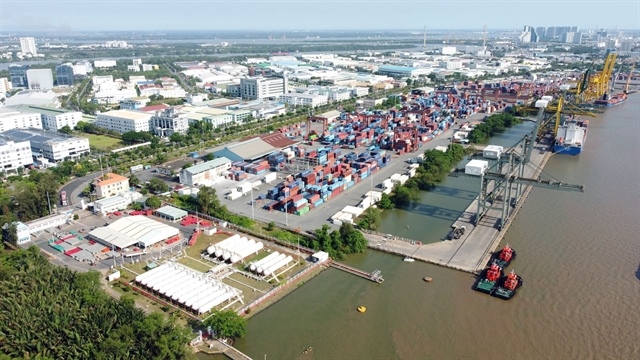
The establishment of the Tân Thuận Export Processing Zone in 1991 marked a major step in opening up the economy, while the Sài Gòn Hi-Tech Park, established in 2002, shifted the focus towards technology and higher value-added activities.
The city’s development has therefore evolved from removing constraints on production to mobilising investment and, increasingly, building technological and productive capabilities.
The core area of the Việt Nam International Financial Centre in HCM City is located on the Thủ Thiêm Peninsula. — VNA/VNS Photo |
The transformation is particularly visible in the emergence of technology-focused economic hubs.
The Saigon Hi-Tech Park has generated more than US$203 billion worth of high-tech products, including more than $185 billion in exports, and created nearly 54,000 jobs.
Nguyễn Kỳ Phùng, head of its management, said the park is no longer viewed simply as a place to lease industrial land, but as an ecosystem for global technology corporations, technology investment funds, and developers of core technologies.
This reflects a shift from quantity to quality, and from processing and assembly towards mastering core technologies and developing specialised technology value chains.
Quang Trung Software Park provides another example. After 25 years, it has more than 120 digital technology enterprises with cumulative revenues of VNĐ138 trillion ($5.32 billion) and exports of more than $4.35 billion.
These changes are beginning to show in the city’s productivity performance.
Total factor productivity, the measure of how efficiently an economy uses capital and labour to generate output, including the effects of technology, innovation, and better organisation, contributed about 59 per cent to HCM City’s economic growth in 2025, according to the city Department of Science and Technology.
The figure is close to the city’s target of 60 per cent for 2026–30, suggesting that technology, innovation, and more efficient use of resources are already making a major contribution to growth.
The core area of the Việt Nam International Financial Centre in HCM City is located on the Thủ Thiêm Peninsula. — VNA/VNS Photo |
Economist Dr Trần Du Lịch, former director of the HCM City Institute for Development Studies, said shifting the development model towards science, technology, innovation, and the digital economy was not only an inevitable trend but also a strategic choice for the city to maintain its leading role.
The focus of this process is not only on technology but, first and foremost, on policy thinking and institutions, he said.
Institutions must lead the way by creating room to test new models, helping the city shift from capital-driven growth towards growth based on knowledge and productivity, he said.
Connecting resources
According to the Global Financial Centres Index 2026, HCM City ranked 84th out of 120 global financial centres, 11 places higher than the previous year and third in ASEAN.
The city is seeking to bring previously separate economic strengths together into a larger development system.
The merger of Bình Dương and Bà Rịa–Vũng Tàu provinces into HCM City in July 2025 created a larger economic space integrating finance, high-tech industry, seaports, logistics, and innovation.
Scale alone will, however, create additional value only if these assets can be effectively connected.
The Politburo’s Resolution No 09, issued on May 19, 2026, on building and developing HCM City in the new era, establishes a development model based on science and technology, innovation, and digital transformation, while calling for institutional reform, greater decentralisation, and more effective mobilisation of resources.
The Law on Urban Development, which takes effect on October 1, 2026, is expected to provide further special mechanisms and strengthen decentralisation.
According to Võ Văn Minh, chairman of the city People’s Council, the law will help eliminate bottlenecks and make more effective use of land, financial, investment, science and technology resources, contributing to the city’s long-term development.
Institutions are therefore taking on a broader role: not simply removing obstacles but also organising resources and creating room to test new models.
The Việt Nam International Financial Centre in HCM City (VIFC-HCMC) and the Cái Mép Hạ Free Trade Zone (FTZ) illustrate this approach.
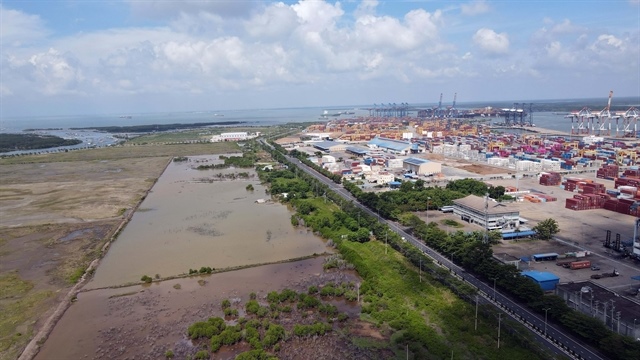
The core area of the Việt Nam International Financial Centre in HCM City is located on the Thủ Thiêm Peninsula. — VNA/VNS Photo |
Nguyễn Hữu Huân, deputy chairman of the VIFC-HCMC executive board, said the financial centre could develop from a cluster of financial institutions into market infrastructure meeting capital needs for metro lines, seaports, logistics, aviation, the FTZ, green transformation, and business activities.
“If this can be achieved within a sound risk management framework, VIFC-HCMC will not simply be a financial centre located in HCM City. It will become economic infrastructure for the city – infrastructure for capital flows.”
If the financial centre connects the city with capital flows, the FTZ can connect those flows with production, logistics, trade, and supply chains.
The underlying shift is therefore from having more resources to organising resources into a value-generating system.
Foreign investment remains an important source of capital. In the first eight months of 2026, the city attracted more than $10.06 billion in FDI, up 167.3 per cent year-on-year.
Hoàng Vũ Thảnh, director of the city Department of Finance, said: “The result shows the attractiveness of the city’s long-term investment environment, with foreign capital becoming increasingly visible in technology and science.”
Building capabilities
Capital and infrastructure, however, cannot generate sustainable competitiveness without people capable of using them effectively.
A technology-driven economy requires high-quality human resources whose skills match the needs of businesses.
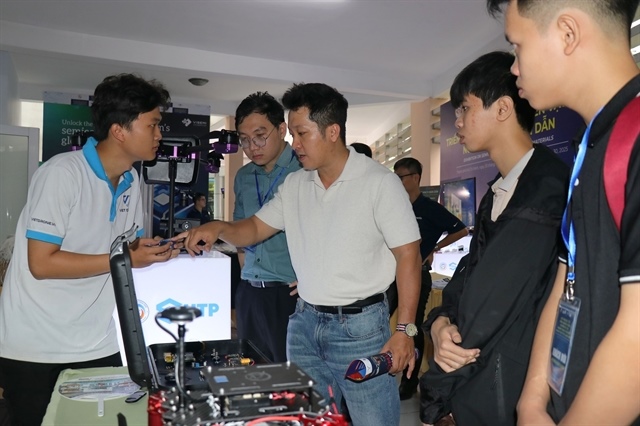
In line with the Politburo’s Resolution No. 57, issued in December 2024, the city is promoting specialised training in technology, digital skills, and innovation, with priority given to human resources for semiconductors, microchips, and AI.
It is also strengthening links between the State, schools, and businesses, while applying AI and big data in training to personalise learning pathways and help workers acquire skills suited to industry needs.
Universities are likewise strengthening applied research, links with businesses, and the commercialisation of knowledge.
The human-resource challenge is therefore changing. The question is no longer simply whether the city can train enough people for the market, but whether it can develop a workforce capable of mastering technology, conducting research, innovating, and turning knowledge into economic value.
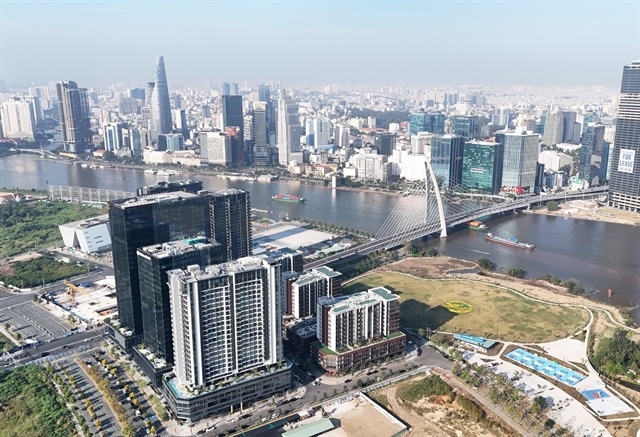
The core area of the Việt Nam International Financial Centre in HCM City is located on the Thủ Thiêm Peninsula. — VNA/VNS Photo |
In the first half of 2026, the city implemented tasks in science, technology, innovation, and digital transformation in line with the Politburo’s Resolution No 57, placing businesses at the centre of these efforts.
Measures focused on improving policies and funding, developing digital infrastructure and data, and commercialising technologies.
The city is offering incentives covering tax, research and development, land, infrastructure, administrative procedures, and human resources to attract investment in high and strategic technologies.
Public investment is rising, with VNĐ12.7 trillion ($488 million) allocated to science and technology this year, accounting for 4.16 per cent of total city budget expenditure.
The city has 143 science and technology enterprises, some 20 per cent of the country’s total.
It aims to raise R&D spending to about 2 per cent of GRDP and accelerate the commercialisation of research results.
But spending and targets alone will not determine the outcome.
The key measure is whether these investments can be converted into technologies, products, and businesses that generate higher productivity and greater economic value.
That challenge is particularly important as the city seeks to move beyond processing and assembly, develop stronger domestic technological capabilities, and build specialised value chains.
The city’s future competitiveness will depend on how effectively it turns its increasing resources into higher productivity, greater value added, and stronger technological capabilities.
- 08:21 13/10/2026