




Rubber sector seeks higher value as raw exports face pressure
Rubber sector seeks higher value as raw exports face pressure
Việt Nam ranks fourth globally in natural rubber latex production, accounting for about 9 per cent, and third in exports, with about 14 per cent, after Thailand and Ivory Coast.
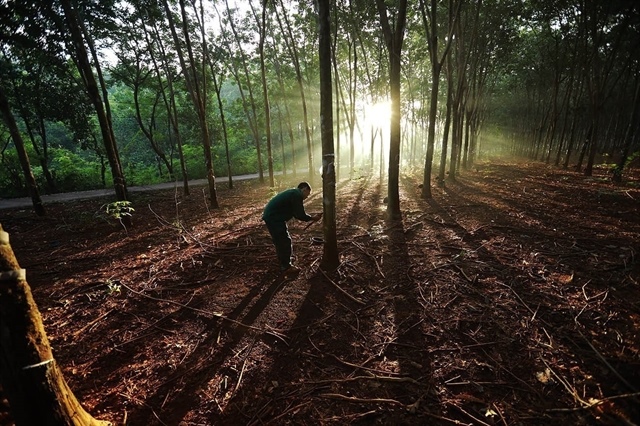
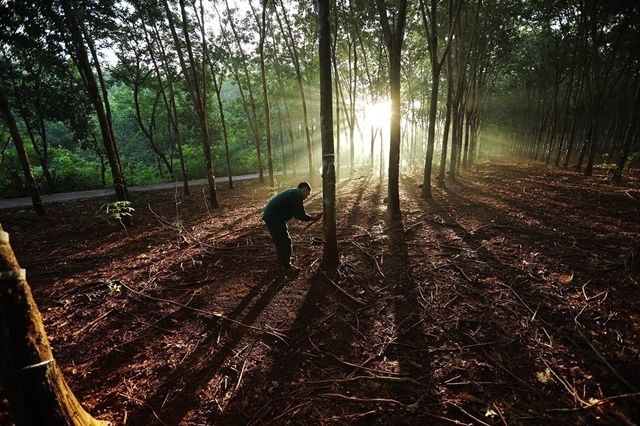
A worker taps a rubber tree at the Đồng Phú rubber plantation in Đồng Nai. —VNA/VNS Photos |
Despite being one of the world's largest producers and exporters of natural rubber, limited processing capacity, weak branding and limited control over the value chain are constraining the industry's ability to turn its production strength into greater market influence, experts said.
Rubber futures prices on major Asian exchanges have risen in September as concerns over adverse weather in Southeast Asia have raised supply risks. But an uneven recovery in demand and competition from synthetic rubber are limiting the benefit to exporters, making higher prices an uncertain source of growth for Việt Nam's rubber industry.
Nguyễn Viết Tượng, a former vice president of the Vietnam Rubber Association (VRA), said the industry's main challenge is its position in the global value chain.
Việt Nam ranks fourth globally in natural rubber latex production, accounting for about 9 per cent, and third in exports, with about 14 per cent, after Thailand and Ivory Coast, Tượng said.
But much of Việt Nam's exports remain concentrated in raw or relatively low-value products, limiting the industry's ability to influence prices, standards and trading conditions, he said.
Việt Nam's rubber supply is substantial, but the industry continues to generate relatively low added value, leaving it caught in what he described as a 'production trap'.
China remains Việt Nam's largest rubber export market, but weaker demand there has added pressure on exporters, according to the Ministry of Industry and Trade's Agency for Foreign Trade.
Rubber exports to China fell 30 per cent in volume and 21 per cent in value in the first eight months of this year from a year earlier, the agency said.
Exports to Russia, the US, Germany, Pakistan and several European markets have also faced weaker conditions, while shipments to India, Malaysia, Indonesia, Sri Lanka, the Republic of Korea, Taiwan (China) and Mexico have increased.
The agency said the shift created opportunities for exporters to diversify away from traditional markets. But expanding into new destinations may have limited impact on overall value if exports remain concentrated in raw materials.
Việt Nam exports around 15 main groups of rubber products, Tượng said. Tyres account for about 69 per cent of exports, while components, technical rubber products, gloves, shoe soles and rubber hoses make up smaller shares.
The product mix leaves room for greater value addition, as many products have yet to move into more technologically advanced and technically demanding segments, he added.
The Agency for Foreign Trade expects China's demand and global rubber prices to remain important factors for Việt Nam's exports. Demand could also improve as the automotive, tyre and rubber-processing industries recover. It suggested that businesses diversify markets, improve product quality, increase processed-rubber exports and meet international standards.
Traceability rules raise hurdles
A worker taps a rubber tree at the Đồng Phú rubber plantation in Đồng Nai. —VNA/VNS Photos |
The rubber industry is also facing growing pressure to meet environmental and traceability requirements as major markets tighten conditions for access, adding to the sector's challenges in moving beyond raw-material exports.
The European Union Deforestation Regulation (EUDR) requires companies to demonstrate that covered products placed on the EU market are not linked to deforestation after December 31, 2020, with supply-chain information traceable to the production area.
Under the current timetable, large companies must comply from December 30, 2026, while small businesses have until June 30, 2027.
The requirements could be particularly challenging for the rubber industry, where about 87 per cent of rubber-growing areas are managed by households cultivating less than three hectares. Fragmented production makes it harder to standardise farming practices, digitise data, and establish traceable supply chains.
About 90 per cent of raw latex passes through multiple intermediaries, according to industry data, keeping farmers relatively distant from end markets and limiting their participation in value creation.
Industry experts say companies will need to strengthen links with producers and gain greater control over growing areas, production data and supply-chain processes to meet stricter standards and expand into higher-value markets.
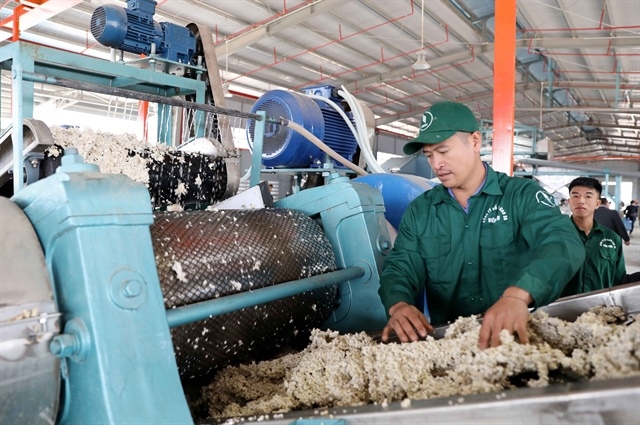
Tượng said the industry should develop higher-value products such as elastic threads, technical latex and industrial rubber products rather than relying mainly on raw latex exports.
Greater integration into processing could give companies more control over technology, quality, branding and pricing, while direct engagement with importers could help them target specific market segments and develop their own brands, he added.
- 08:33 15/10/2026