MoIT to build system to flag unusual fuel price movements
MoIT to build system to flag unusual fuel price movements
Ministry of Industry and Trade (MoIT) plans to build a data system to detect unusual movements in fuel prices and their underlying components, as businesses could be given greater discretion to set retail prices under a new draft decree.
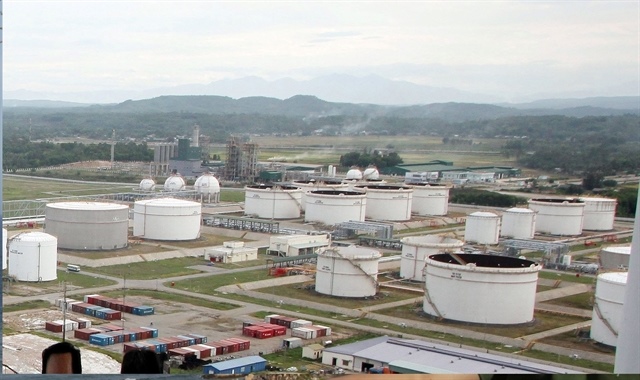
A view of Dung Quất Oil Refinery. From 2027, major fuel traders are expected to be required to secure total annual fuel supplies of at least 300,000 cubic metres or tonnes. VNA/VNS Photo |
At a regular press briefing on October 7, Nguyễn Thúy Hiền, deputy head of the ministry's Domestic Markets Department, said the draft decree on fuel trading was being developed to allow businesses to calculate prices based on input costs and set retail prices themselves, instead of having regulators announce maximum retail prices on a periodic basis.
Under the proposal, businesses would have to declare the factors that make up their prices through a price database. When adjusting prices, they would also have to provide supporting explanations, which could include changes in input costs, operating expenses or profit margins.
The database would be used to track prices set by individual fuel traders and identify signs of unusual price movements. When a warning signal on price emerges, the information would be sent to provincial Departments of Industry and Trade and market surveillance authorities for inspection and monitoring, Hien said.
The new mechanism would shift the focus of regulation from directly determining prices to monitoring how businesses set and adjust them.
The state would retain some regulatory tools, including regulated cost components in the pricing formula and a price-stabilisation mechanism that could be used when market conditions require intervention.
On the possibility of setting limits on the size or frequency of price adjustments, a ministry representative said the specific characteristics of the fuel business should be taken into account. Businesses import fuel in multiple shipments bought at different times and prices, before consolidating and storing the fuel in shared tanks. As a result, retail prices would not necessarily need to change immediately in response to each shipment or every movement in global oil prices.
The ministry said the new mechanism should allow prices to reflect market signals while giving businesses greater flexibility to operate, compete and maintain supply.
Broader pricing powers
The draft decree would also extend pricing powers to distributors that are not part of a major fuel trader's network, with the aim of increasing competition and reducing the risk of the market being dominated by a few large companies.
The ministry plans to reduce the number of intermediary layers in the distribution system from three to two. It estimates that more than 10,500 traders could move to the new distribution model and gain greater discretion over prices.
The draft would also add provisions to address agreements that restrict competition under Competition Law, aimed at preventing businesses from coordinating to raise prices.
From 2027, major fuel traders are expected to be required to secure total annual fuel supplies of at least 300,000 cubic metres or tonnes. Businesses that fail to meet the requirement for two consecutive years could have their trading licences revoked.
More than half of major fuel traders currently meet the proposed threshold, the ministry said. Businesses that fall short would be given time to invest, expand their distribution networks and increase their scale of operations.
The ministry said the higher supply requirement was intended to restructure the network of major fuel traders, strengthen supply capacity and bolster energy security.
As global oil markets remain affected by conflicts in the Middle East and Ukraine, the ministry said it was closely monitoring supply and demand and updating data on imports, domestic production and inventories to balance fuel supplies.
Hiền said inventories at the country's oil refineries were currently high. Based on an assessment of available supply sources, the ministry expects domestic fuel supplies to broadly meet demand through the end of 2026.
The draft decree has been under development for about two years and has gone through four rounds of consultation with government members. Following a business consultation conference in late September, the ministry continued to revise the draft and plans to submit it to the government in October.
If approved, the new mechanism would give businesses greater control over pricing, while regulators would monitor the market through data and competition-control tools.
- 14:54 09/10/2026