Raising construction materials supply chain standards amid green transition
Raising construction materials supply chain standards amid green transition
Growing scrutiny of carbon emissions and ESG performance is putting pressure on construction materials companies and their supply chains, particularly small- and medium-sized enterprises, to strengthen their capabilities, according to Nguyen Thi Thanh Tam, head of Sustainability Development at Prime Group, a member of SCG.
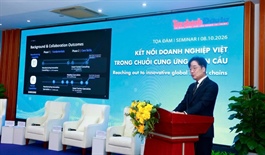
Speaking at the ‘Reaching out to innovative global supply chains’ seminar hosted by VIR on October 8, Tam said the construction materials industry was connected to multiple stages of the value chain, spanning raw materials, energy, production, technology, and logistics through to contractors, developers, and end markets.
“The quality and competitiveness of products increasingly depend on the capabilities of the entire ecosystem rather than a single company,” she said.
“Many international customers have expanded their supplier assessment criteria beyond product quality to factors such as carbon emissions, raw material origins, energy efficiency, and ESG standards,” Tam added.
With Vietnam targeting net-zero emissions by 2050, such criteria are expected to play a growing role in determining companies’ ability to participate in high-standard supply chains.
Prime Group currently has products in 24 countries, exposing the group to increasingly diverse market expectations spanning product quality, environmental performance, energy use, safety, traceability, and governance. “Meeting these expectations requires stronger capabilities across the supply chain, including among suppliers and SMEs,” said Tam.
SCG sees improving supply chain performance as a shared responsibility. Lead firms need to raise their own standards while helping suppliers strengthen their ability to meet evolving market expectations, supporting more stable and resilient supply networks.
This approach is reflected in Prime Group’s own operations. As a member of SCG, the company pursues sustainable development under the group’s Inclusive Green Growth strategy and ESG 4 Plus philosophy.

Nguyen Thi Thanh Tam, head of Sustainability Development at Prime Group, a member of SCG, spoke at the seminar. Photo: Duc Thanh |
Prime Group has 14 member companies and more than 3,600 employees, and applies management systems including various ISO standards. Its products also meet standards in the EU, Thailand, and Malaysia, alongside green labels such as Singapore Green Label and SCG Green Choice.
The group has also incorporated sustainability targets into its production activities. By 2030, Prime aims to cut emissions by more than 30 per cent from 2020 levels, source 30 per cent of its energy from clean sources, raise the proportion of recycled waste to around 8.9 per cent, and recycle and reuse 100 per cent of wastewater from production.
To support these targets, the group has implemented measures including waste heat recovery, the use of broken tiles and coal ash as raw materials, reductions in raw material and fuel losses, the Internet of Things applications in production control, greater use of biomass and solar power, and a gradual shift towards electric vehicles.
For Prime Group, these measures show how the green transition can be linked to operational efficiency. “Reducing energy and raw material consumption, limiting waste, and improving production control can reduce environmental impacts while helping companies control costs and maintain product quality,” Tam said.
While companies can improve their own operations, their performance also depends on the capabilities of suppliers across the value chain. Tam highlighted several areas that can directly affect the efficiency and competitiveness of lead firms in the construction materials industry.
Raw material quality needs to remain consistent, while recycled and alternative materials must meet technical requirements. Equipment and technical services should support production efficiency, while logistics needs to ensure quality, timely delivery, and cost efficiency. Clear data across the value chain is equally important for management and traceability.
These interdependencies underpin SCG’s Go Together approach, under which lead firms raise their own standards while supporting partners, particularly SMEs, in meeting them, Tam said.
The approach centres on three areas: sharing standards, sharing implementation experience, and working together on improvements.
Suppliers first need to understand requirements covering quality, safety, environmental performance, and market standards. SCG and Prime can then share experience from initiatives in areas such as energy, raw materials, waste, data management, and production efficiency.
The two sides can identify issues affecting quality, costs, productivity, and suppliers’ ability to meet requirements, then prioritise areas for improvement. This can help suppliers address gaps while giving lead firms a clearer view of their supply base.
The approach comes as global supply chains are being restructured, creating scope for closer links between foreign-invested enterprises and Vietnamese suppliers, particularly SMEs. For suppliers, areas for improvement include raw material quality, energy and fuel use, production losses, resource reuse, safety, environmental management, and data for management and traceability.
“Over time, improvements in these areas could help Vietnamese suppliers meet higher requirements and strengthen their participation in global value chains,” Tam said.
- 14:00 08/10/2026