Market upgrade is just the beginning: Vietnamese companies face tougher test to attract capital
Market upgrade is just the beginning: Vietnamese companies face tougher test to attract capital
Vietnam's market upgrade by FTSE Russell opens new opportunities to attract international capital. However, unlocking these opportunities will require companies to strengthen corporate governance, enhance transparency, and demonstrate their ability to generate cash flows.
At Coteccons' 2026 AGM on October 20, a panel discussion “The Window of Opportunity – Vietnam's Capital Market," brought together leading financial experts to explore the opportunities and challenges facing Vietnam's capital markets.
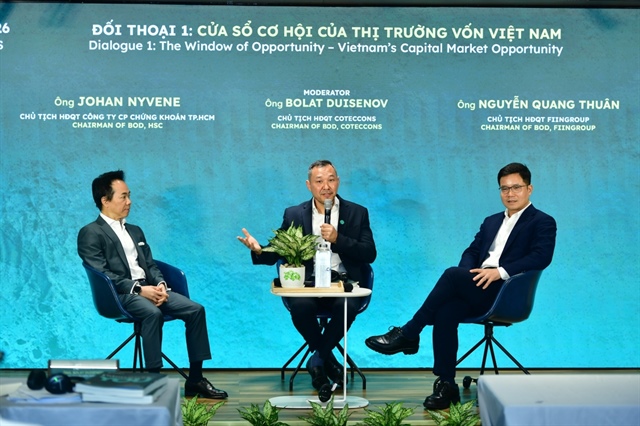
The panel discussion, "The Window of Opportunity – Vietnam's Capital Market," was moderated by Bolat Duisenov, chairman of Coteccons. Photo: Coteccons |
Market upgrade does not guarantee immediate foreign capital inflows
Opening the discussion, Bolat Duisenov, chairman of Coteccons, described Vietnam's market upgrade by FTSE Russell as a significant milestone, reflecting the country's growing prominence on the global investment landscape. However, he emphasised that the upgrade marks only the beginning of a longer journey, rather than a guarantee of immediate capital inflows.
“In construction, getting a project approved does not guarantee its success. The same applies to capital markets. An upgrade does not mean capital will automatically flow in. The window of opportunity is open, but investors will always have a choice," said Duisenov.
He added that indeed, despite Vietnam's market upgrade, foreign investors have continued to be net sellers, while market liquidity has yet to improve in line with expectations.
Explaining this disconnect, Johan Nyvene, chairman of Ho Chi Minh City Securities Corporation (HSC), noted that global stock markets are navigating an unusual period marked by heightened volatility and cautious investor sentiment.
Nyvene stressed, “Market reclassification is a gradual process, not a magic solution that will instantly turn Vietnam into a magnet for foreign investment. International funds may allocate capital in stages, but they are under no obligation to invest if market conditions remain unfavorable.”
Sharing a similar view, Nguyen Quang Thuan, founder and chairman of FiinGroup, pointed to elevated US dollar interest rates, with US Treasury yields exceeding 5 per cent, as a major factor affecting capital allocation across global markets. Some funds that have generated profits in Vietnam may choose to take profits and redeploy capital to the United States.
“Market reclassification is a necessary condition, but it is not sufficient,” Thuan said. “Institutional investors will continue to scrutinise corporate fundamentals, asset quality, and cash flow generation before making investment decisions.”
Another barrier highlighted during the discussion was the foreign ownership limit imposed on certain Vietnamese companies. Easing these restrictions in eligible sectors could broaden access for international investors and create more opportunities for foreign capital participation.
Nyvene also highlighted a structural challenge in Vietnam's equity market. Much of its market capitalisation remains concentrated in banking, securities, and real estate.
Meanwhile, global investment flows are increasingly targeting technology and AI. The limited number of Vietnamese technology companies with sufficient scale and international competitiveness means that the market still lacks some of the investment opportunities sought by global investors.
The key to attract investors
Moving beyond the broader capital market outlook, they discussed how Vietnamese companies, particularly Coteccons, do to become more attractive to international investors.
According to Thuan, institutional investors first assess the growth prospects of an industry and the companies operating within it. Their investment decisions are shaped by a company's competitive positioning, governance standards, and resilience during challenging market conditions.
Speaking about financial resilience, he noted that one of the biggest concerns for foreign project owners is entrusting a billion-dollar project to a contractor without knowing whether that company will remain financially viable throughout the project.
With market conditions potentially remaining challenging over the next two to three years, he suggested that Coteccons should adopt a more selective approach to customer acquisition, diversify its business portfolio, and strengthen its engagement with foreign direct investment (FDI) clients.
According to Thuan, FDI clients are often willing to pay a premium, but they also demand higher standards of quality, project delivery, corporate governance, and sustainability.
In this context, ESG has become an important foundation for companies to identify risks early, improve resource efficiency, strengthen transparency, and build trust with employees, customers, business partners, investors, and the wider community.
Thuan acknowledged Coteccons' progress in ESG and encouraged the company to continue exploring new business opportunities.
While revenue growth was once a primary measure of corporate success, institutional investors are now placing greater emphasis on governance quality, capital efficiency, risk management capabilities, ESG performance, and sustainable cash flow generation.
HSC Chairman Johan Nyvene also underscored the importance of sound governance and financial discipline.
Reflecting on nearly three decades of market fluctuations in Vietnam, he observed that every cycle of expansion and contraction has seen companies fail to withstand market pressures.
Drawing on the well-known saying, “Only when the tide goes out do you discover who's been swimming naked,” Nyvene explained that market downturns often expose weaknesses that remain hidden during periods of strong growth.
Building lasting investor confidence therefore requires companies to maintain rigorous governance standards, manage risks proactively, and develop the financial resilience needed to weather unfavorable market cycles.
|
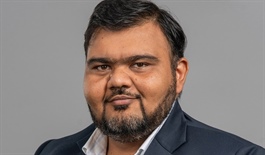
Bolat Duisenov, chairman of Coteccons. Photo: Coteccons |
Bolat Duisenov said that the market must move away from a growth-at-all-costs mentality towards quality growth.
“Growth only matters when it comes with quality. We do not chase every opportunity. We choose the right opportunities and execute them with the highest level of discipline,” said the Coteccons Chairman.
He added that the ultimate measure of a company's success is not the size of its backlog, but its ability to convert that backlog into tangible business results, value for customers, and returns for shareholders.
Stronger capital markets in need
At the event, experts also discussed a key topic about Vietnam's ability to mobilise the substantial funding required to support its development ambitions between 2026 and 2030.
According to Nyvene, Vietnam's challenge extends beyond attracting capital inflows to developing the mechanisms needed to mobilise and sustain long-term investment capital.
Bank lending remains the primary source of corporate financing in Vietnam, while the country's broader capital market infrastructure has yet to develop to its full potential.
The HSC chairman highlighted the lack of a sufficiently developed credit rating ecosystem, which would enable investors to assess corporate credit risks with greater transparency and confidence.
In practice, relatively few companies are willing to commit the time and resources required to obtain a credit rating, a process that can take up to six months. Bank borrowing, by comparison, is often faster and more convenient.
Meanwhile, Thuan estimated that Vietnam would require approximately $1.5 trillion in investment capital between 2026 and 2030.
Meeting such substantial funding needs will require a corresponding expansion of the country's capital markets, with more diversified financing channels beyond the traditional banking system.
Turning to Coteccons, Thuan stressed the importance of maintaining a selective customer strategy, particularly as the residential real estate sector may continue to face headwinds in the coming year.
Diversifying into FDI-driven projects and expanding into infrastructure segments, including roads, bridges, and airports, could create additional avenues for long-term growth.
Concluding the discussion, Duisenov said that companies seeking to engage investment must establish strong business fundamentals, demonstrate consistent execution capabilities, and maintain sound financial health.
Transparency and timely disclosure are equally essential to earning and sustaining investor confidence.
For Coteccons, the strategic priority remains quality growth, with a continued focus on selecting the right customers, strengthening risk management, improving productivity, ensuring construction quality, and converting backlog into sustainable profits and cash flows.
Duisenov also noted that Vietnam offers some of the region's most compelling growth opportunities. However, capital will not necessarily flow to the largest or fastest-growing companies. Instead, investors will increasingly favor businesses that have demonstrated their credibility and earned lasting trust.
“At Coteccons, we believe quality growth is the foundation for building Trust Capital. This goes beyond financial capital from the market. It also encompasses the trust placed in us by our customers, shareholders, partners, and employees,” said Duisenov.
- 16:04 20/10/2026