Fuel retailers seek fairer cost and profit-sharing mechanism
Fuel retailers seek fairer cost and profit-sharing mechanism
The proposed pricing mechanism could leave downstream businesses struggling with operating costs and limited bargaining power, said insiders.
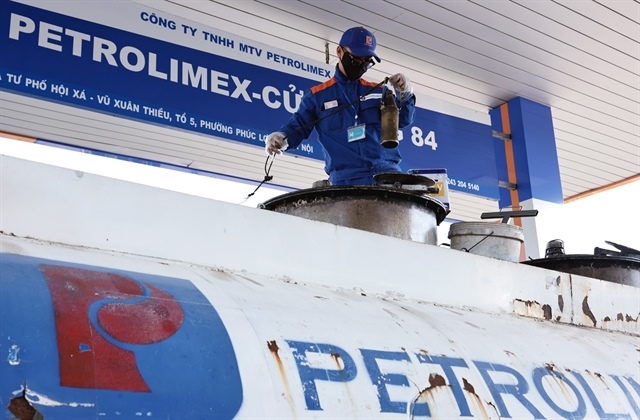
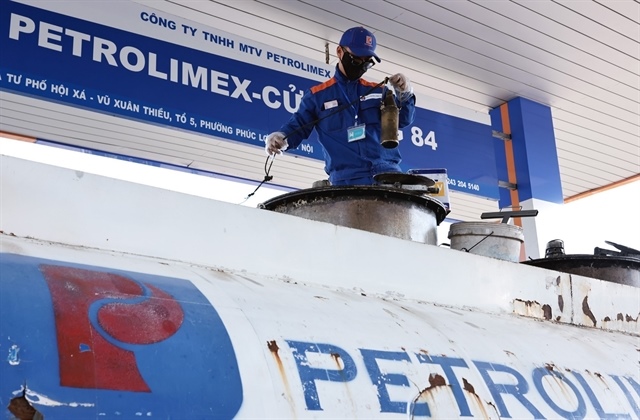
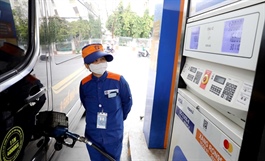
A Petrolimex worker pumping petroleum into a reservoir. — VNA/VNS Photo |
Fuel distributors and retailers have called for clearer rules on cost and profit allocation under a draft decree replacing existing regulations on petroleum trading, warning that the proposed pricing mechanism could leave downstream businesses struggling with operating costs and limited bargaining power.
At a consultation conference organised by the Ministry of Industry and Trade (MoIT) in Hà Nội on Wednesday, businesses broadly supported the direction of allowing market forces to play a greater role in fuel pricing. However, they raised concerns about the distribution of costs, profit margins and trading rights among major petroleum traders, distributors and retailers.
Nguyễn Xuân Thắng, director of Hai Au Phat Petroleum Co Ltd, said he supports developing a market-based pricing formula but noted that the draft had not clearly defined how standard business costs and profits would be allocated across the supply chain.
He suggested that the MoIT establish a common reference level for business costs based on reports from major petroleum wholesalers, with periodic adjustments. However, the reference level should account for the operating expenses of distributors and retailers rather than reflecting only the costs incurred by major traders, he said.
Thắng was particularly concerned about a provision allowing major petroleum traders to determine the profit component. If wholesalers control wholesale prices and the profit margins are passed down to subsequent stages, discounts for retail outlets could potentially fall to zero.
"If major traders retain all standard business costs and profits, distributors and retailers will have no resources left to cover transportation and labour costs or maintain their outlets," he said.
Hai Au Phat instead proposed that if profit margins remain part of the pricing formula, regulations should allow each petroleum trader to determine its own profit component rather than granting major wholesalers full control.
Another contentious issue is whether petroleum distributors should be allowed to trade fuel with one another.
Đinh Trọng Vinh, head of the Business Department at Minh Thinh Oil Trading Co Ltd, supported allowing such transactions, provided they involve actual goods, valid contracts and invoices, transfers of ownership and traceable origins.
He argued that restricting transactions to periods of supply shortages would make it difficult for businesses to respond quickly to market disruptions. Companies without existing contractual relationships would need additional time to identify partners, negotiate terms and sign agreements, delaying the movement of fuel to areas where it is needed.
"Without the right to trade with one another, distributors will be entirely dependent on the supply sources and sales conditions imposed by major traders," Vinh said.
He warned that such dependence could constrain distributors' expansion and make it harder for them to develop into major petroleum traders in the future, potentially reducing market competition.
Trịnh Quang Khanh, standing vice chairman and secretary general of the Vietnam Petroleum Association, agreed, describing distributors as an 'extended arm' of the petroleum supply network, particularly in remote and mountainous areas.
Distributors use their own capital or borrowings to purchase fuel and bear price risks while maintaining storage facilities, transportation and retail networks, he said.
The regulatory priority should therefore be to eliminate transactions without actual goods, ownership transfers or added value, rather than prohibit genuine trading between distributors.
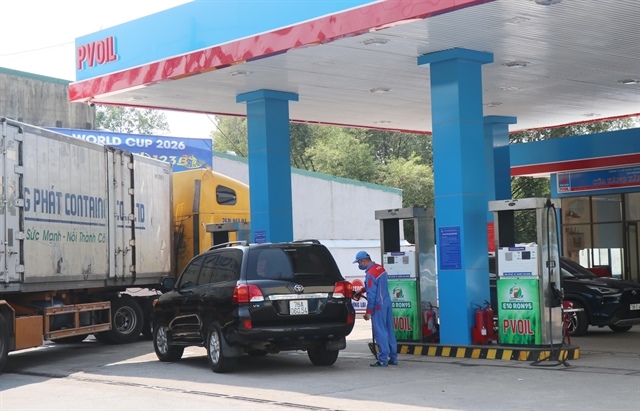
A Petrolimex worker pumping petroleum into a reservoir. — VNA/VNS Photo |
Choosing appropriate operating models
Nguyễn Thúy Hiền, deputy director of the Domestic Market Surveillance and Development Agency under the MoIT, said the ministry would carefully review the pricing formula, particularly the determination and allocation of business costs and profits across the supply chain.
However, regarding proposals to allow agents and franchisees to set their own retail prices, Hiền said businesses need to choose an appropriate operating model.
Companies operating as agents or franchisees of major petroleum traders benefit from established brands, discounts, secured supplies and contractual support. In return, they must comply with contractual requirements governing supply sources, selling prices and network operations.
Businesses seeking to purchase fuel from multiple suppliers and independently determine selling prices could instead operate as independent traders, she said.
The drafting agency would find it difficult to accept a model in which a business simultaneously enjoys the benefits of being an agent or franchisee while exercising pricing autonomy as an independent buyer and seller.
The proposal to separate wholesale and retail operations, preventing major petroleum traders from directly participating in retail sales, also faced reservations from the ministry.
Hiền said such a separation would be difficult to implement, as the petroleum industry, like many other sectors, is increasingly developing integrated value chains spanning production, imports, distribution and retail.
A rigid division between wholesale and retail activities could run counter to this trend, she said.
- 10:22 02/10/2026