HCM City promotes high-tech urban agriculture and food processing
HCM City promotes high-tech urban agriculture and food processing
The city encourages businesses to research and apply post-harvest technologies and deep-processing solutions to make better use of by-products and increase the value of agricultural products.
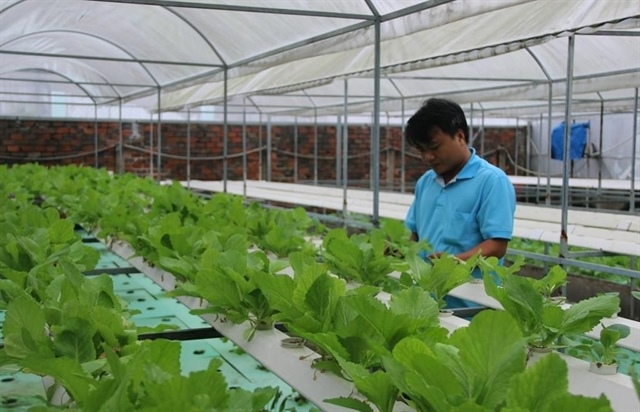
A high-tech hydroponic vegetable farming model in HCM City yields high economic results. — VNA/VNS Photo |
HCM City is stepping up implementation of the Urban Agriculture Development Programme for 2026–2030, with a vision to 2050, and a strategy for developing the food processing industry to 2030, aiming to shift from conventional farming towards smart, high-tech, ecological and circular agriculture, according to the Investment and Trade Promotion Centre of HCM City (ITPC).
Lê Anh Hoàng, ITPC’s deputy director, said HCM City continued to be a major food processing centre in the country, accounting for around 30–35 per cent of the production value of the Southern Key Economic Region and 14–15 per cent of the country’s industrial production value.
“The city is positioning itself not only as a major consumer market but also as a centre for connectivity, high-tech applications and deep processing of agricultural products across the region, with the aim of promoting sustainable exports and joining international supply chains,” he said.
One focus of the strategy is to encourage businesses to research and apply post-harvest technologies and deep-processing solutions to make better use of by-products and increase the value of agricultural products, according to Hoàng.
The city is also strengthening requirements for food hygiene, safety and quality, while prioritising green production models, low-emission factories and products that meet international standards.
These measures are aimed at helping Vietnamese businesses access export markets where requirements for quality, traceability and sustainability are becoming increasingly stringent.
Priority export products include cashew nuts, rubber, pepper, coffee, cocoa, tea, rice, seafood, ornamental fish, processed food, Halal food and other agricultural-based processed products.
Workforce development is another priority. Training in testing, advanced processing technologies and quality management is being promoted to meet the demand for skilled workers as the sector modernises.
The city also aims to develop a modern distribution network, cold chains and integrated logistics warehouses to extend the shelf life of agricultural products, reduce post-harvest losses and improve the efficiency of transporting goods from production areas to processing and consumption centres.
“The city is committed to creating the most favourable and open mechanisms possible for investors and businesses participating in its high-tech agriculture and processed food ecosystem,” Hoàng said.
Urban agriculture seen as inevitable direction
The HCM City Department of Agriculture and Environment said high-tech agriculture would be an appropriate way forward for increasing added value and improving the competitiveness of the city’s agricultural products.
The application of biotechnology, automation, the Internet of Things and artificial intelligence in production has shown potential to improve productivity, quality and production management.
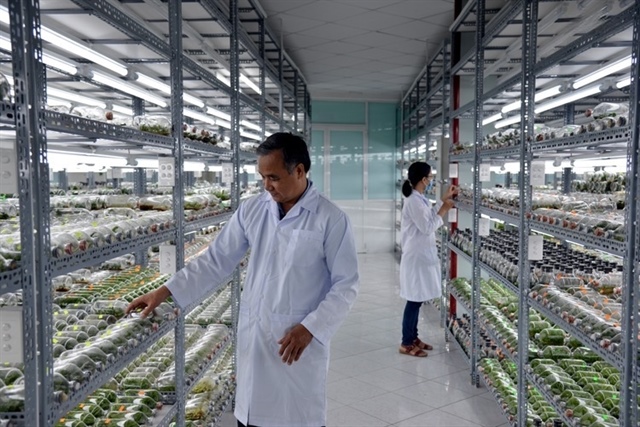
A high-tech hydroponic vegetable farming model in HCM City yields high economic results. — VNA/VNS Photo |
To build a modern, ecological, circular and sustainable agricultural sector, the city has set a goal of optimising the entire value chain from production and processing to consumption under its strategy to 2030, with a vision to 2045.
The department said this transformation must combine advances in science and technology to improve productivity and product quality with solutions to address challenges arising from urbanisation, climate change and shifts in the labour structure, thereby improving the livelihoods and living standards of farmers.
Lê Quang Bảo Quốc of the Centre for Industrial and Supporting Industries Development under the HCM City Department of Industry and Trade, said Resolution No. 09-NQ/TW, issued by the Politburo on May 19, 2026, on the development of HCM City in the new era, clearly set out a direction for developing agriculture towards a modern, high-value model associated with technology, ecological practices and urban development.
Although agriculture accounts for a relatively small share of the city’s GRDP, the sector plays an important role in ensuring food security, protecting the environment, developing the circular economy and improving quality of life, according to Quốc.
The resolution calls for improving the efficiency of agricultural production through high-tech applications, developing urban and ecological agriculture, completing value chains for key agricultural products, and building comprehensive and sustainable rural areas linked to urbanisation.
“This is not only a development direction for the agricultural sector but also a new positioning for HCM City’s agriculture, reflecting the city’s role as a major economic, science and technology, and innovation centre in the country,” Quốc said.
According to him, the city has three key advantages: institutions, urban planning and its large market. Institutions provide the foundation for new support mechanisms, planning determines suitable spaces for urban agriculture, while the market helps turn technologies and products into economic value.
With its large population, strong tourism sector and dynamic trade activity, HCM City is the country’s largest consumer market and offers businesses a favourable environment to test new agricultural models, products and technological solutions before expanding to other markets.
Its position as a regional logistics, commercial and export hub also enables the city to connect the agricultural value chain, from seed research and production to harvesting, storage, processing, logistics, consumption and exports.
“In the coming period, leveraging these three pillars in a synchronised manner will not only help HCM City’s agricultural sector elevate its economic value but also contribute to building a modern, green, liveable and sustainable city in the new era,” he said.
- 09:31 16/09/2026