Clearer rules needed to turn green power into competitive advantage
Clearer rules needed to turn green power into competitive advantage
Access to stable green energy at reasonable costs is now becoming the decisive factor as green power is directly affecting investment decisions by multinational corporations, the ability to retain export orders and businesses' participation in global value chains.
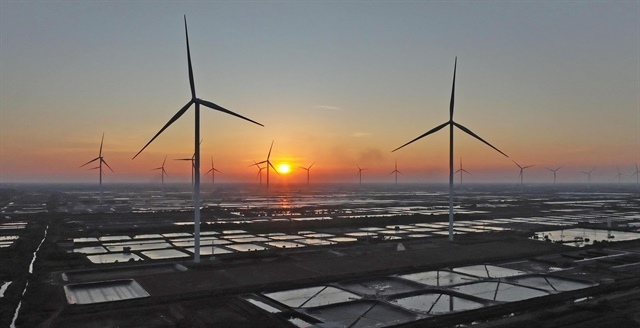
A solar power farm in Cà Mau Province. Việt Nam faces an urgent need to shift towards a greener growth model while ensuring energy security and advancing a sustainable energy transition to sustain high economic growth. — VNA/VNS Photo Vũ Sinh |
The direct power purchase agreement (DPPA) mechanism is creating significant opportunities for businesses to access renewable electricity. However, clearer implementation guidelines, stronger grid infrastructure and policies supporting energy storage are needed before green power can become a meaningful competitive advantage.
Hoàng Quang Phòng, vice chairman of the Vietnam Chamber of Commerce and Industry (VCCI), said national and corporate competitiveness was no longer determined solely by traditional factors such as capital, technology and human resources.
Access to a stable supply of green energy at a reasonable cost was now becoming a decisive factor, he stressed.
"Green power supply is directly affecting investment decisions by multinational corporations, the ability to retain export orders and businesses' participation in global value chains," Phòng said.
Major export markets, including the European Union, the United States, Japan and South Korea, are tightening requirements on carbon emissions, energy traceability, environmental, social and governance standards and the use of renewable energy in supply chains, he said.
Việt Nam faces an urgent need to shift towards a greener growth model while ensuring energy security and advancing a sustainable energy transition to sustain high economic growth, he stressed.
Despite improved legal framework for the energy sector, including Politburo’s Resolution No. 70/NQ/TW dated August 20, 2025 on ensuring national energy security and the National Assembly’s Resolution No. 253/2025/QH15 dated December 11, 2025 onspecific mechanisms and policies for national energy development, implementation still faced numerous challenges, Phòng said.
Firms are still awaiting detailed guidance on the DPPA mechanism, technical standards for battery energy storage systems (BESS), time-of-use (TOU) electricity pricing, grid connection regulations and financial support policies to ease upfront investment costs.
DPPA and BESS
The Government issued Decree 243/2026/NĐ-CP in June, amending regulations on the DPPA mechanism and self-produced, self-consumed rooftop solar power, which raises the maximum share of excess electricity from eligible rooftop solar systems that can be sold to the national grid to 50 per cent from 20 per cent.
However, Nguyễn Xuân Quy, vice chairman of the Vietnam Clean Energy Association, said no transactions involving the sale of excess rooftop solar power to the grid had yet been recorded. He pointed out that the lack of detailed implementation guidance was a major obstacle.
Võ Phúc Nguyên, project director at Becamex Power Development Investment Co., said his firm was interested in implementing DPPA but did not know how to proceed. He called on authorities to issue standard procedures and model contracts for buyers and sellers.
Phan Công Tiến, director of the Institute of Smart Energy Applications Research (ISEAR), said renewable electricity sold through the national grid faced additional transmission and distribution charges, which could weaken its price competitiveness.
He proposed exempting renewable energy projects of less than 30 MW from transmission charges where electricity was supplied through local distribution networks and consumed locally, arguing that such power did not physically pass through the national transmission system.
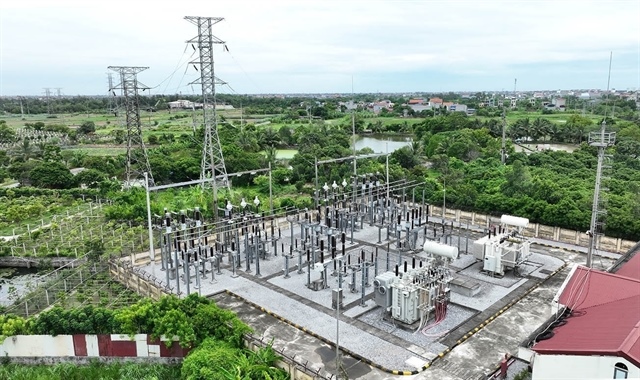
A solar power farm in Cà Mau Province. Việt Nam faces an urgent need to shift towards a greener growth model while ensuring energy security and advancing a sustainable energy transition to sustain high economic growth. — VNA/VNS Photo Vũ Sinh |
Over the longer term, Việt Nam should develop local electricity markets alongside its wholesale electricity market, he said.
Trần Huỳnh Ngọc, a senior power market and system expert at AMPERE, part of Alluvium Group, said that while Decree 243 had significantly expanded the legal space for DPPA, the next challenge, however, was to translate regulations into transactions that could operate reliably, generate economic value and attract financing.
Several issues still needed clarification, including the treatment of internal electricity losses, metering discrepancies between sellers and buyers, the allocation of costs for system upgrades and supervisory control and data acquisition (SCADA) systems, and dispute settlement mechanisms, he said.
Experts also highlighted the importance of battery energy storage (BESS), as an in increasing the flexibility and stability of a power system with a growing share of renewable energy.
Ngọc said BESS faced its own regulatory and financial obstacles, as Việt Nam had yet to establish a comprehensive mechanism for converting its technical value into predictable revenue, determining chargeable capacity and allocating risks between parties to contracts.
Changes in electricity pricing, including time-of-use tariffs and the planned application of two-part pricing, could also narrow the room for negotiating prices under DPPA, which might potentially affect project bankability, he added.
BESS was a missing piece that needed to be addressed, said Trần Quốc Tâm, deputy chairman of the HCM City Renewable Energy Association.
It is critical to develop clearer regulations defining the role of storage systems, electricity pricing that reflected the value of power at different times, payments for flexibility services and policies to mobilise investment capital, he said.
According to Quy, DPPA and BESS markets required a more coordinated policy ecosystem to attract investment, including transparent grid-use and system-service charges, standard contracts, stronger metering and settlement systems, expanded eligibility for DPPA and a more comprehensive renewable energy certificate system.
He added that investors are also concerned about policy stability, transparency and predictability.
Nguyễn Võ Trường An, chief executive of ASEAN Carbon Credit Exchange, proposed the establishment of a digital electricity or energy trading platform to connect renewable power buyers and sellers and improve price transparency.
He said that such a platform could eventually develop into a national electricity and energy exchange, providing real-time information on demand, generation and power supply.
- 07:46 15/09/2026